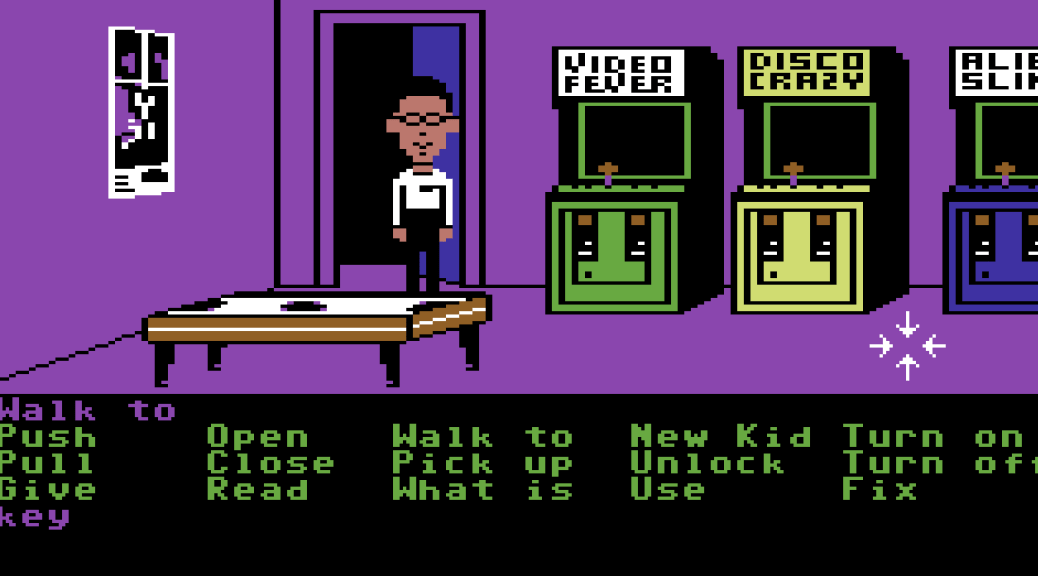
Released in 1987 for the Commodore 64 and Apple II, Maniac Mansion was the birth of SCUMM (Story Creation Utility for Maniac Mansion), the game engine that defined LucasArts point-and-click adventures for a decade. Actually, back then they were called Lucasfilm Games, and they were breaking new ground in a number of different places.
Tag Archives: humour

Simon the Sorcerer, Amiga
Simon the Sorcerer is a very fondly-remembered, British point-and-click adventure game published by Adventure Soft for the Amiga in 1993.
It looks and plays similarly to the classic LucasArts adventures of the late 80s and early 90s – Loom, Monkey Island, and Indiana Jones and the Fate of Atlantis – and has the same verb/icon system as pioneered by those games.
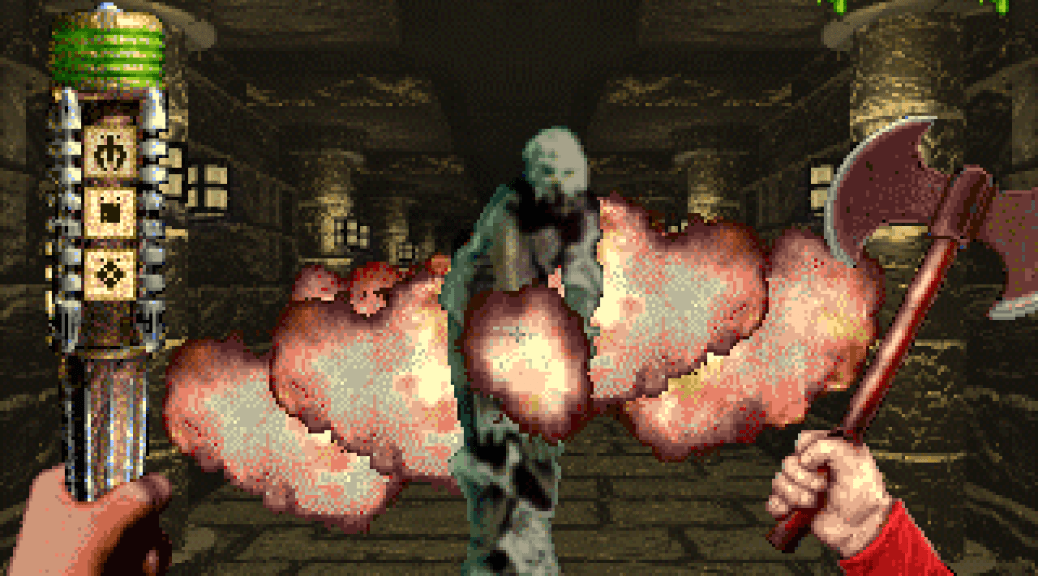
Stonekeep, PC
Stonekeep is a strange first-person Role-Playing Game, developed and published by Interplay Productions in 1995.
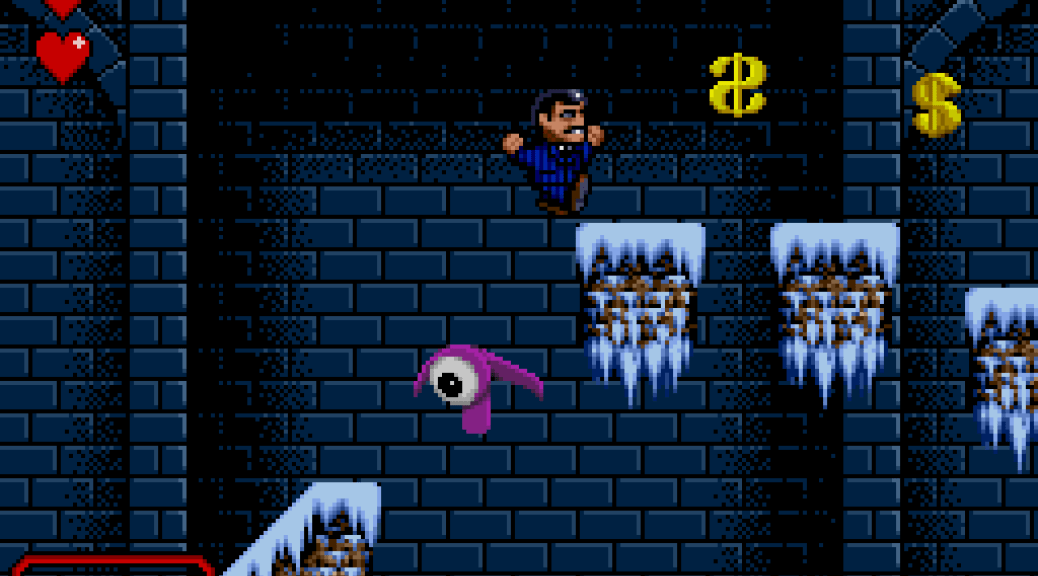
The Addams Family, Super Nintendo
Back in the early 1990s Ocean Software had a reputation for producing mostly movie-licensed action games, and The Addams Family on the Super Nintendo is arguably the pinnacle of that niche.

General Chaos, Megadrive/Genesis
General Chaos is a memorable multiplayer strategy/action game, developed by Game Refuge Inc. and published for the Sega Megadrive by Electronic Arts in 1993.
The game is basically a real-time, single-screen tactical action game, with two teams of soldiers fighting it out for overall domination. You can either take on the computer AI, or another person, and must capture your opponent’s base to win the game.

Cobra, ZX Spectrum
Loosely-based on the Sylvester Stallone film of the same name, Cobra is a legendary run-and-gun platform game programmed by the late Jonathan Smith for Ocean Software and first released in 1986.

Fallout 2, PC
Released in 1998, Fallout 2 is a sequel developed by Black Isle Studios, for Interplay, and using mostly the same post-apocalypse setting, graphical style, and game mechanics, of the first game.

Fallout, PC
Interplay‘s 1997 release, Fallout, began its existence as a post-apocalyptic Role-Playing Game based on the Steve Jackson “GURPs” ruleset, and also as the ‘spiritual successor’ to the classic 8-bit RPG, Wasteland.
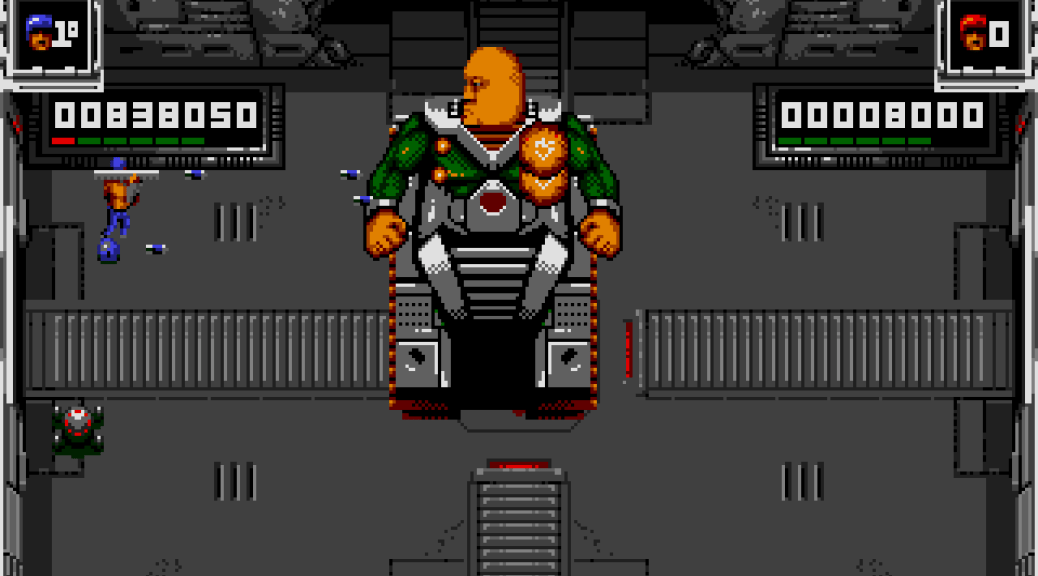
Smash TV, Atari ST
On the face of it the Atari ST conversion of Williams Electronics‘ classic Smash TV looks pretty good, but scratch below the surface and you might realise that it has one or two major deficiencies.

Don’t Press The Letter Q, Oric
Released for the Oric by IJK Software in 1984, Don’t Press The Letter Q is a very early ‘minigame’-based adventure, in a similar vein to more modern titles like Warioware.
Considering that Don’t Press The Letter Q is over 35 years old now, it has stood the test of time remarkably well. And – considering that it is an Oric exclusive – it is something of a stand-out title on the platform. Arguably even the best game on the Oric.
 The King of Grabs