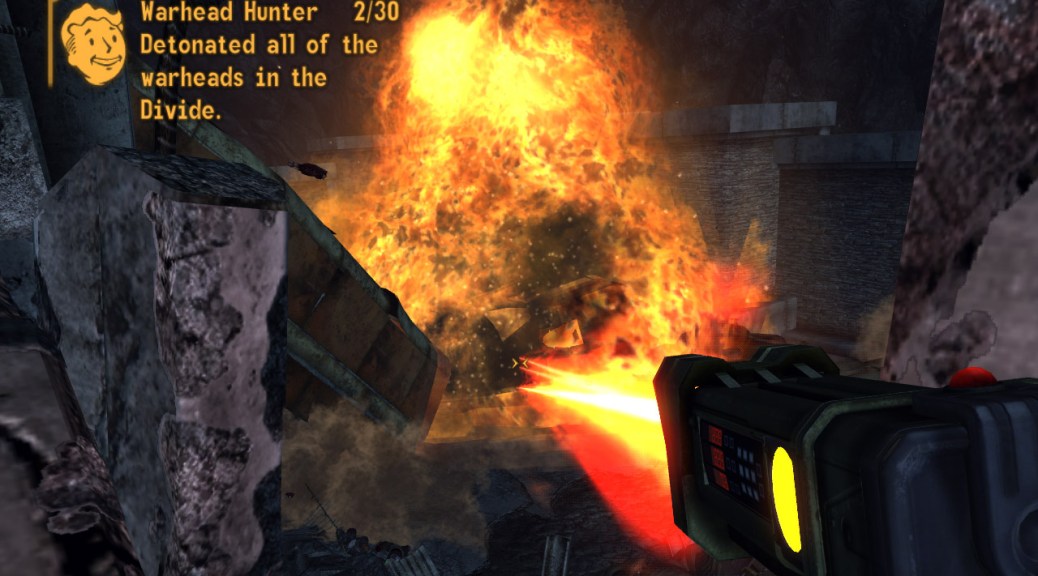
Lonesome Road is the fourth and final story-based DLC for the classic RPG/shooter, Fallout: New Vegas, and was first released in September 2011. It’s meant for players who are level 25 or higher and begins with you being contacted by the original Courier Six – a man called Ulysses – who promises to tell you important information about the Platinum Chip and why he refused to deliver it.
Tag Archives: traps
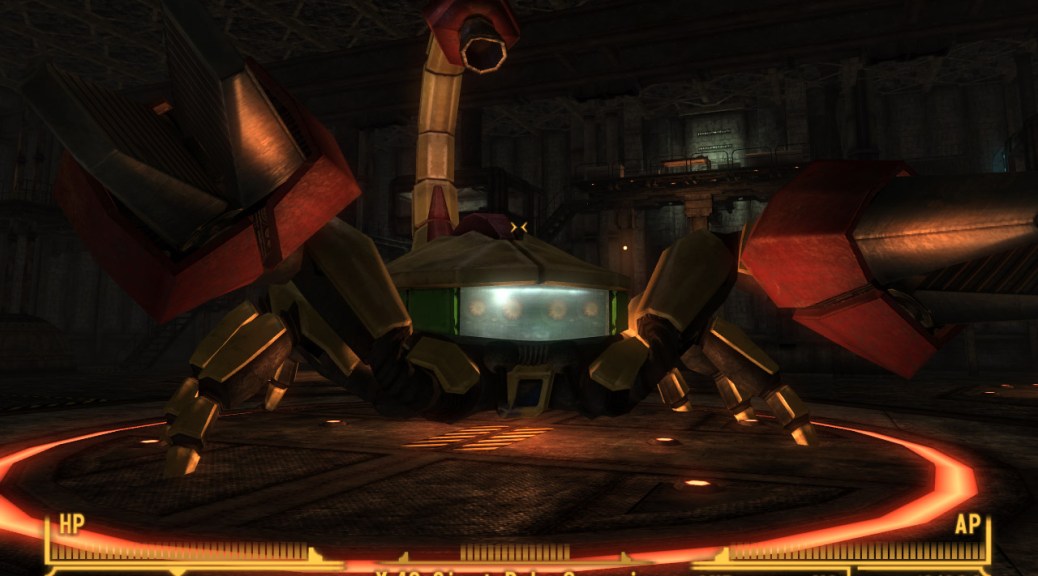
Fallout: New Vegas: Old World Blues, PC
Old World Blues was the third story-based DLC to be released for Fallout: New Vegas and first came out on 19th July 2011. It is definitely the weirdest and funniest of the FNV DLCs and contains some hilarious dialogue, bizarre enemies, and strange settings, and it is considered by many Fallout: New Vegas players to be the best of the DLCs (I’d disagree, though – I think Dead Money is better).
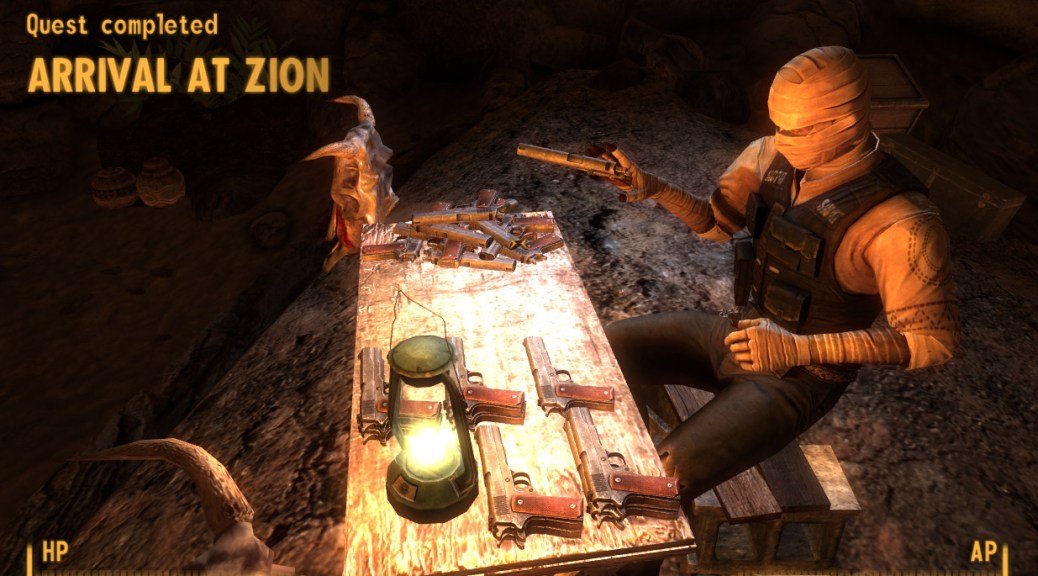
Fallout: New Vegas: Honest Hearts, PC
One of six DLCs released for Fallout: New Vegas, Honest Hearts was initially released in May 2011 and sees The Courier setting out on a trading expedition to Utah’s Zion National Park with the Happy Trails Caravan crew.

Fallout: New Vegas: Dead Money, PC
Dead Money is a DLC for Fallout: New Vegas that was first released in 2010 for the XBox 360, and later for PC and PlayStation 3 in 2011. It was one of six DLCs released for Fallout: New Vegas, and for my (dead) money it is by far the best.

Rastan, Arcade
Rastan – also known as “Rastan Saga” in Japan – is a scrolling hack and slash arcade game developed and manufactured by Taito in 1987. It features a barbarian warrior who must embark on a quest to slay an evil dragon.

Mindroll, Amiga
Mindroll is a 16-bit conversion of Stavros Fasoulas‘ classic Commodore 64 ball-rolling maze game, Quedex. It was converted by Silent Software and published in North America for the Amiga and PC by Epyx in 1990. As far as I know it wasn’t released in the UK or Europe, which is strange considering that the game originated there.
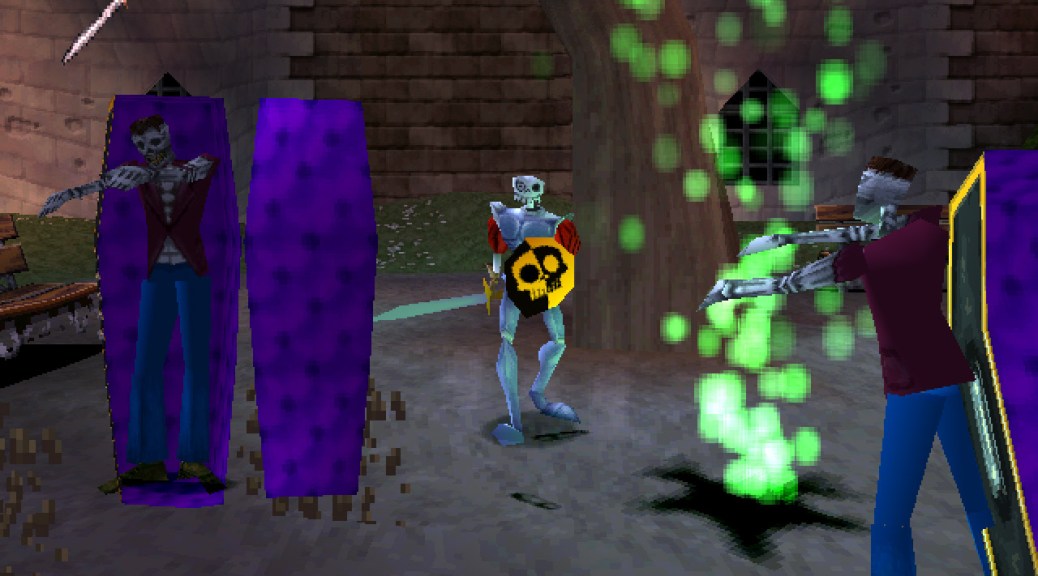
MediEvil 2, PlayStation
MediEvil 2 is the sequel to the classic PS1 game, MediEvil, and is the return of the skeleton warrior, Sir Daniel Fortesque. The game is this time set in Victorian England where Sir Dan must combat monsters and animated skeletons, resurrected by a meddling sorcerer who is trying to resurrect Zarok, the bad guy from the first game. Gameplay is mostly identical to MediEvil [one], but with a few tweaks here and there. MediEvil 2 was first published in 2000 and was developed by many of the same people who made the first game, at SCE Cambridge Studio in England.
MediEvil, PlayStation
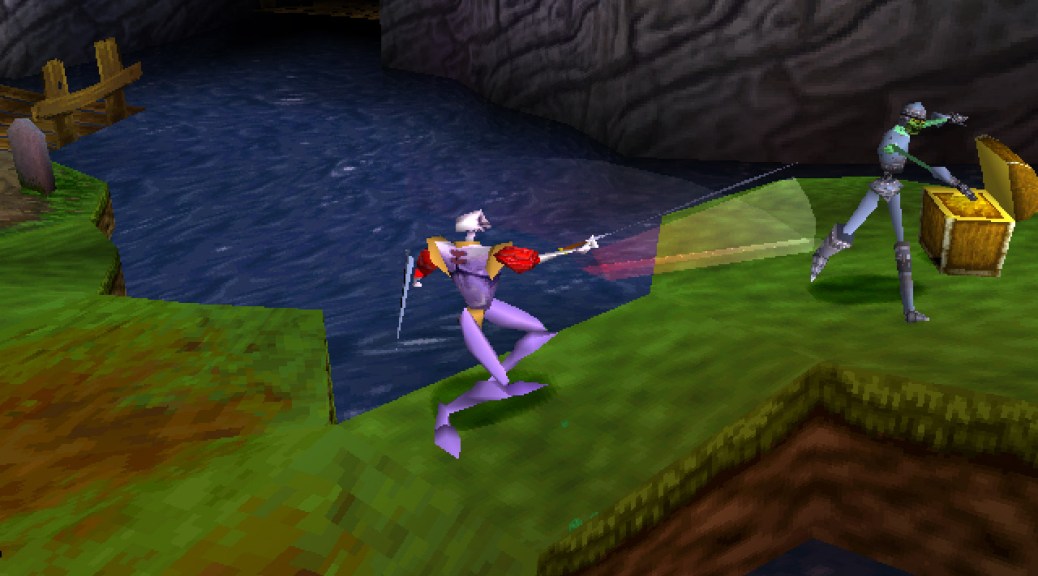
MediEvil is a classic hack-and-slash action game developed by SCE Cambridge Studio and published by Sony in 1998. In it you play as the resurrected skeleton of Sir Daniel Fortesque, in the kingdom of Gallowmere, who has been inadvertently brought back from his eternal sleep to once again fight the evil sorcerer Zarok (voiced by the late Paul Darrow). As shown in the humorous introductory sequence, Sir Dan’s initial attempt at thwarting Zarok fell flat on its face and this is his shot at redemption.
Mad Max, PC
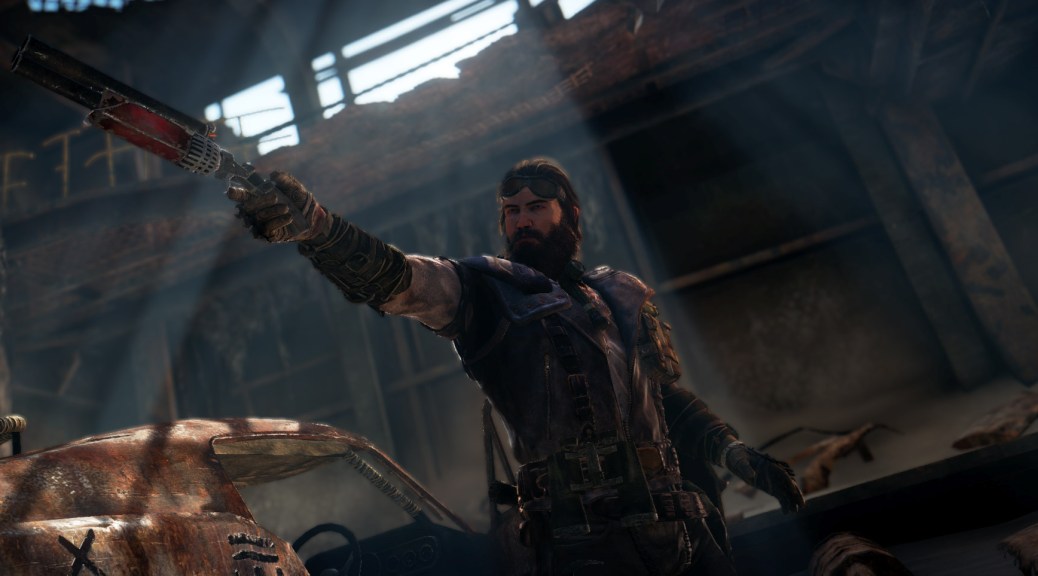
The 2015 game, Mad Max, was developed by Swedish company Avalanche Studios and published by Warner Brothers Games. It is an action/adventure/Role-Playing Game based on the hit 2015 film, Mad Max: Fury Road, and it is pretty bloody amazing!

Blaster Master, NES/Famicom
Released in Japan and North America in 1988, and Europe in 1991, Sunsoft‘s Blaster Master is a mixture of platforming and shooting that was a minor hit on the Nintendo Famicom/NES.

