
Time Crisis is a classic lightgun shooter, developed and distributed into arcades by Namco in 1995. The game is played in a 3D environment, with all the locations, characters and cut scenes fully-modelled as texture-mapped polygons. Unlike many lightgun shooters of the time, Time Crisis is a single-player only game, because it utilizes a foot pedal for taking cover.
Tag Archives: pioneering

Gunbuster, Arcade
Gunbuster is a lightgun-based First-Person Shooter (FPS) for up to four players, first distributed into arcades by Taito in 1992. It was released as “Operation Gunbuster” in North America and as “Gun Buster” in Japan.

Eric and the Floaters, ZX Spectrum
I find it pretty amazing that Hudson Soft‘s famous maze-based, bomb-blasting game, Bomberman, was released for the ZX Spectrum in 1984, but it was. It was developed by Hudson Soft themselves and published by Sinclair Research in the UK (much like Hudson Soft‘s other famous Spectrum game, Stop the Express). Even more bizarre is the name of the game, but there was a good reason for the change…

Breakout, Atari 2600
Brad Stewart‘s 1978 Atari 2600 conversion of the pioneering 1976 arcade game, Breakout, is a software-based cartridge version that most people who’ve played the game will be familiar with. Mainly because – as far as I know – the original arcade version of Breakout is currently un-emulatable, because it utilizes mechanical components that prevent it from being played as a ROM file in something like MAME.

Devilish: Ball Bounder, Nintendo DS
Devilish: Ball Bounder (aka Classic Action: Devilish in North America; aka Devilish in Europe) is the third game in the Devilish series and was released thirteen years after its predecessor, Devilish: The Next Possession for the Megadrive/Genesis. It was developed by Starfish Kaihatsu and released for the Nintendo DS in 2005 in Japan and Europe, and 2007 in North America.

Indiana Jones and the Fate of Atlantis, FM Towns
LucasArts‘ classic point-and-click adventure, Indiana Jones and the Fate of Atlantis, was released for the FM Towns by Victor Musical Industries in 1993, and although it was a Japan-only release it does include the English language version, which makes it perfectly playable to Westerners.
Continue reading Indiana Jones and the Fate of Atlantis, FM Towns
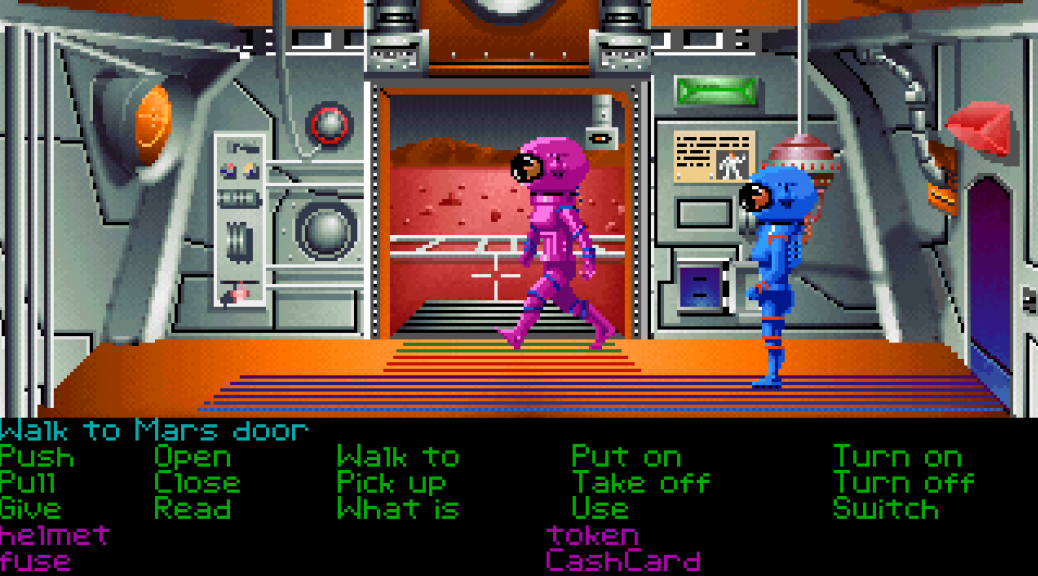
Zak McKracken and the Alien Mindbenders, FM Towns
Zak McKracken and the Alien Mindbenders is the second SCUMM game from Lucasfilm Games (aka LucasArts), after Maniac Mansion, with game development led by David Fox, and with Matthew Alan Kane as co-designer and co-programmer. It was originally released for the Commodore 64 in 1988, and this enhanced FM Towns port was published in Japan in 1990 by Fujitsu. The game is playable in both English and Japanese.
Continue reading Zak McKracken and the Alien Mindbenders, FM Towns

Syndicate, FM Towns
Although the FM Towns port of Bullfrog‘s classic Syndicate is in Japanese, it’s still a great game to play if you know what you’re doing. Of course this is not the right version of Syndicate to play if it’s your first time (unless you can read Japanese), but it is a sharp port with crisp high resolution graphics and responsive controls.
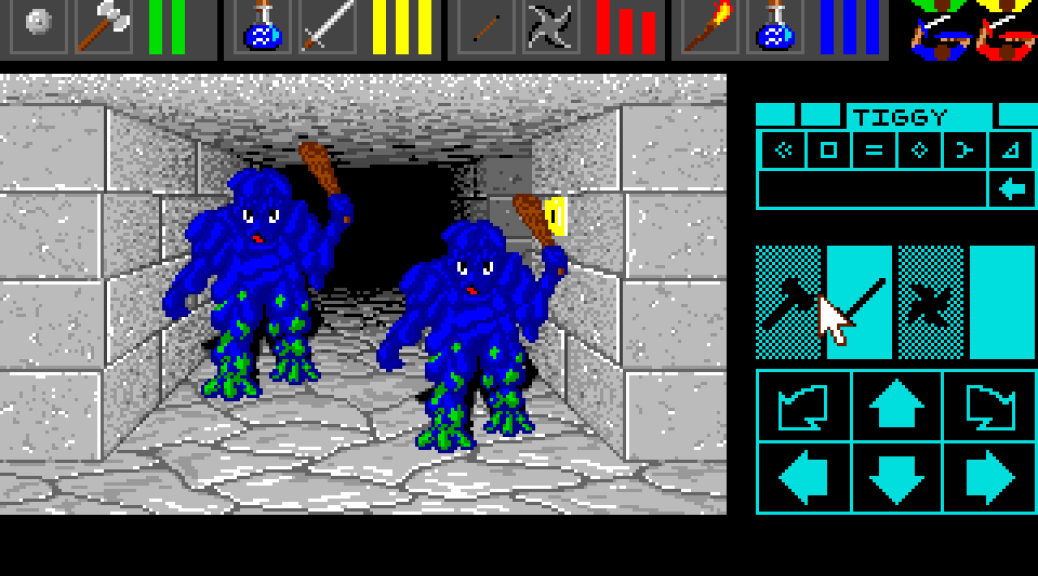
Dungeon Master, FM Towns
The FM Towns version of the classic Dungeon Master was ported by FTL Games (the game’s original developer) and published by Fujitsu in 1989 (two years after the original Atari ST version, and three years before the DOS version came out). This was a Japan-only release, on CD-ROM, but the game is playable in both English and Japanese, which is great.

FM Towns Special
The FM Towns is a Japanese personal computer, designed and manufactured by Fujitsu from 1989 to 1997. The “FM” part of the name means “Fujitsu Micro“, while the “Towns” part is derived from the code name that the system was assigned during development, “Townes”. This refers to Charles Townes, one of the winners of the 1964 Nobel Prize in Physics, following a custom at Fujitsu of naming PC products after Nobel Prize winners.
 The King of Grabs