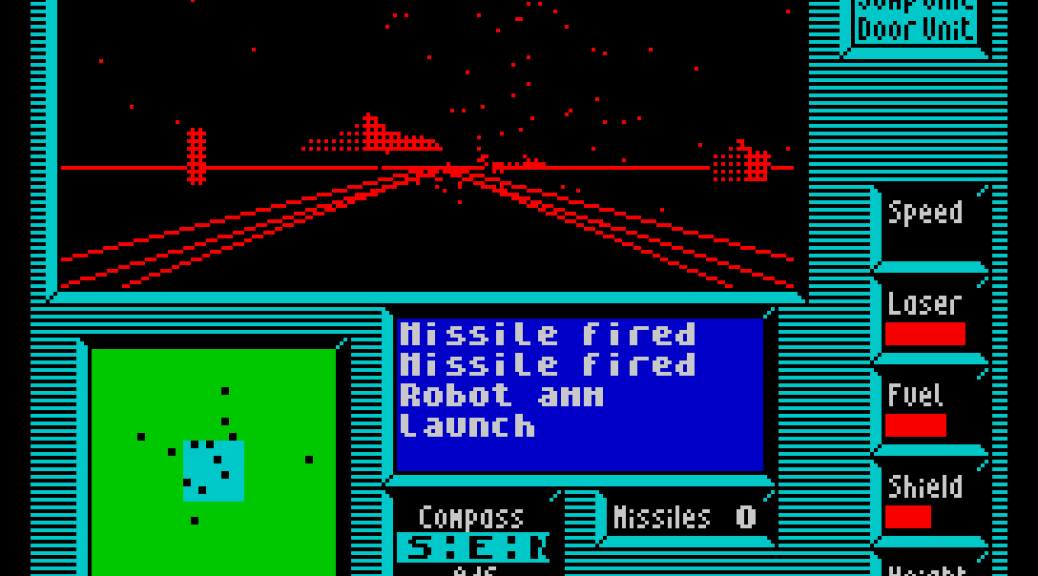
Sub-titled “Tau Ceti II“, Pete Cooke’s stunning Academy is a brilliant mission-based surface shooter that combines great presentation and atmosphere, with interesting use of light – quite radical for a humble ZX Spectrum.
Tag Archives: First-Person

Shining In The Darkness, Megadrive/Genesis
When I first played Shining In The Darkness – a 1991 party-based Role-Playing Game for the Sega Megadrive/Genesis, developed by Climax Entertainment and published by Sega – I was ready to dismiss it, because of the unattractive, ‘cartoony’ graphics, the clunky interface, and the generic script. But after some determined play – admittedly: in an emulator, and using quicksaves – it became apparent that this was no ‘throwaway’ level-grinder. It was in fact something quite special…

Doomdark’s Revenge, ZX Spectrum
Sequel to Mike Singleton‘s classic fantasy war game Lords of Midnight, Doomdark’s Revenge is much bigger and more complex than its predecessor, although essentially it still follows the same style of play as the original – with unique, turn-based movement and tactical combat.

Lords of Midnight, ZX Spectrum
The late Mike Singleton‘s classic Lords of Midnight is a pioneering fantasy war game with strategy and RPG overtones. It was first released in 1984 on the ZX Spectrum by Beyond Software and immediately became a cult hit.

Starstrike II, ZX Spectrum
The sequel to Realtime Software‘s brilliant Starstrike 3D, Starstrike II is another excellent and groundbreaking first-person space shooter, only this time with impressive “filled” polygons, instead of the simpler wireframe graphics of the original.

Starstrike 3D, ZX Spectrum
More than just a clone of Atari‘s arcade classic Star Wars, Starstrike 3D (or 3D Starstrike, whatever you prefer) is a wireframe, shooter masterpiece on the humble ZX Spectrum that really set the gaming world alight, back in the early Eighties.
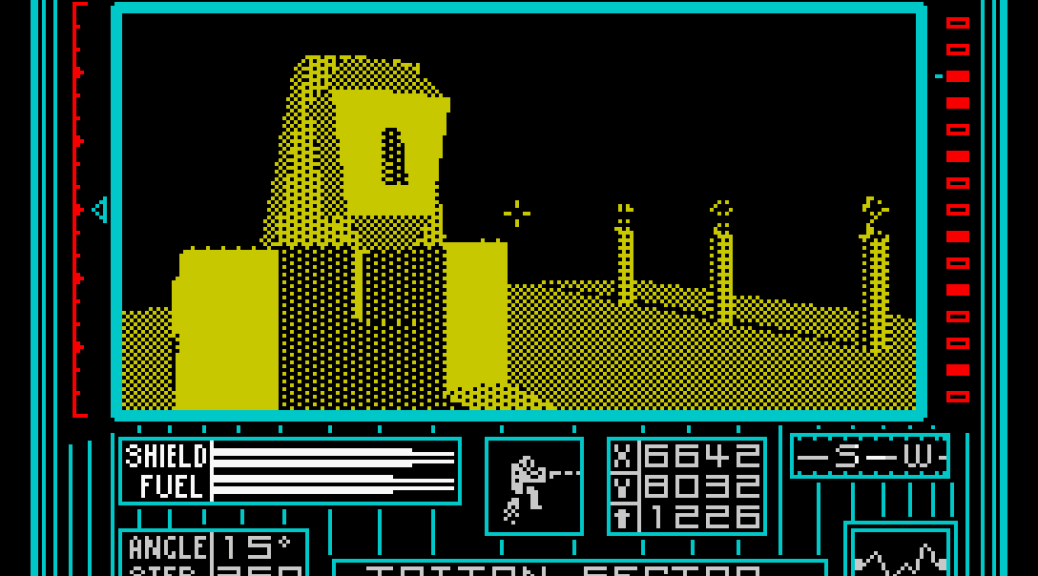
Dark Side, ZX Spectrum
Dark Side is the 1988 sequel to Driller is a very early example of a first-person, full 3D, explorable world, that can be viewed from almost any angle.
The game engine – Freescape – has gone on to become famous as one of the earliest examples of its type, and one that was hugely influential on every 3D exploration game that followed.

Star Fox, Super Nintendo
I’m going to use the Japanese and North American name for this game – Star Fox – rather than the European name (Star Wing, which was chosen because the name “Star Fox” was apparently too similar to a German company called “StarVox”!).

Metroid Prime, GameCube
The fifth game in Nintendo‘s famous “Metroid” series, and the first to use 3D graphics, Metroid Prime follows the well-worn gameplay path of the earlier Metroid games (that is: have all your equipment; lose all your equipment; have to find all your equipment again) and again sees you playing as Samus Aran, a female ex-soldier with a powered exoskeleton.
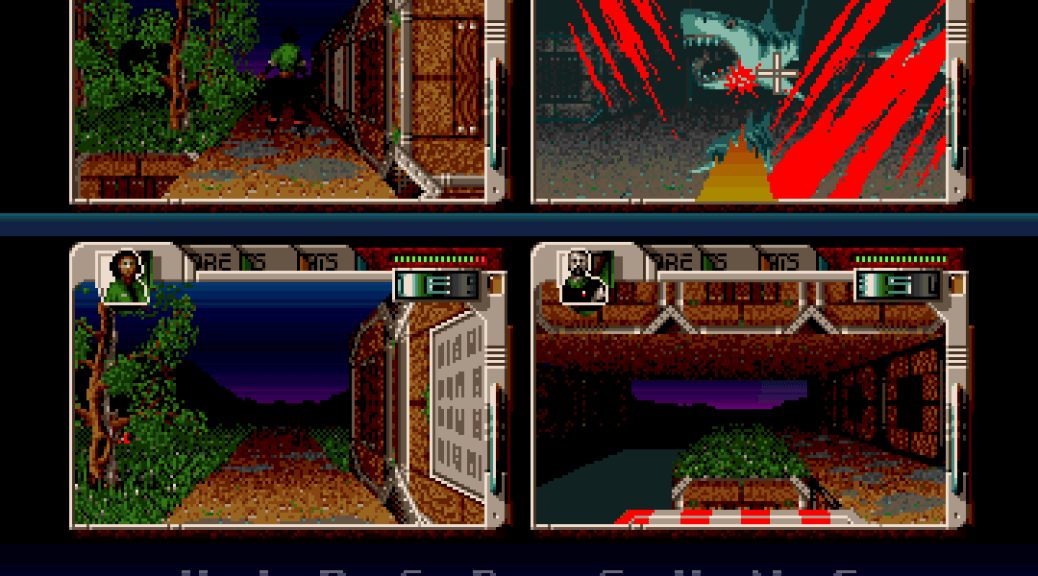
Hired Guns, Amiga
Psygnosis‘ Hired Guns is an innovative, squad-based tactical action game where the player takes control of a team of four mercenaries (from a pool of twelve), each of which has their own viewpoint in the play area.
 The King of Grabs