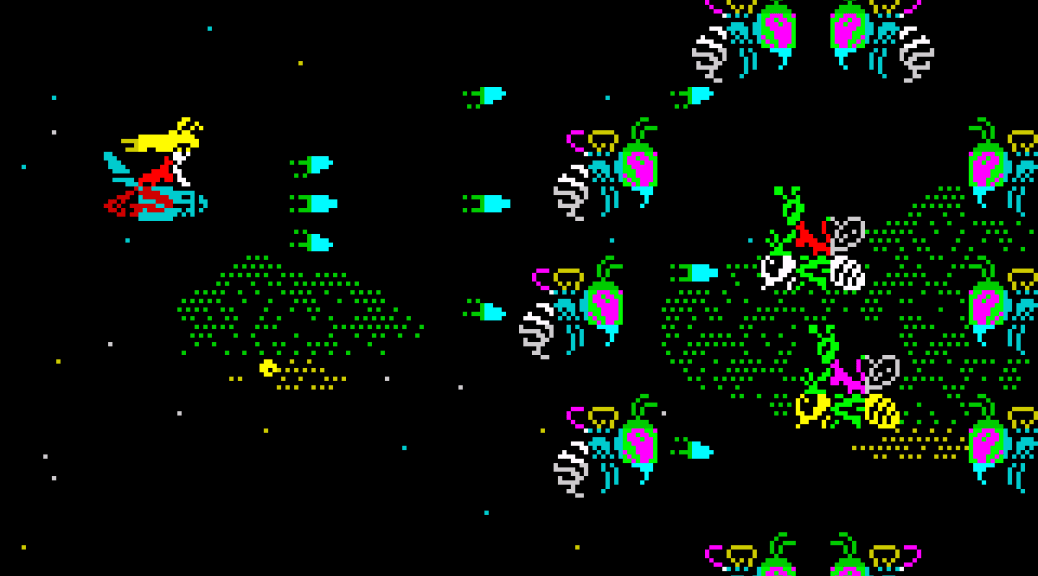
Written by Jason J. Railton and first released in 2026, Go-Go BunnyGun is a side-scrolling shooter on the ZX Spectrum that features a bunny girl on a rocket, flying through space. With smooth, colourful graphics and compelling gameplay, Go-Go BunnyGun is another great “Modern Retro” release.
Tag Archives: female lead
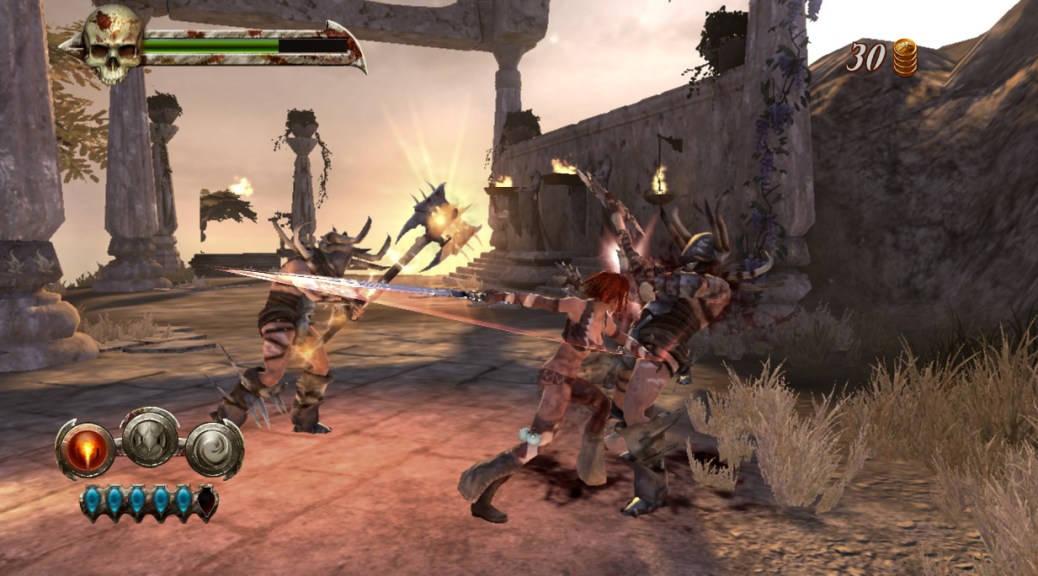
Golden Axe: Beast Rider, PlayStation 3
Golden Axe: Beast Rider was developed by Secret Level, Inc. and published for the PlayStation 3 and XBox 360 by Sega in 2008. What initially drew me to this game was the fact that it was 18-rated, in an age when few games are. I wondered why it was an 18. I also wondered if it was worthy of the Golden Axe name.
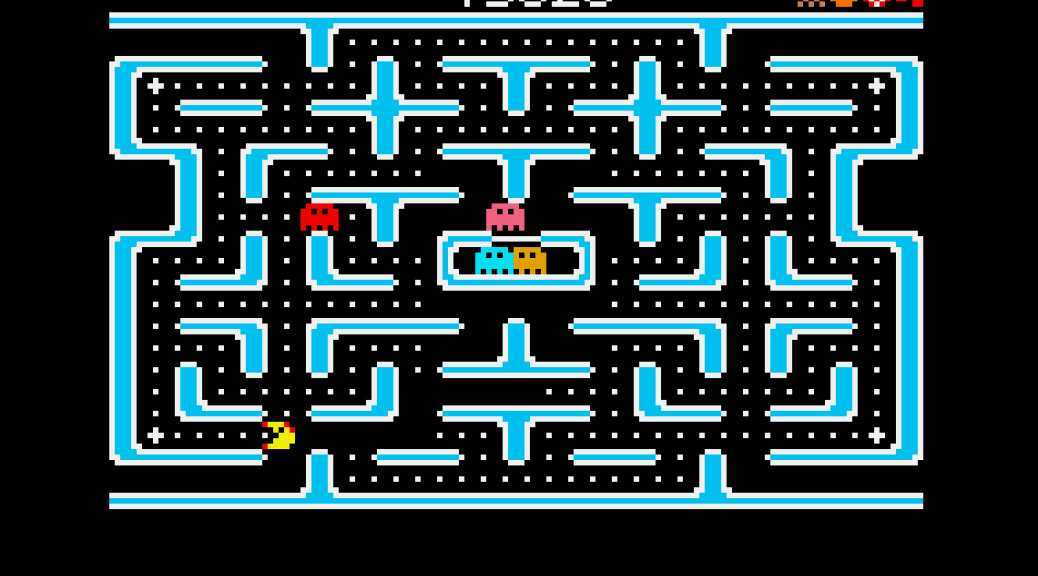
Ms. Pac-Man, Atari Lynx
The Atari Lynx version of Ms. Pac-Man is a very good pill-gobbler, and – as far as I’m aware – it was only Pac-Man type game to appear on the system, outside of homebrew. It was developed and published by Atari Corporation in 1990.
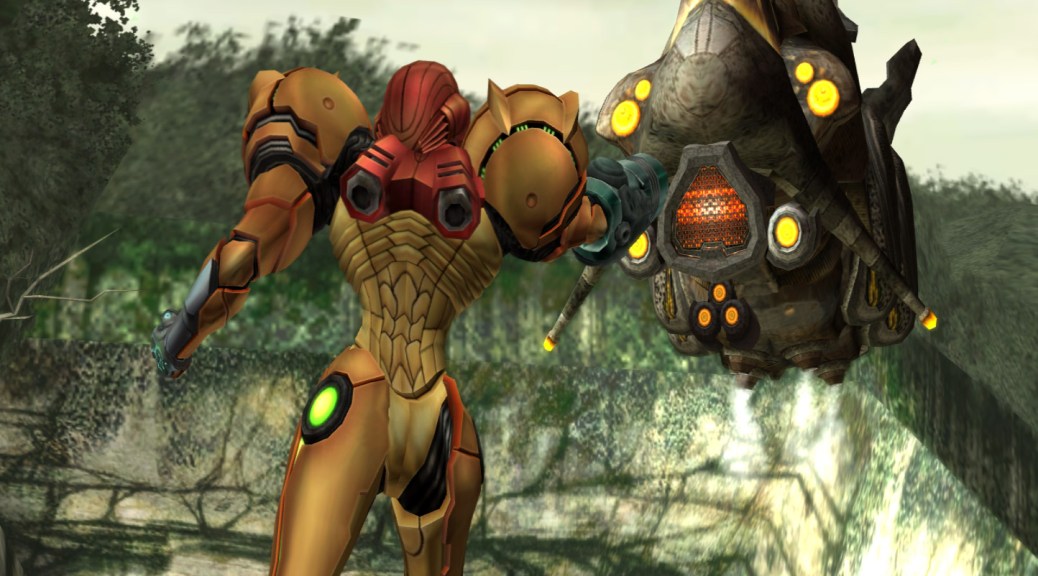
Metroid Prime 3: Corruption, Nintendo Wii
The 2007 release of Metroid Prime 3: Corruption was something of a milestone for Nintendo, the game’s publisher, and Retro Studios, the game’s developer. For Nintendo this was a landmark release, showing off the Wii‘s impressive capabilities as a games console, and for Retro Studios it was the end of years of experimentation with the control system. In the end, it turned out to be a masterpiece…
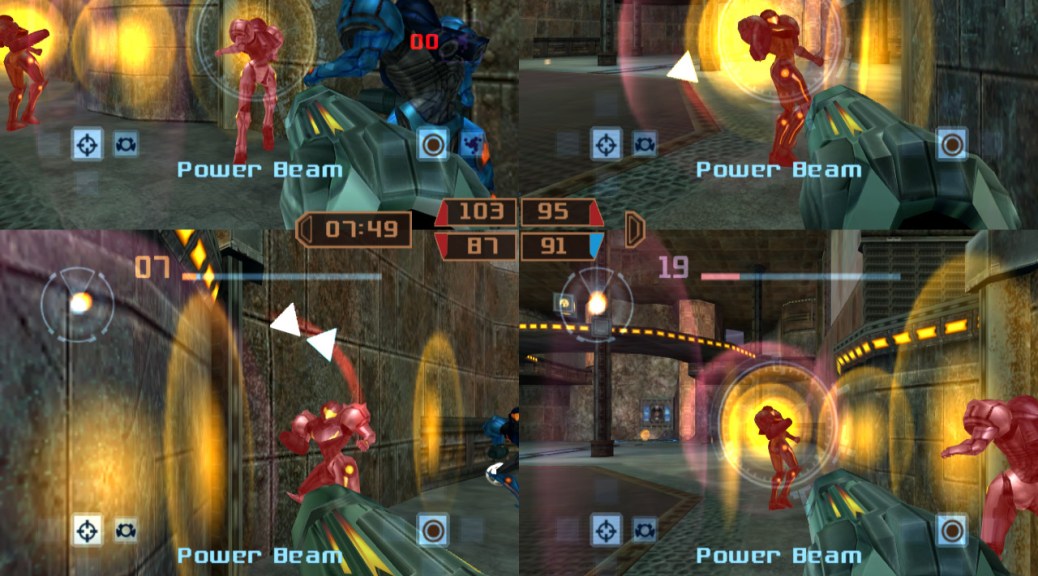
Metroid Prime 2: Echoes (Multiplayer), GameCube
This is a separate set of Metroid Prime 2: Echoes grabs (to the set showing the single-player campaign that I posted earlier); these are of the multiplayer side of the game, which is not shown very often.
Continue reading Metroid Prime 2: Echoes (Multiplayer), GameCube
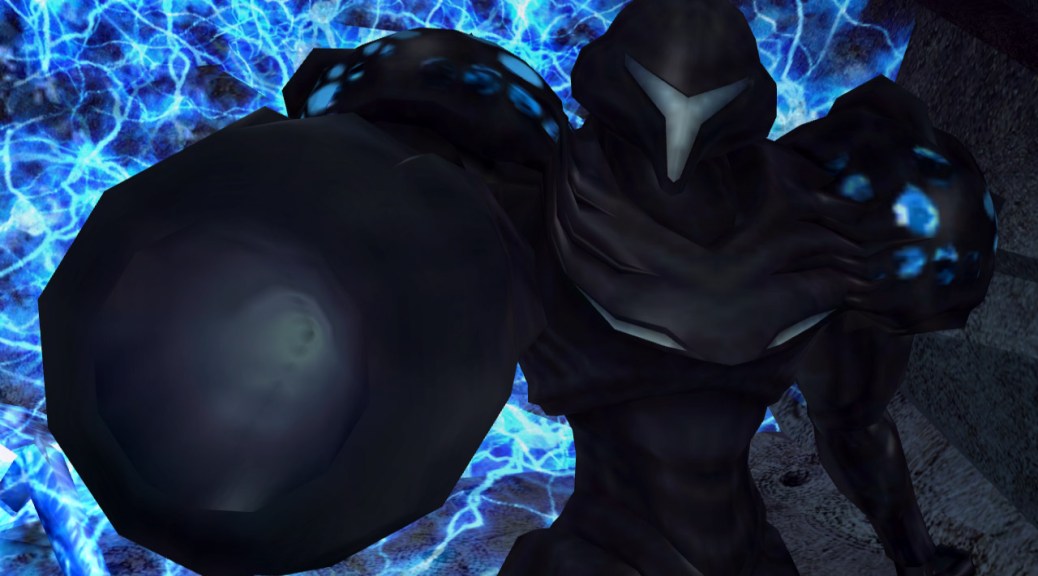
Metroid Prime 2: Echoes, GameCube
Developed by Retro Studios in collaboration with Nintendo, Metroid Prime 2: Echoes is the sequel to the classic Metroid Prime. It was first released in 2004 – to rave reviews – and it remains one of the best games ever made for the Nintendo GameCube.
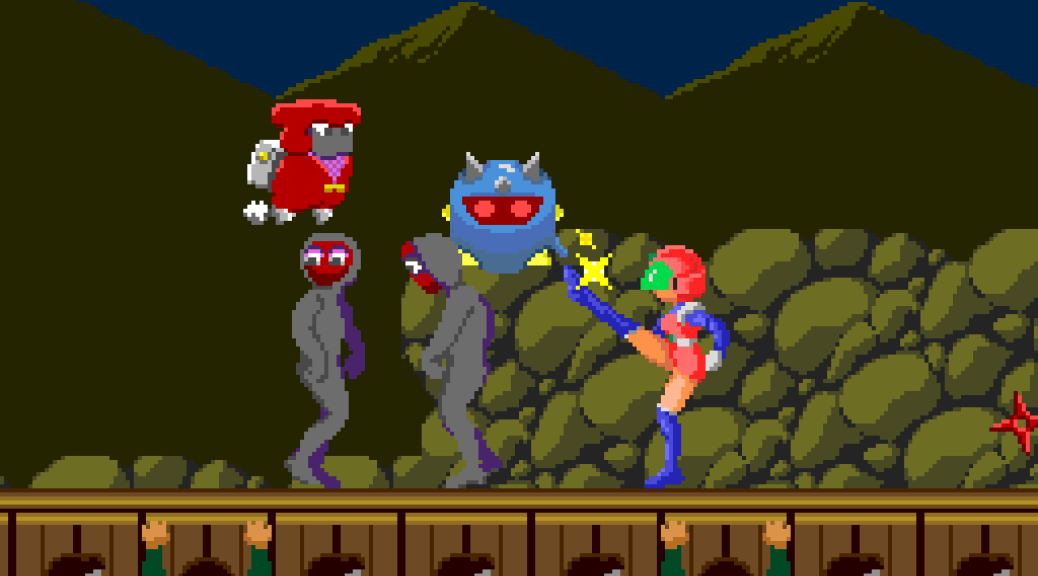
Wonder Momo, PC Engine
Developed by Namco and published – in Japan only – by NEC Avenue in 1989, Wonder Momo is a conversion of a weird Japanese arcade game featuring a female lead character who must fight off attackers during a theatre stage play. And, if that sounds bizarre, then – well – that’s because it is! Unlike the arcade original, the PC Engine version of Wonder Momo has been fan-translated into English and Spanish, so is more accessible to Western audiences.

Wonder Momo, Arcade
I first encountered Namco‘s Wonder Momo on the PC Engine, because it had received a fan translation, and I was curious to see what the game was about. I then discovered that it was a conversion of a 1987 arcade game, featuring a young girl called Momo, who can turn into a ‘superhero’ by building up her “Wonder Meter“.
This bizarre arcade game was only ever released in Japan, but has subsequently built up a cult following around the world, and has also inspired manga/anime, and resulted in a sequel that was released in 2014.
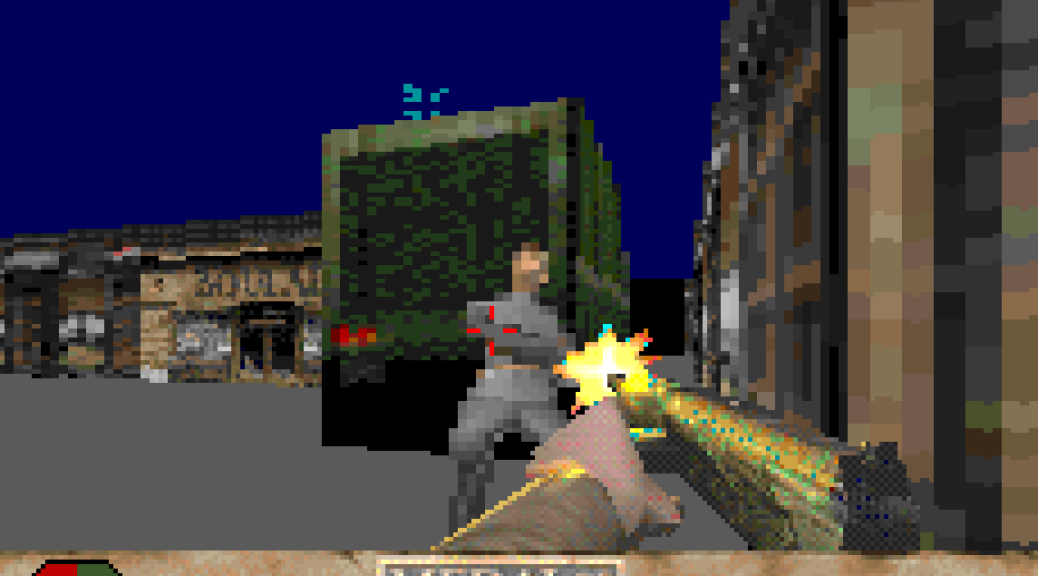
Medal of Honor: Underground, Game Boy Advance
Adapted from the PlayStation original (published in 2000 by EA Games), the GBA version of Medal of Honor: Underground was developed by Rebellion and published by Destination Software in 2002. It is a first-person shooter, set during The Second World War.
Continue reading Medal of Honor: Underground, Game Boy Advance
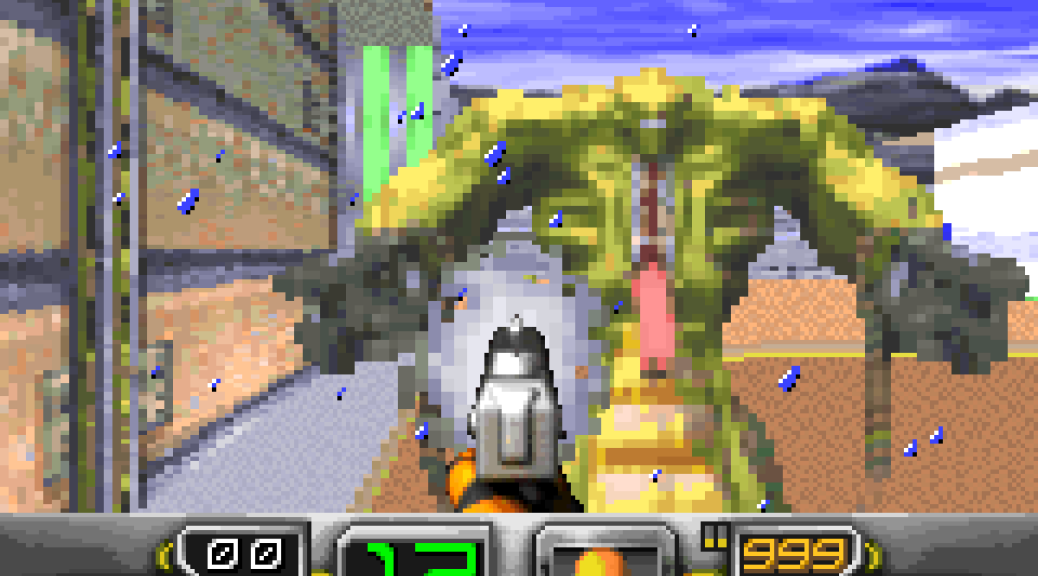
Dark Arena, Game Boy Advance
Developed by Graphic State and published by Majesco/THQ in 2002, Dark Arena is a first-person shooter set in a futuristic environment where you are the only survivor of a team sent in to neutralise a bunch of Genetically-Engineered Organisms (GEOs) inside a top secret training facility.

