
The SG-1000 version of Choplifter was published – in Japan only – by Sega in 1985, and it is surprisingly good. It’s actually one of the better versions of the first Choplifter, with decent controls and some unique features not seen in other versions.
Tag Archives: console
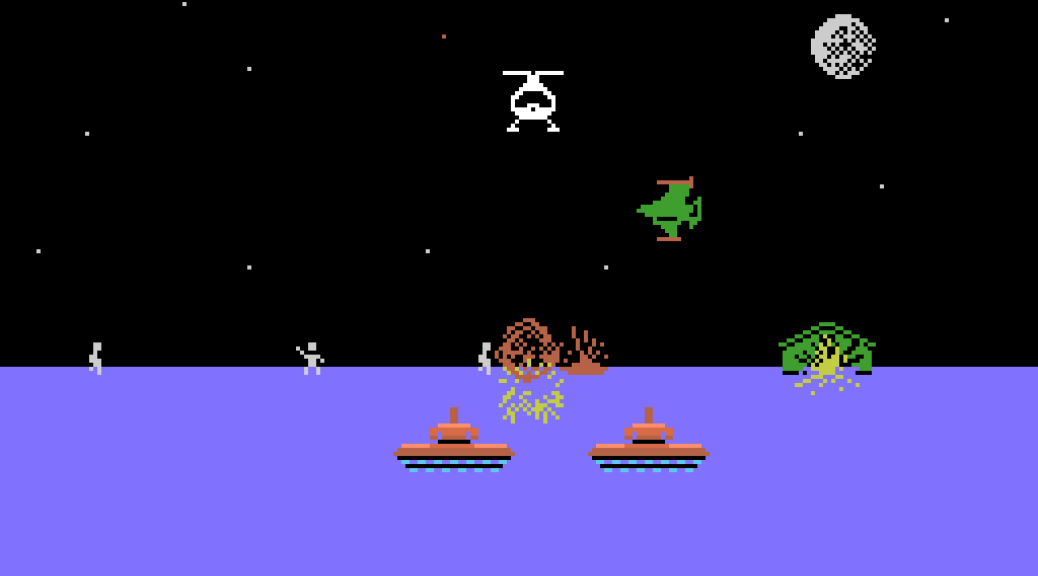
Choplifter, ColecoVision
I’m not quite sure what’s up with the 1984 ColecoVision version of Choplifter, but the game seems to run faster than any other version I’ve played. Arguably too fast…

Choplifter, Atari 5200
The Atari 5200 version of Choplifter – first published by Atari, Inc. in 1984 – is more or less identical to the Atari 8-bit version released for home computers. Which is a little disappointing, as you’d maybe hope that it’d be enhanced in some way.

Battletoads, NES/Famicom
Battletoads is a scrolling action game, developed by Rare and published by Tradewest in 1991. It satirises (and takes advantage of the popularity of) the Teenage Mutant Ninja Turtles, and features a group of cartoon toads, called Zitz, Rash and Pimple.
Two of the toads – Zitz and Rash – are on a mission to rescue their third member, Pimple, and Princess Angelica, both of whom have been kidnapped by the evil Dark Queen and taken to her planet. The toads fly to the planet in their spaceship and lower themselves down to the surface using their ‘Turbo Ropes’. From there they begin the fight to free their friends.

Ultimate Qix, Megadrive/Genesis
Released as “Volfied” in arcades, this sequel to the original Qix was re-named Ultimate Qix for its Sega Genesis release in North America in 1991. And – let’s face it – “Volfied” is a crappy name anyway, so it’s no great loss.
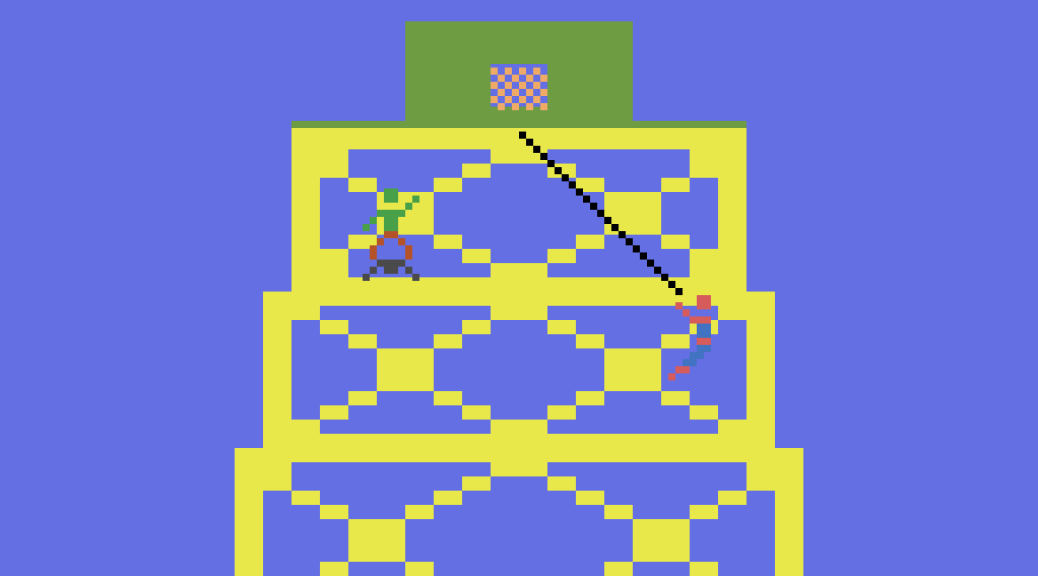
Spider-Man, Atari 2600
The 1982 release of Parker Brothers‘ Atari 2600 game, Spider-Man, was the first ever video game featuring a character licensed from Marvel Comics. And, of course, by extension, it was also the first officially-licensed Spider-Man game. But is it any good?

Moon Patrol Redux, Atari 5200
Moon Patrol Redux is a homebrew hack/remake of the Atari 5200 port of Moon Patrol – originally released in 1983, with this ‘Redux‘ version coming out in 2019 via Playsoft.
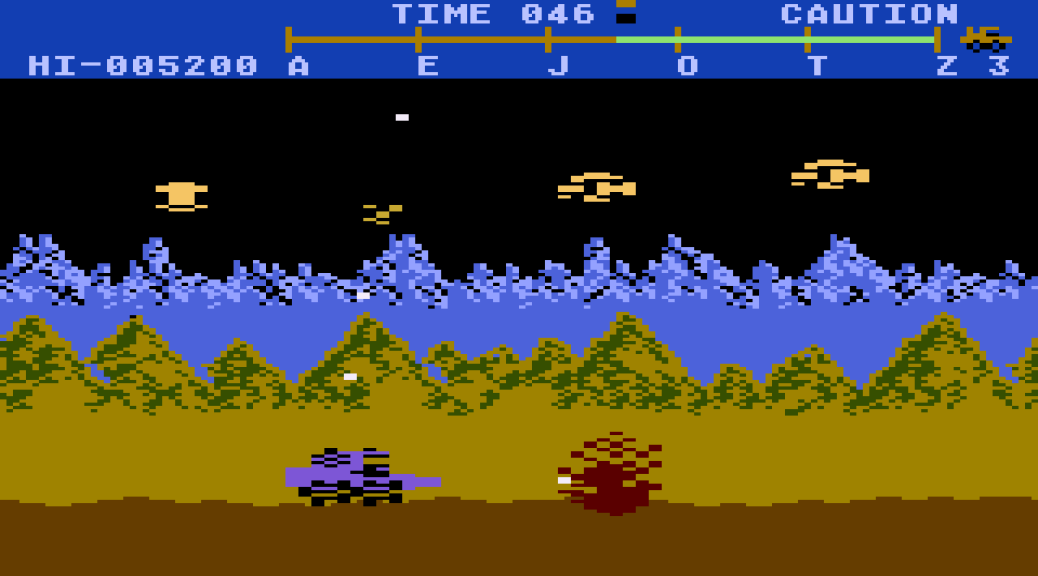
Moon Patrol, Atari 5200
Developed and published by Atari, Inc. in 1983, the Atari 5200 conversion of Moon Patrol is an adequate, but hardly ‘dazzling’, port of the classic Irem arcade game.

Kid Dracula, NES/Famicom
Known in Japan as “Akumajō Special: Boku Dracula-kun“, this cute and humorous Castlevania spin-off was initially released by Konami, in Japan only, in 1990, for the Nintendo Famicom. Numerous fan translations exist for the game, but it was also officially released in English for the first time – as “Kid Dracula” – in 2019, in the Castlevania Anniversary Collection. That’s the version I’m showing here.

Dungeon Master Nexus, Sega Saturn
Released exclusively in Japan for the Sega Saturn in 1998, Dungeon Master Nexus is a 3D dungeon-crawler based on the classic 16-bit RPG, Dungeon Master. And although FTL Games – the American developer of the original Dungeon Master – have been credited with creating this game, they actually had no involvement in the production of it. Dungeon Master Nexus was developed entirely in Japan, by Victor Interactive Software, and a fan translation into English was released in Sept 2023.

