Dawn of Souls is a GBA remake of the first two NES Final Fantasy games, and they take advantage of the Game Boy Advance‘s enhanced capabilities (enhanced over the NES, anyway).
Continue reading Final Fantasy I & II: Dawn of Souls, Game Boy Advance
Dawn of Souls is a GBA remake of the first two NES Final Fantasy games, and they take advantage of the Game Boy Advance‘s enhanced capabilities (enhanced over the NES, anyway).
Continue reading Final Fantasy I & II: Dawn of Souls, Game Boy Advance
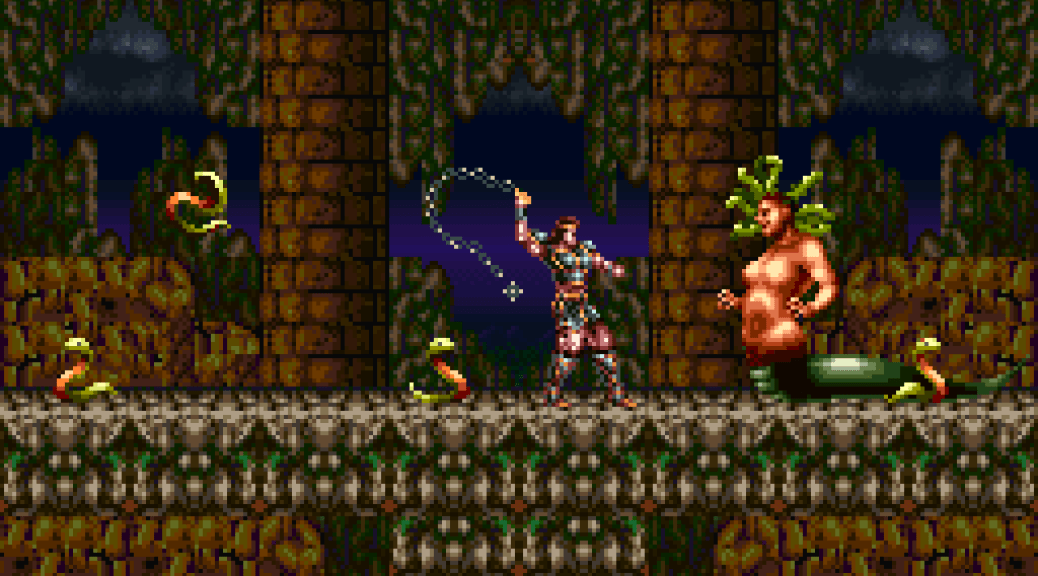
Released in 1991, Konami‘s Super Castlevania IV was one of the earliest releases for the Super Nintendo console – and one of the best.
Goof Troop is an attempt at a Disney-based Zelda-style game, by famed Japanese developer Capcom. It’s based on a ’90s television series of the same name and was first released in 1993.
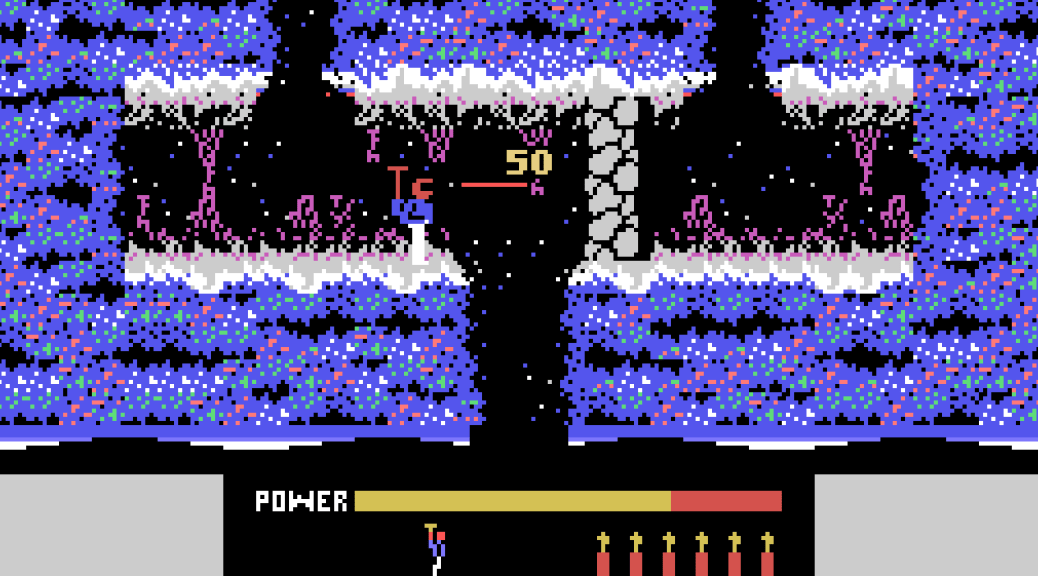
The ColecoVision version of the classic rescue game, H.E.R.O., looks quite similar to the Commodore 64 version, in that: the graphics are a little rough around the edges.
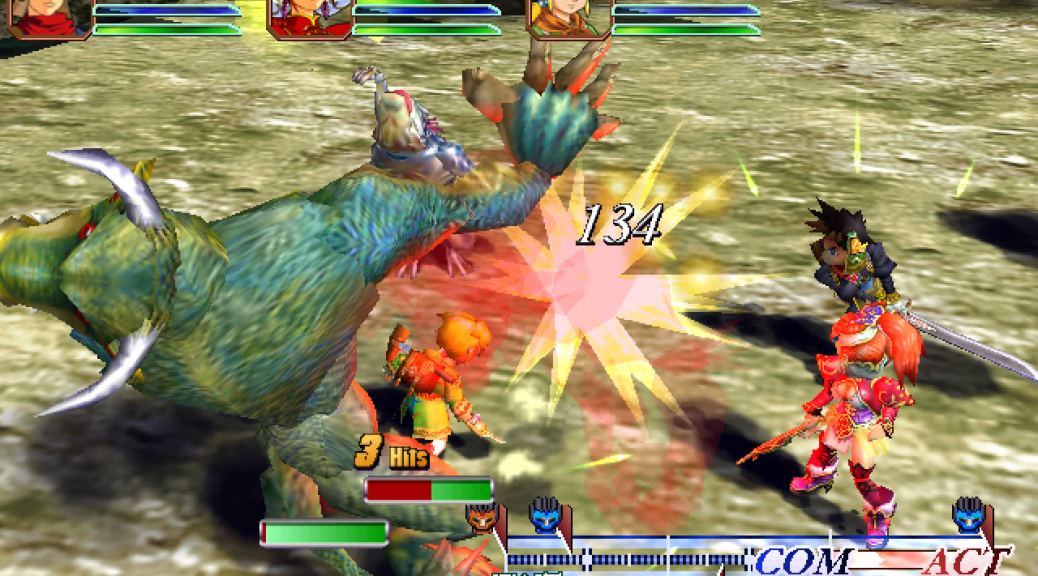
Grandia II was released in August 2000 in Japan for the Sega Dreamcast. It follows the same template as the first Grandia game, except this time with full 3D graphics (the first Grandia mixed 2D and 3D). And – as Grandia II was made by many of the same people who made the first game – it’s not surprising that it’s similar.
A direct follow-up to the classic Megadrive game, Shining in the Darkness, and arguably the best level-grinder on the Sega Saturn, the awkwardly-titled Shining the Holy Ark is a superb first-person, party-based RPG with turn-based combat.
Released in 1998, Fallout 2 is a sequel developed by Black Isle Studios, for Interplay, and using mostly the same post-apocalypse setting, graphical style, and game mechanics, of the first game.
Interplay‘s 1997 release, Fallout, began its existence as a post-apocalyptic Role-Playing Game based on the Steve Jackson “GURPs” ruleset, and also as the ‘spiritual successor’ to the classic 8-bit RPG, Wasteland.
Trees, trees, and more trees! That’s what you get when you explore the ancient island kingdom of Arborea. And with a name like that it is no surprise.
Crystals of Arborea is a real-time, first-person, tile-based, party-driven RPG with combat, exploration, and day/night scenes where the colours cycle to give you a nice atmospheric setting.
Crystals of Arborea is the predecessor to the Ishar series of games. It’s a first-person, tile-based RPG, with a character-based party system and turn-based combat.