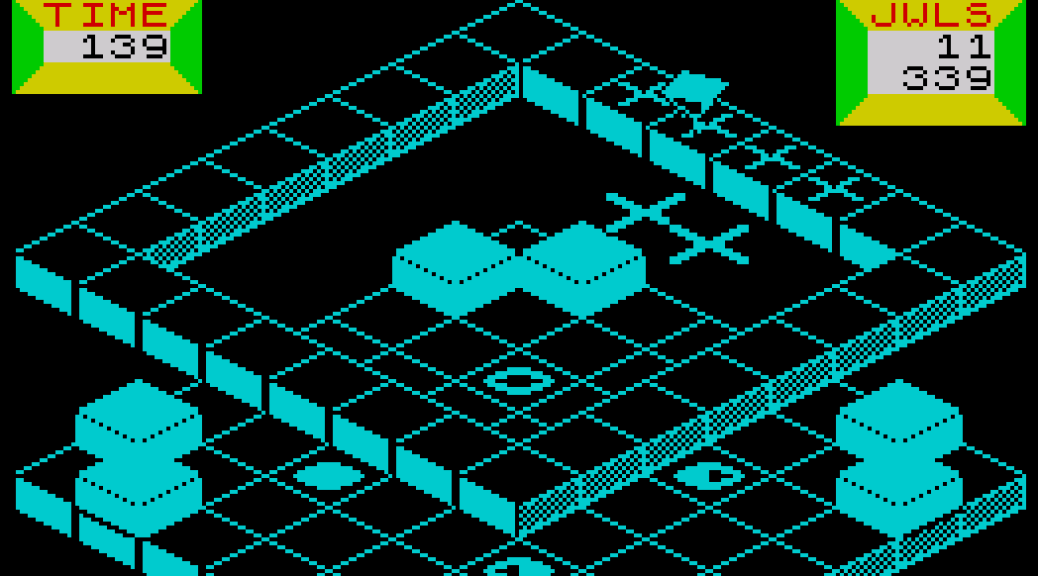
Originating on the Amstrad CPC, Spindizzy is a genius piece of coding and game design. It is an isometric exploration game, where you play as a spinning gyroscope (called GERALD) trying to collect gems across a large map of screens. It was designed by Paul Shirley, and the Spectrum port was handled by Phil Churchyard. Spindizzy on the Spectrum was published by Electric Dreams in 1986.
Tag Archives: jewels
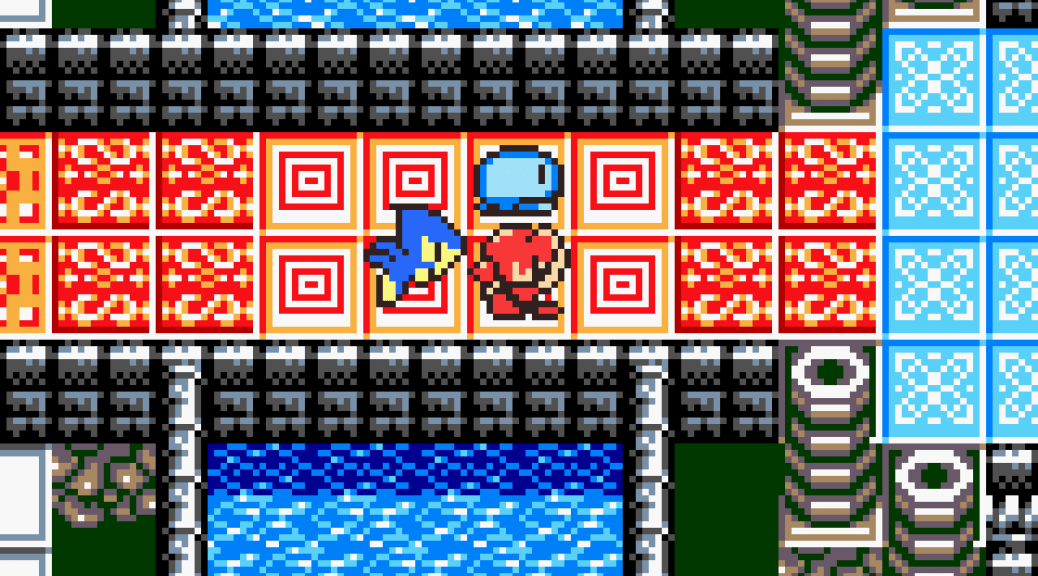
Azure Dreams, Game Boy Color
The PlayStation version of Konami‘s Azure Dreams is an excellent level-grinder, and this Game Boy Color version is also very good, but differs somewhat from the original.
It still takes place in the provincial city of Monsbaiya, and you are still a Monster Hunter. Whereas the PlayStation version uses a 3D isometric viewpoint, this one instead goes for an overhead, 2D view. With titchy characters and intricately-detailed locations rendered as flat pixel art.

Azure Dreams, PlayStation
Developed by Konami Computer Entertainment Tokyo (KCET) and published by Konami in 1997, in Japan, and in 1998 in North America and Europe, Azure Dreams is a ‘Roguelike’ Role-Playing Game about a young boy who wants to become a Monster Hunter.
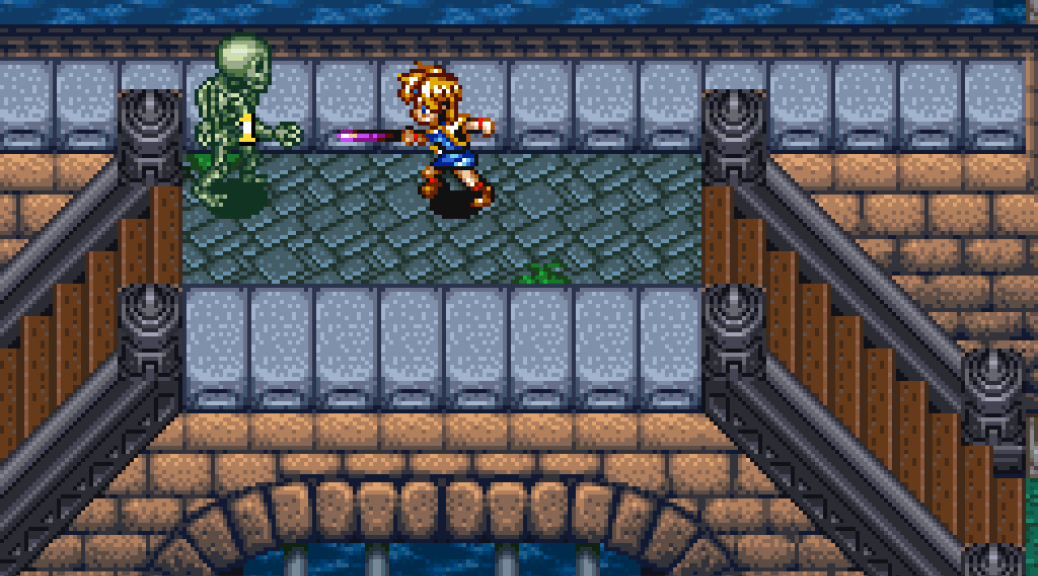
Illusion of Gaia, Super Nintendo
Developed by Quintet and published by Enix in Japan in 1993, and by Nintendo, everywhere else, in 1994 and ’95. The later ‘Westernised‘ version was censored in places, but there are some good fan-patches of the uncut Japanese version available in English.
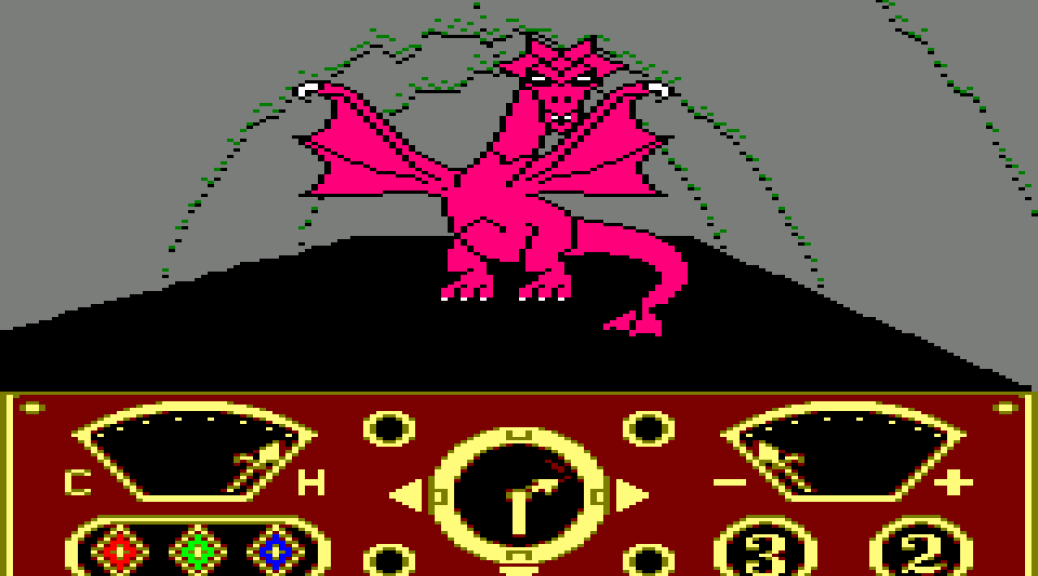
The Eidolon, Amstrad CPC
Adapted by P.A.W. Software, the Amstrad CPC version of The Eidolon is another excellent port of Lucasfilm Games‘ classic cave exploration game. It was first released by Activision in 1986 and could be argued is one of the best games on the Amstrad (although some would disagree).
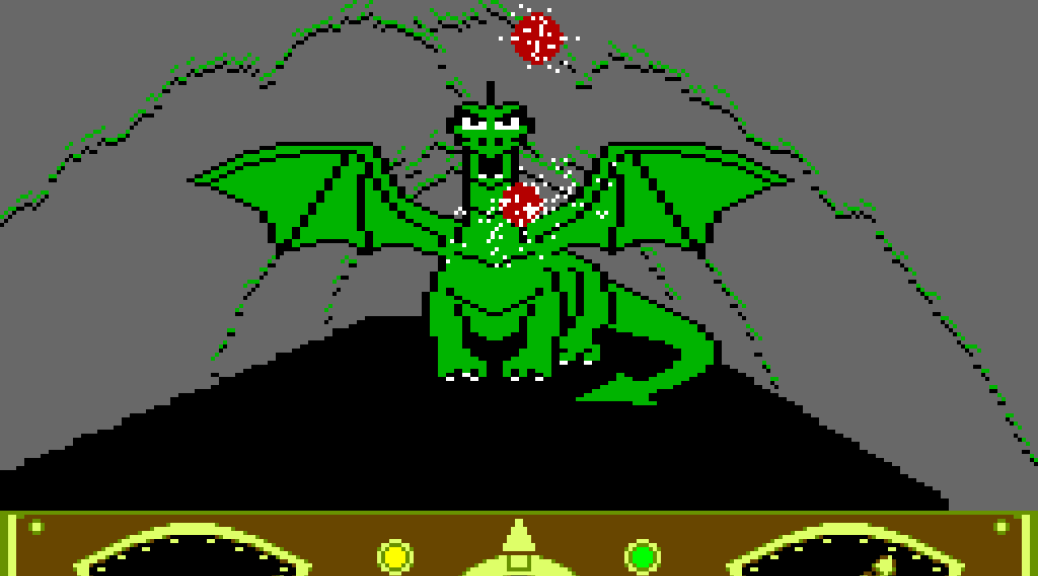
The Eidolon, MSX
The MSX version of Lucasfilm Games‘ The Eidolon was published in Japan only – on cartridge – by Pony Canyon in 1986, and it is on-par with the original Atari 8-bit and Commodore C64 originals of this classic cave exploration game.

The Eidolon, ZX Spectrum
I didn’t even know that Lucasfilm Games‘ classic 8-bit fantasy exploration game, The Eidolon, was available for the ZX Spectrum until recently. It was ported to the Spectrum by P.A.W. Software and first published by Activision in 1986. And this is my first time playing it.

The Eidolon, Commodore 64
The Commodore 64 version of Lucasfilm Games‘ The Eidolon came out just after the Atari 8-bit original, in 1985. The game divided critics, but in my opinion it is an atmospheric and unusual cave exploration game, with weird-looking monsters and scary-looking dragons, and is still worth playing today.

Crypt Killer, Arcade
Crypt Killer is a three-player, horror-themed lightgun shooter that was first distributed into arcades by Konami in 1995. It uses 3D polygonal graphics for the backgrounds and 2D scaled sprites for the enemies and objects. In some respects it is Konami‘s attempt at producing a House of the Dead-style shooter, although in my humble opinion it isn’t as good as Sega‘s famous horror shooter series.

The Eidolon, Atari 8-Bit
Using an enhanced version of the fractal engine created for Rescue On Fractalus, The Eidolon is a first-person action game – developed by Lucasfilm Games and published by Epyx in North America in 1985 and Activision in Europe in 1986 – that divided critics when it was first released. While Zzap!64 magazine gave it 97% and a gold medal; raved about the game, and said that it was “not to be missed“, the reviewers of Computer Gaming World disliked it, describing it as “one of the worst games of 1986“… There’s no accounting for taste…

