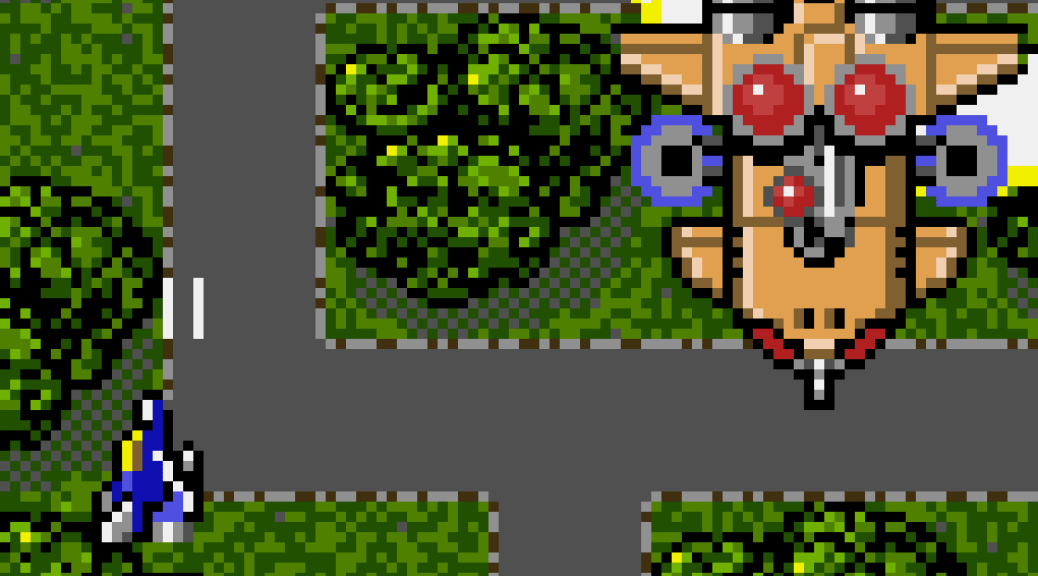
The original Raiden, developed by Seibu Kaihatsu and published by Tecmo, came out in arcades in 1990. This handheld conversion wasn’t released until 1997 – well after Atari had discontinued the Lynx. And even then the game was only available by direct order, and through a few select retailers. It’s still available to buy now, at the time of writing.
Tag Archives: 1997
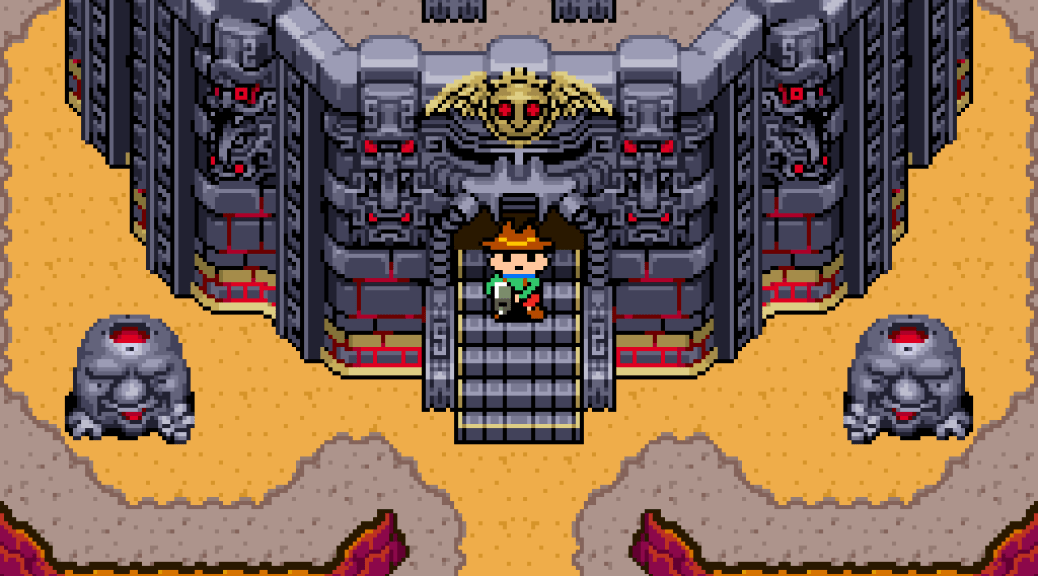
Gunple: Gunman’s Proof, Super Nintendo
Gunple: Gunman’s Proof was developed by Lenar and published by ASCII Corporation in 1997. It was one of the last games to be released for the SNES and was only ever released in Japan. An English fan translation does exist, though, which means that non Japanese speakers can enjoy this wonderful game.
In essence, Gunple could be described as ‘Zelda with guns’ or a ‘Wild West Zelda‘, because – graphically – the game does have a lot of similarities to Nintendo‘s classic A Link To the Past. In fact: some of the background graphics, in my opinion, appear to have been lifted from the aforementioned Zelda game, which in reality is no bad thing.

Neo Bomberman, Neo Geo
Every home console had to have a version of Bomberman, and the Neo Geo had one too.
Actually, technically that’s not true, because – while Neo Bomberman did get a Neo Geo release – it was only ever for the MVS (arcade system). It was never officially released for the AES (home system). So only ever appeared in arcades. And that was mostly just in Japan.
Neo Bomberman was sold into some countries outside of Japan, although when the game is played on a European system the text is displayed in Spanish and not English.
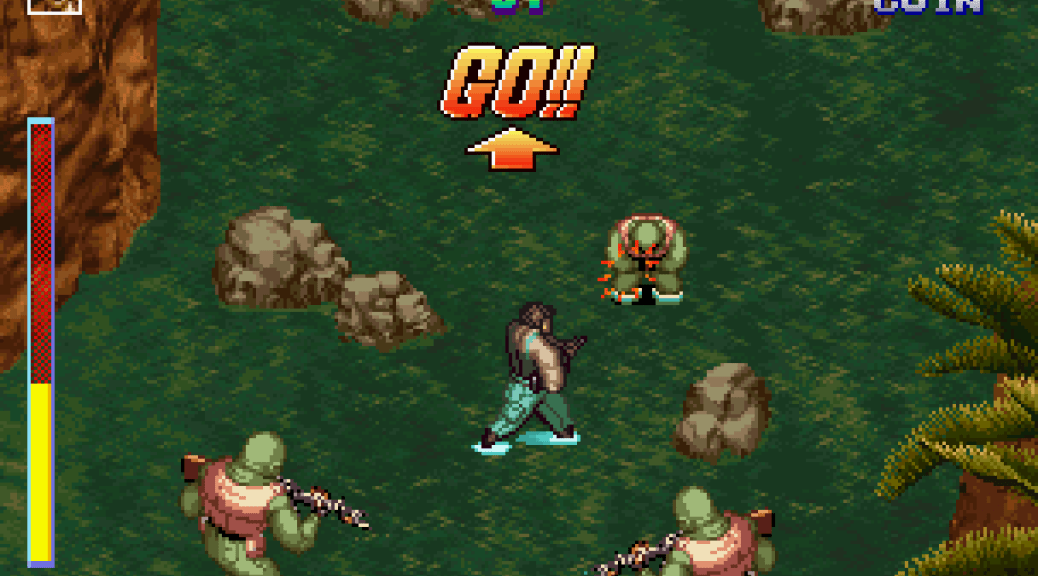
Shock Troopers, Neo Geo
Shock Troopers is a one or two-player, over-the-top arcade shooter developed by Saurus in 1997. It is a mixture of overhead and isometric style Run-and-Gun action – similar in some respects to Total Carnage and Caliber .50.

Micro Machines V3, PlayStation
The third Micro Machines was released in 1997 for the Sony PlayStation. In V3 the environments and vehicles are all 3D-modelled, and the action is displayed at a slightly tilted angle, rather than directly overhead.
The same excellent gameplay mechanics of the previous games have been retained though. Mostly revolving around getting ahead of your opponents in order to push them off-screen.

Realms of the Haunting, PC
I have to admit that, in spite of the slightly wonky graphics/cut scenes, I have a real soft spot for Gremlin Interactive‘s 1997 PC MS-DOS release, Realms of the Haunting. Mostly because I was lucky and got to visit Gremlin‘s offices in Sheffield to see the game in production, and to talk to the people who were making it. I drove all the way from Bournemouth – where I worked as a video games magazine editor – and spent an entire day there to preview the game for PC Power magazine.

Shining the Holy Ark, Sega Saturn
A direct follow-up to the classic Megadrive game, Shining in the Darkness, and arguably the best level-grinder on the Sega Saturn, the awkwardly-titled Shining the Holy Ark is a superb first-person, party-based RPG with turn-based combat.

Fallout, PC
Interplay‘s 1997 release, Fallout, began its existence as a post-apocalyptic Role-Playing Game based on the Steve Jackson “GURPs” ruleset, and also as the ‘spiritual successor’ to the classic 8-bit RPG, Wasteland.
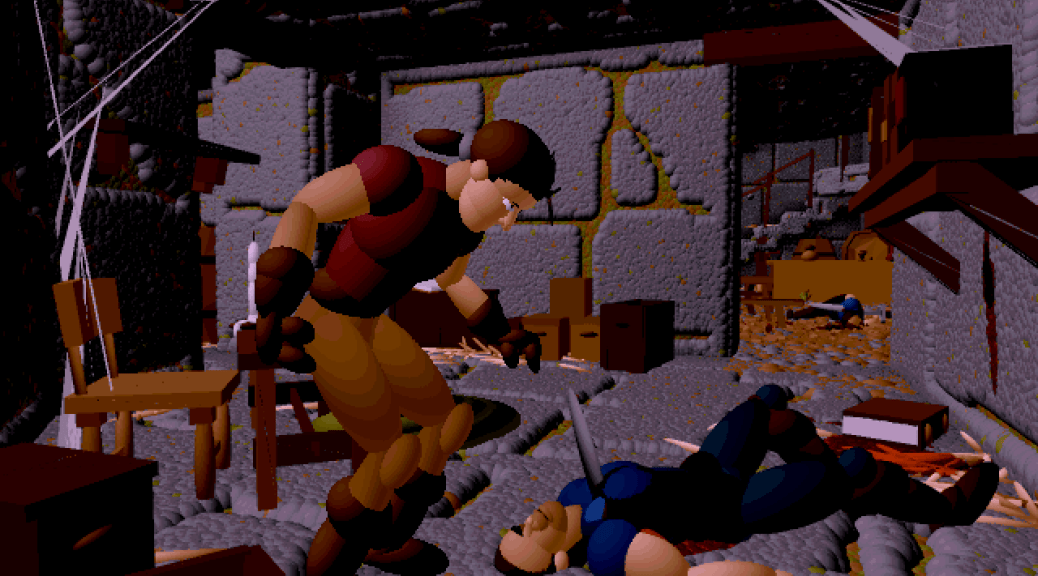
Ecstatica II, PC
This sequel to Andrew Spencer Studios‘ brilliant Ecstatica is a worthy survival horror game in its own right. In it you play a knight trapped inside a gigantic castle full of monsters and must fight your way out to freedom.

Final Fantasy VII, PlayStation
Final Fantasy VII is a legendary level-grinding Role-Playing Game, developed by Square and released for the Sony PlayStation in 1997.
While the Final Fantasy series had grown in stature throughout the 1990s, it was this seventh instalment that broke Japanese CRPGs into the mainstream, with its outstanding mix of 3D, polygonal graphics, Full Motion Video, and pre-rendered backgrounds.
 The King of Grabs