
The Megadrive/Genesis version of Sensible Software‘s classic Cannon Fodder is not the one I think of when I think “Cannon Fodder“, but it’s actually a really good port. The game was converted by PanelComp, who also made the excellent SNES version, and it too supports mouse play. Which is important, because without using a mouse it’s impossible to attain the right kind of intensity needed to play Cannon Fodder properly. IMHO.
Tag Archives: water

Cannon Fodder, Super Nintendo
The Super Nintendo version of Cannon Fodder was coded by Andy Onions, John Rocke and Steve Caslin, with graphics conversion by Doug Townsley and sound and music adaptation by Allister Brimble. The SNES port was published by Virgin Interactive Entertainment in 1994 and you’ll be pleased to know that it does indeed support the use of the SNES mouse, which makes all the difference.

Cannon Fodder, 3DO
Sensible Software‘s classic point-and-click shooter, Cannon Fodder, was ported by Krisalis Software and released for 3DO systems in 1994 by Virgin Interactive. And it is a playable and accurate port of the original, but unfortunately there doesn’t seem to be any mouse support – you can only play the game using a gamepad. Which is a little disappointing because Cannon Fodder was designed to be played with a mouse. Thankfully it still works okay with a gamepad*.

Cannon Fodder, PC
The MS-DOS version of Cannon Fodder was ported by Audio Visual Magic Ltd., and was not the first version of Cannon Fodder released (as some seem to think – I’m looking at you, Moby Games). No – the original version of Cannon Fodder was the Amiga version, which was developed by Sensible Software themselves.

Zarlor Mercenary, Atari Lynx
Zarlor Mercenary is a single or multiplayer vertically-scrolling “bullet hell” shooter that was developed by Epyx and released exclusively for the Atari Lynx in 1990. The game plays in landscape (horizontal) format, and the background scrolls horizontally too.
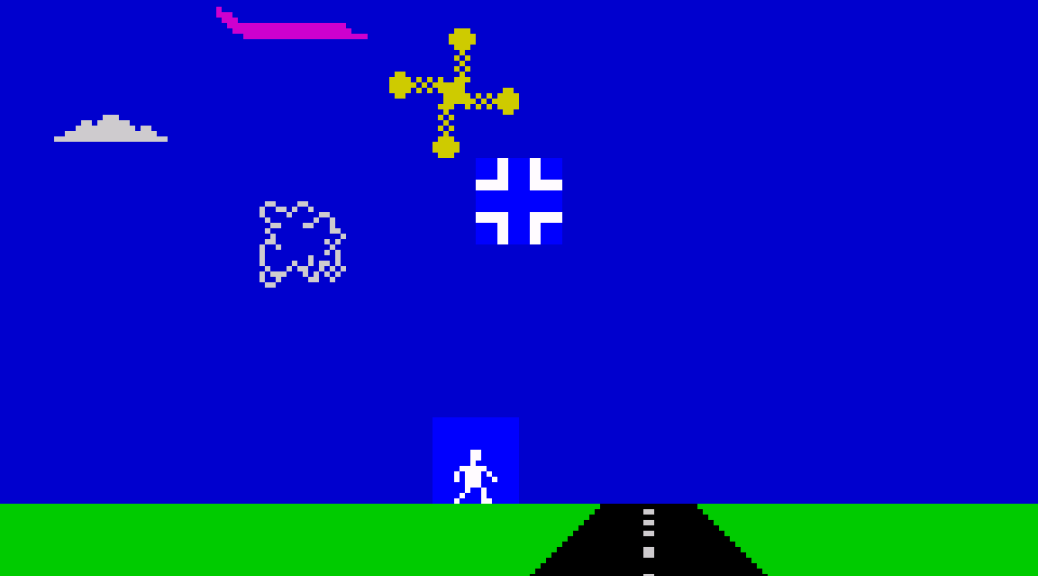
Zzoom, ZX Spectrum
Written by John Gibson and published by Imagine Software in 1983, Zzoom is a simple first-person shoot ’em up where the aim is to protect refugees from attacking enemy forces.

The NewZealand Story, FM Towns
A conversion of the classic Taito arcade game, featuring the cute Kiwi (Tiki), trying to rescue his girlfriend (Phee Phee) and his other Kiwi friends, from the blue leopard seal who has kidnapped them. The FM Towns version was first released in 1989 by Ving and was ported by Taito themselves.

Chaos Strikes Back, FM Towns
Chaos Strikes Back is a continuation of the classic Role-Playing Game, Dungeon Master. It’s a sequel – but not the sequel – to the first game, and was originally released as a stand-alone expansion disk on the Atari ST. On the FM Towns it was published on CD-ROM by Victor Musical Industries in 1990, and there’s a bit of faffing around to do before you can actually start the game*. Thankfully you can at least do this in English as there’s an option to play in that language.
*= Before you can play Chaos Strikes Back you must either create a new party (by entering the prison and choosing from the available portraits), and then save it to a new 720Kb floppy disk; or load a set of characters from a pre-existing FM Towns Dungeon Master save. You then need to enter the CSB portrait editor utility program and then click on ‘Make New Adventure’ to activate and save a new Chaos Strikes Back file to the disk. Only then will you be able to load and start the game…

Kirby’s Dream Land 3, Super Nintendo
Kirby’s Dream Land 3 was developed by HAL Laboratory and published by Nintendo in 1997. It is the successor to Kirby’s Dream Land 2 on the Game Boy, and was the first and only Dream Land adventure on the Super NES.
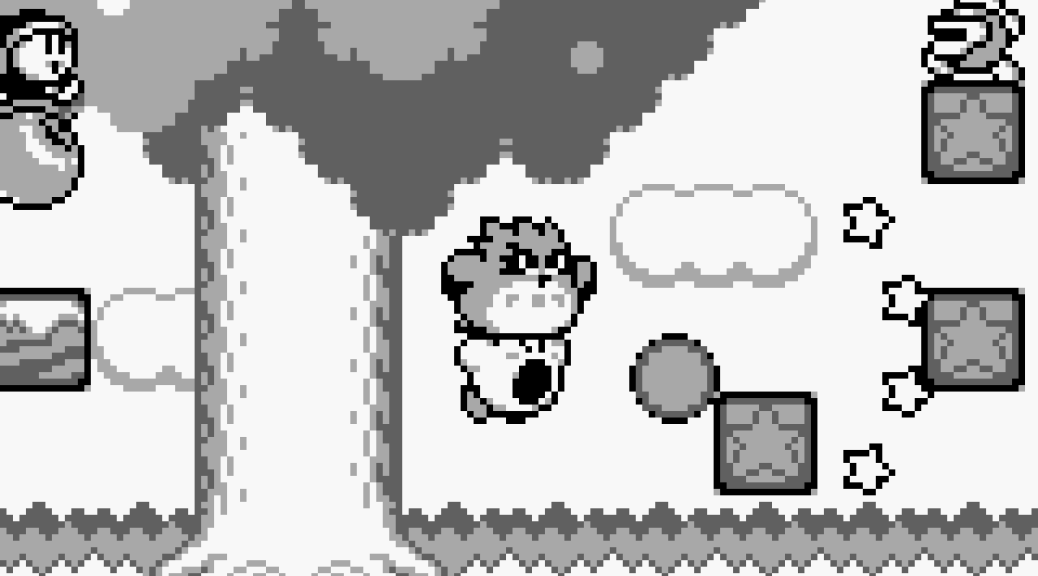
Kirby’s Dream Land 2, Game Boy
First released in 1995 for the original Game Boy, Kirby’s Dream Land 2 continues the adventures of Kirby – after Kirby’s Dream Land and Kirby’s Adventure – adding three new animal friends to help Kirby as he sets out on a quest to restore seven stolen rainbow bridges and defeat the evil force known as “Dark Matter“.
 The King of Grabs