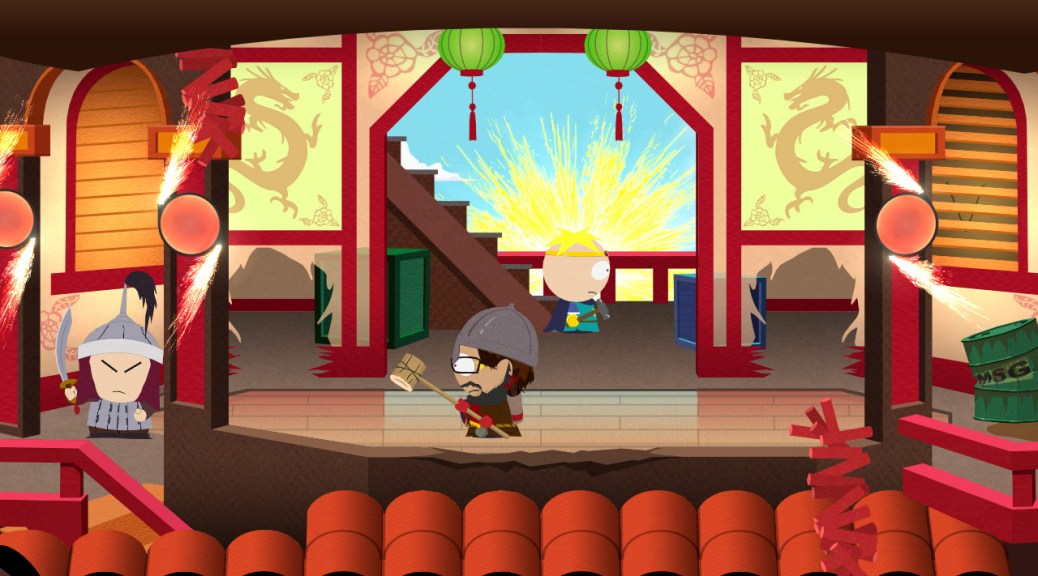
South Park: The Stick of Truth is a – gasp – turn-based RPG based on the popular South Park animated series. It was developed by Obsidian and published by Ubisoft in 2014. It was co-written by Trey Parker and Matt Stone, co-creators of South Park, and is a hilarious level-grinder with tons of detail, loads of quests, graphics that are identical to the TV show, and all the voices that South Park fans have come to know and love (most provided by Stone and Parker).
Tag Archives: humour
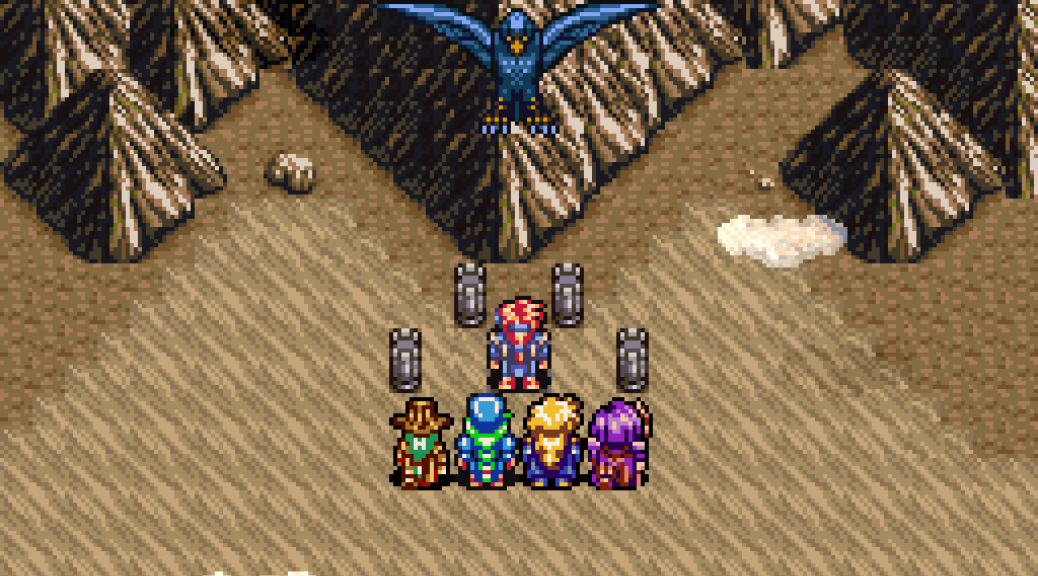
Emerald Dragon, Super Nintendo
Emerald Dragon is a Japan-only RPG that was developed by Alfa System and published by MediaWorks for the Super Nintendo in 1995. It was given an English fan translation (by Translation Corporation) in 2014, which is great because it is an excellent game!

Wario: Master of Disguise, Nintendo DS
Wario: Master of Disguise was developed by Suzak and published for the Nintendo DS by Nintendo in 2007. It utilises dual screens (of course), and also requires use of the DS touchscreen when playing.

Pepsiman, PlayStation
Now here’s a game that’ll make you laugh out loud… Pepsiman by Japanese developer Kindle Imagine Develop (aka KID). It was only ever released in Japan, although the game is entirely in English and features full motion video segments in English too.
Pepsiman was the Japanese Pepsi mascot who appeared in TV commercials for the famous soft drink manufacturer in the mid-to-late 1990s. He apparently became quite popular in Japan so naturally someone decided to make a video game based on him, and the resulting game is pretty funny. Pepsiman (the game) was apparently made on a low budget and sold for a low price when it came out, although I can’t find a reference to how much it sold for. If it was for the Japanese equivalent of less than ten pounds, then it was an okay purchase!

Revelations: Persona, PlayStation
Revelations: Persona is the first game in the Persona series, which is a spin-off from the Shin Megami Tensei series, and was first published by Atlus for the PlayStation in 1996. It was actually the first game in the entire Megami Tensei series to be officially released in the West.

APB, ZX Spectrum
Another fine conversion of Atari‘s classic arcade game, APB (All Points Bulletin), this time converted by Walking Circles for Tengen and first published by Domark in 1989.

Rapscallion, ZX Spectrum
Rapscallion is a bizarre and humorous action adventure written by Albert Ball and published by Bug-Byte for the ZX Spectrum in 1984.
You play an un-named king who has had his crown and castle seized by his arch enemy, Rapscallion the Rogue. Rapscallion has thrown you into the dungeon to rot, but you are saved by your friend, The Fairy Princess, who transforms you into a bird and grants you six lives. This allows you to begin your quest for revenge…

Shin Megami Tensei II, Super Nintendo
Shin Megami Tensei II is the direct sequel to Shin Megami Tensei and was first published in Japan in 1994 by Atlus.
While the basic gameplay is essentially the same as before, with tile-based movement and first-person combat sections, overhead city map sections, and magic, occult and religious themes, the developers deliberately chose not to connect this sequel directly to its predecessor, so story-wise it is somewhat different, being set in the far-flung future.

APB, Atari Lynx
This 1991 handheld conversion of Atari‘s classic APB (All Points Bulletin) arcade game is actually rather good. It might have titchy graphics, and also lack the useful vertical screen orientation of the original, but the developers (Quicksilver Games, Inc.) did a fine job of translating the fun scrolling gameplay to the small Lynx screen.

Shadow Warrior, PC
This remake of the classic Build engine shooter, Shadow Warrior, was developed by Flying Wild Hog and first released in 2013.
Like the original, it’s a hectic, balls-to-the-wall shooter that follows the exploits of a guy called Lo Wang and his fight against his boss, Orochi Zilla, and the mega corporation he commands (Zilla Industries).
I’ve played the second game extensively and really enjoyed it, so decided to buy this and see if it was any different. And it is!
 The King of Grabs