
Released for the Game Gear in 1991, Sonic the Hedgehog is a handheld-specific version of the classic Megadrive game featuring Sega‘s famous blue mascot who is battling Dr. Robotnik to free the animals he’s kidnapped.
Tag Archives: elevators

Wario: Master of Disguise, Nintendo DS
Wario: Master of Disguise was developed by Suzak and published for the Nintendo DS by Nintendo in 2007. It utilises dual screens (of course), and also requires use of the DS touchscreen when playing.

Infiltrator, Atari 8-bit
Infiltrator is a classic helicopter action game designed and programmed by Chris Gray and published in 1986 by US Gold (in Europe) and Mindscape (everywhere else).
The aim is to fly a chopper (called the Gizmo DHX-3) to an enemy compound, then infiltrate the base on one of three separate missions. Each mission is split into two halves: a first-person flying game, then an isometric stealth/exploration game.
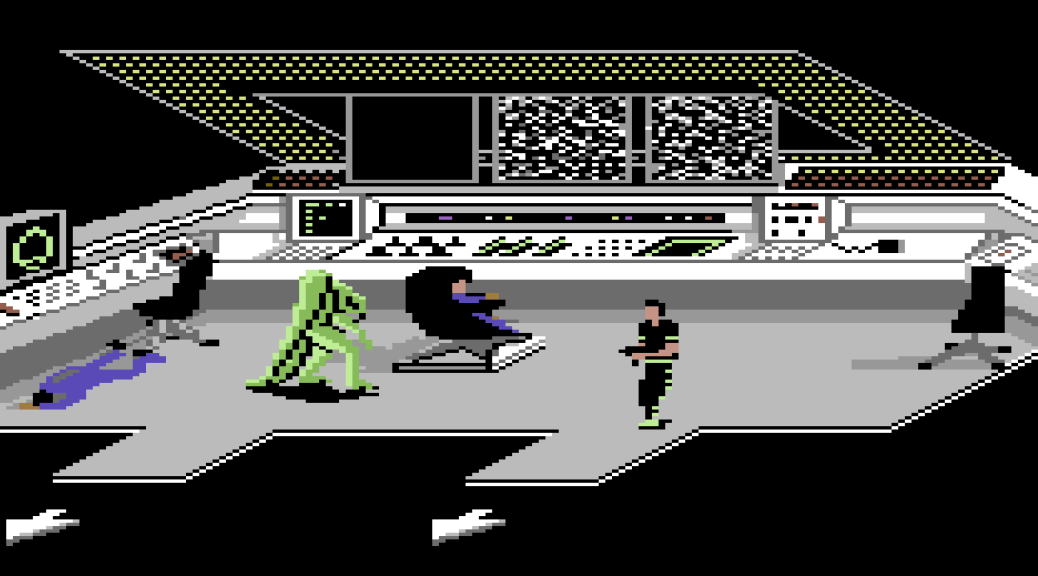
Project Firestart, Commodore 64
Developed by Dynamix and published by Electronic Arts in 1988, Project Firestart is a science fiction survival horror game set on a research station orbiting Saturn’s moon, Titan, in 2061. It is considered to be one of the first survival horror games ever made, and is often cited as pioneering many conventions of the genre.
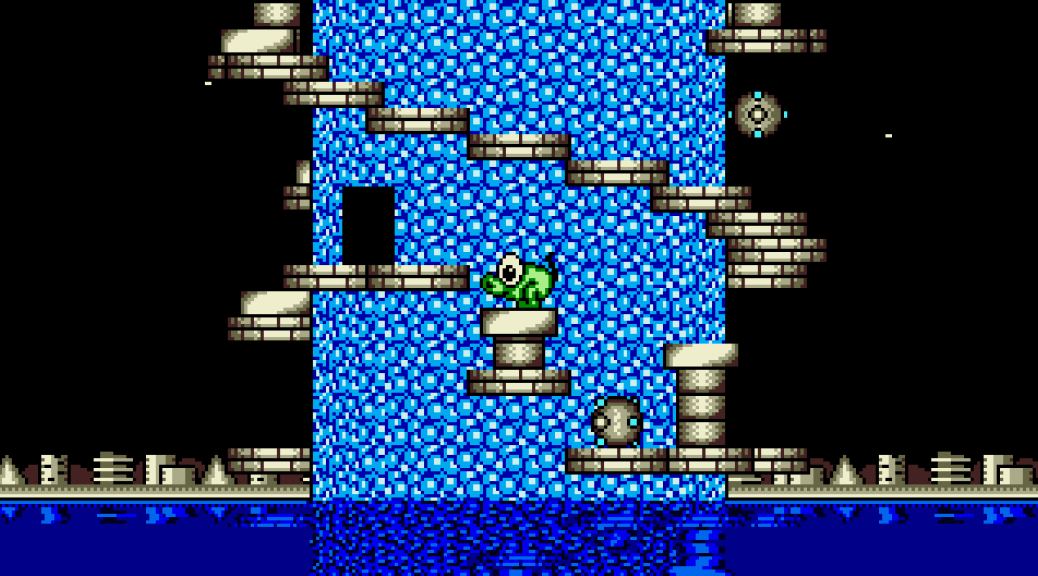
Nebulus, Archimedes
John Phillips‘ brilliant platform puzzler, Nebulus, made a welcome appearance on the Acorn Archimedes courtesy of Krisalis Software in 1987.

Out to Lunch, Super Nintendo
Or, to give the game its full title: Pierre le Chef is… Out To Lunch. This side-scrolling platform game is all about a French chef trying to collect ingredients for his dishes by travelling to a variety of different countries to catch them.
The 1993 Super Nintendo version is the original, with the Amiga and CD32 ports coming later, in 1994. A Game Boy version was also released in 1993.

Fantasy World Dizzy, ZX Spectrum
The third Dizzy adventure, Fantasy World Dizzy, was again designed by The Oliver Twins with graphics by Neil Adamson. It was published by Codemasters in 1989, initially for the ZX Spectrum, but also later for all the major formats at the time (Amstrad CPC, C64, Amiga, ST, and MS-DOS).
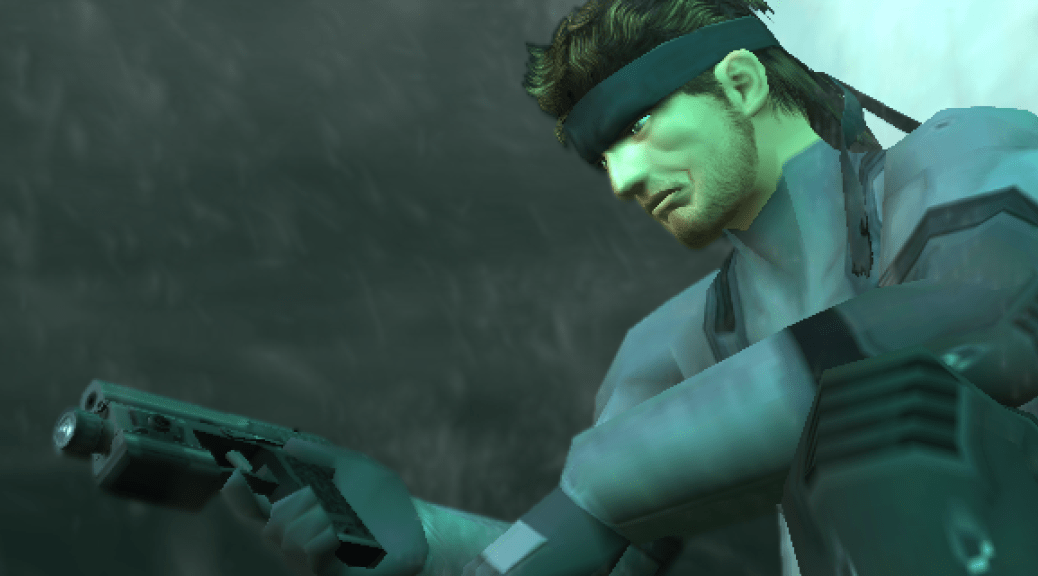
Metal Gear Solid 2: Substance, XBox
Metal Gear Solid 2: Substance is an expanded version of Metal Gear Solid 2: Sons of Liberty (which was released for the PlayStation 2 in 2001). Substance was released for the XBox by Konami in 2002.
It’s the fourth Metal Gear game co-written and designed by Hideo Koijima and the seventh game in the series as a whole.

Metal Gear Solid, PlayStation
Metal Gear Solid is an award-winning tactical espionage action game focusing on stealth gameplay and it was first released by Konami in 1998. It was directed, produced and written by Hideo Koijima and follows on from the MSX games Metal Gear and Metal Gear 2: Solid Snake.
You play as codename “Solid Snake“, a legendary American soldier who infiltrates a nuclear weapons facility in order to neutralise a terrorist threat who are threatening a nuclear strike on The White House. Snake must sneak around, liberate hostages and stop the terrorists from launching the strike, all the while avoiding enemy contact as much as possible and gathering information about the situation.

Metal Gear 2: Solid Snake, MSX
Metal Gear 2: Solid Snake is a direct sequel to the original Metal Gear and was first released for the MSX2 by Konami in 1990. It was again written and designed by Hideo Koijima and is much better than the half-baked pseudo sequel, Snake’s Revenge, by Ultra Games on the NES.

