
Did you know that there are two completely different versions of Marble Madness on the Megadrive/Genesis? The European Megadrive and North American Genesis versions of Marble Madness were published by Electronic Arts in 1991. They were coded by Michael Schwartz, with sound and music by Steve Hayes, and while they’re excellent ports of the classic arcade game, they’re nowhere near as good as the superior Japanese version, which is a completely different game.
Tag Archives: Electronic Arts

Marble Madness, Amiga
The Amiga version of Atari Games‘ classic arcade game, Marble Madness, was converted by Larry Reed and published by Electronic Arts in 1986. It is one of those relatively early 16-bit ports that is a little rough around the edges, presentation-wise, but plays perfectly well.

Shadow of the Beast, Megadrive/Genesis
The Megadrive/Genesis conversion of Shadow of the Beast was developed by WJS Design* and published by Electronic Arts in North America and Europe in 1991 (Victor Interactive Software in Japan in 1992). It’s arguably one of the best versions of Shadow of the Beast out there.

Shadowcaster, PC
Shadowcaster is a first-person fantasy-based action game developed by Raven Software and published by Origin Systems in 1993 for MS-DOS (Electronic Arts published it in Europe). The game uses a modified version of the 3D engine used in Wolfenstein 3D, with icons and point-and-click adventure and RPG elements.

Syndicate, Amiga
The Amiga version of Bullfrog‘s classic tactical action game, Syndicate, came out at more or less the same time as the original PC version, and – as good as the game is – I have to say that it is not as good as the MS-DOS version, and I’ll explain why…
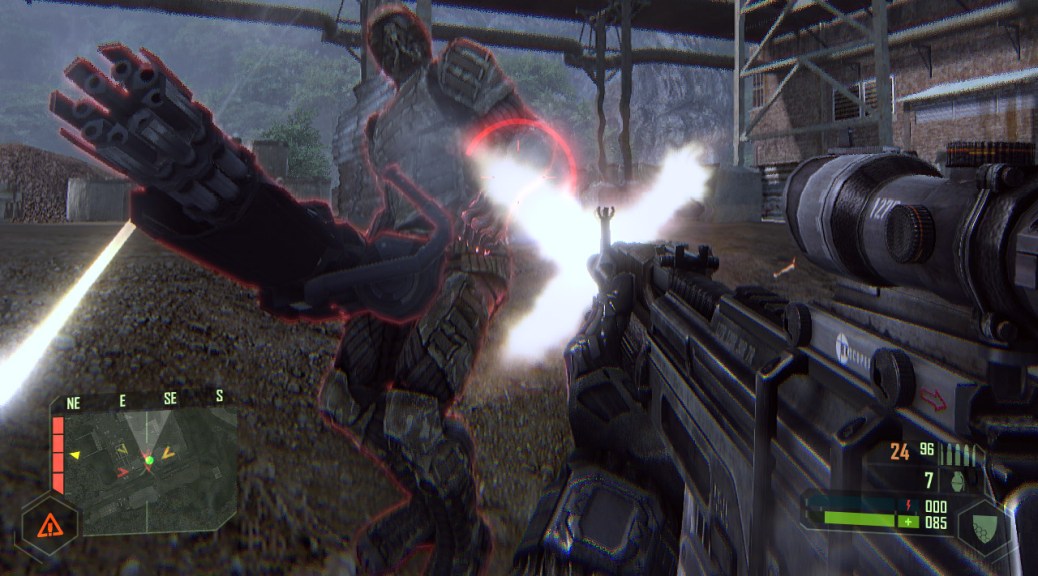
Crysis, PC
Crysis is a futuristic first-person shooter developed by German company Crytek and published by Electronic Arts in 2007. It is the first game in the Crysis series and is known as a game that – at the time of its original release – had relatively high-end system requirements. It’s also quite similar to Crytek‘s previous game, Far Cry, in that it is predominantly combat based in a jungle environment, with vehicles like jeeps, trucks, cars, hovercraft and boats that can be commandeered and driven.

Ultima IX: Ascension, PC
Ultima IX: Ascension is the ninth and final instalment of the core Ultima series and was developed by Origin Systems and published for Windows-based PCs by Electronic Arts in 1999. It was the first Ultima game to use polygonal rendering in a full 3D environment.

Ultima VIII: Pagan, PC
Ultima VIII: Pagan is the eighth entry in the Ultima series and was developed and published by Origin Systems for PC MS-DOS in 1994. Like its predecessor (The Black Gate), Pagan goes for a darker, more mature tone than most of the previous Ultima games, and it is also more puzzle and action-oriented.

M.U.L.E., Atari 8-Bit
M.U.L.E. (meaning: Multiple-Use Labour Elements) is a classic business-based strategy game that mixes turn-based and real-time gameplay, and supply-and-demand economics, with multiplayer competition for up to four players. It was designed by the late Danielle Bunten Berry of Ozark Softscape and first published for Atari 8-bit computers by Electronic Arts in North America in 1983. Later, Ariolasoft published the game in Europe, and Bullet Proof Software published the game in Japan. M.U.L.E. was also converted to a number of other systems and has become something of a cult hit since its original release.

Strike Fleet, Commodore 64
Strike Fleet is a naval combat simulation developed by Lucasfilm Games and first published by Electronic Arts in 1988. It is the unofficial sequel to the game P.H.M. Pegasus* and it received rave reviews at the time of its original release. * = You can even take control of a Pegasus class craft if you want, which is a classy nod to the game’s predecessor.
 The King of Grabs