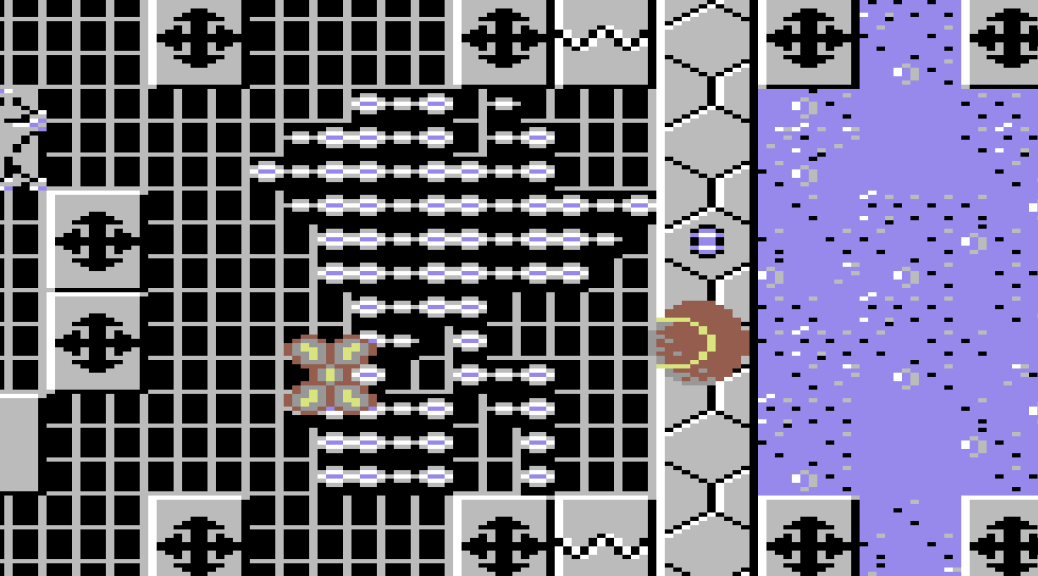
The sequel to Pocky & Rocky (known as Kiki Kaikai in Japan) was developed by Natsume and published by Ocean Software in Europe (by Natsume themselves in Japan and North America). Pocky & Rocky 2 was first released in 1994 and is a similar scrolling shooter to its predecessor, but with multiple companions, instead of just one.
Tag Archives: overhead
Cannon Fodder, Amiga CD32
The Amiga CD32 port of Cannon Fodder was developed by Arch Rivals and published by Virgin Interactive in 1994. Of course the game does have mouse support (as if it wouldn’t…), and it plays extremely well. In fact: some may argue that this is the best version of Cannon Fodder ever released.
Cannon Fodder, Megadrive/Genesis
The Megadrive/Genesis version of Sensible Software‘s classic Cannon Fodder is not the one I think of when I think “Cannon Fodder“, but it’s actually a really good port. The game was converted by PanelComp, who also made the excellent SNES version, and it too supports mouse play. Which is important, because without using a mouse it’s impossible to attain the right kind of intensity needed to play Cannon Fodder properly. IMHO.
Cannon Fodder, Super Nintendo
The Super Nintendo version of Cannon Fodder was coded by Andy Onions, John Rocke and Steve Caslin, with graphics conversion by Doug Townsley and sound and music adaptation by Allister Brimble. The SNES port was published by Virgin Interactive Entertainment in 1994 and you’ll be pleased to know that it does indeed support the use of the SNES mouse, which makes all the difference.
Cannon Fodder, 3DO
Sensible Software‘s classic point-and-click shooter, Cannon Fodder, was ported by Krisalis Software and released for 3DO systems in 1994 by Virgin Interactive. And it is a playable and accurate port of the original, but unfortunately there doesn’t seem to be any mouse support – you can only play the game using a gamepad. Which is a little disappointing because Cannon Fodder was designed to be played with a mouse. Thankfully it still works okay with a gamepad*.
Cannon Fodder, PC
The MS-DOS version of Cannon Fodder was ported by Audio Visual Magic Ltd., and was not the first version of Cannon Fodder released (as some seem to think – I’m looking at you, Moby Games). No – the original version of Cannon Fodder was the Amiga version, which was developed by Sensible Software themselves.
Wiz, ZX Spectrum
Created by Silhouette Software and published for the ZX Spectrum by Melbourne House in 1987, Wiz is an obscure scrolling action game where you control a wizard who must climb levels to gain magical powers so that he can break the link that joins the dark world to the light world. Whatever that means…
Megami Tensei Gaiden: Last Bible III, Super Nintendo
The third game in the Last Bible series (a subseries of the Megami Tensei games), was developed by Multimedia Intelligence Transfer and published by Atlus – in Japan only – for the Super Famicom in 1995. It is a Role-Playing Game with random encounters and turn-based combat, and features the unique Megami Tensei trait of talking to monsters to try to recruit them, calling them into your party, and fusing them together to make more powerful monsters who will fight with you. This is a Japanese-only release that currently benefits from fan translations into both English and Spanish, which makes this excellent game playable to a good proportion of the Western world.
Continue reading Megami Tensei Gaiden: Last Bible III, Super Nintendo
Megami Tensei Gaiden: Last Bible II, Game Boy Color
Megami Tensei Gaiden: Last Bible II is the second game in the Last Bible series, which is a spin-off from the Megami Tensei RPG series. Last Bible II was originally released in Japan in 1993 for the original B&W Game Boy, with the Game Boy Color version coming out in 1999, some six years later. Neither version was ever officially released in the West, but there is an English fan translation for the Game Boy Color version, which is what I’m showing here.
Continue reading Megami Tensei Gaiden: Last Bible II, Game Boy Color
Revelations: The Demon Slayer, Game Boy Color
Revelations: The Demon Slayer is the localized English language version of Megami Tensei Gaiden: Last Bible, which was first released for the original Game Boy, in Japan only, in 1992. This Game Boy Color version was developed by Multimedia Intelligence Transfer and published by Atlus, in Japan and North America, in 1999.
Continue reading Revelations: The Demon Slayer, Game Boy Color