
Treasure Island Dizzy is the second game in the Dizzy series and was first released by Codemasters in 1988. It was again designed and coded by The Oliver Twins and once again features everyone’s favourite anthropomorphic egg, Dizzy.
Tag Archives: items

Dizzy: The Ultimate Cartoon Adventure, ZX Spectrum
The first Dizzy game, and featuring a walking, talking egg that would become synonymous with “cartoon adventures” on the ZX Spectrum, and also budget releases from British software house Codemasters.
Continue reading Dizzy: The Ultimate Cartoon Adventure, ZX Spectrum

Ultima Underworld: The Stygian Abyss, PlayStation
The PlayStation version of the classic Blue Sky Productions (later Looking Glass Studios) first-person RPG is unfortunately only available in Japanese, so is not easy to play for English-speaking gamers. No one has yet translated the game into English even though fans have been crossing their fingers since the game was first released way back in 1997 (24 years ago).
Continue reading Ultima Underworld: The Stygian Abyss, PlayStation

Revelations: Persona, PlayStation
Revelations: Persona is the first game in the Persona series, which is a spin-off from the Shin Megami Tensei series, and was first published by Atlus for the PlayStation in 1996. It was actually the first game in the entire Megami Tensei series to be officially released in the West.

Hunchback: The Adventure, ZX Spectrum
Rather than produce another platform game, Ocean Software chose to make a graphical adventure for their third Hunchback game. Which was an unusual choice.
Hunchback: The Adventure again features Quasimodo trying to rescue Esmeralda, this time from the evil Cardinal of Notre Dame. It’s a three-part game, requiring the same number of loads. In part one Quasimodo must escape from Notre Dame itself, and from the Cardinal’s many guards who are trying to stop him. In part two he must make his way under the city of Paris until he reaches the Cardinal’s mansion. And finally, in part three, he must challenge the Cardinal and escape with Esmeralda in tow.

Pong Quest, PC
This modern take on a retro classic sees you take control of a “brave young paddle” on a quest to unlock the mystery of “The Spooky Door”.
Pong Quest is of course a re-imagining of the classic Atari arcade game, Pong, with cute, colourful graphics, a large variety of different Pong balls, and single and multiplayer play modes.
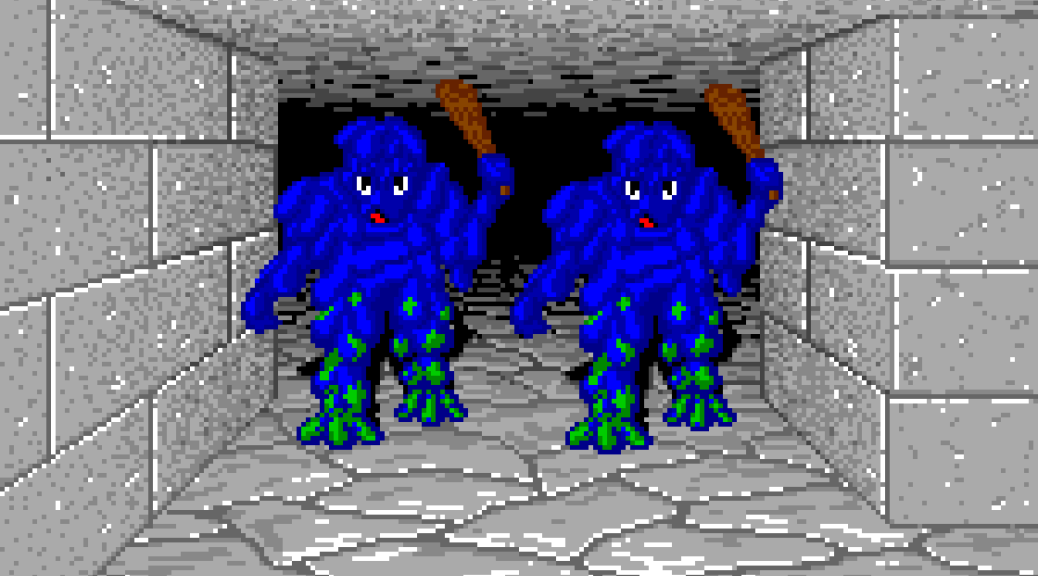
Dungeon Master, Amiga
FTL and Software Heaven‘s classic Dungeon Master was available on the Amiga in two different forms. Initially it was only available for Amigas with 1MB of RAM, and wasn’t available for the Amiga 500 (which only had 512kb of RAM) for quite a while, which gave Atari ST owners bragging rights for this amazing game for a few months.

Kyuuyaku Megami Tensei, Super Nintendo
Kyuuyaku Megami Tensei (aka Megami Tensei: The Old Testament), is an enhanced remake of the first two Megami Tensei games that were originally released on the Nintendo Famicom. It was published in Japan for the Super Famicom in 1995.
Like most of the early Megami Tensei games these two titles weren’t released in the West due to them having controversial content based on religious and occult themes. Thankfully, though, they were liked enough by gamers to be given fan translations into English, and this SNES re-release was first fan-translated in 2014. It has also been fan translated into Spanish.
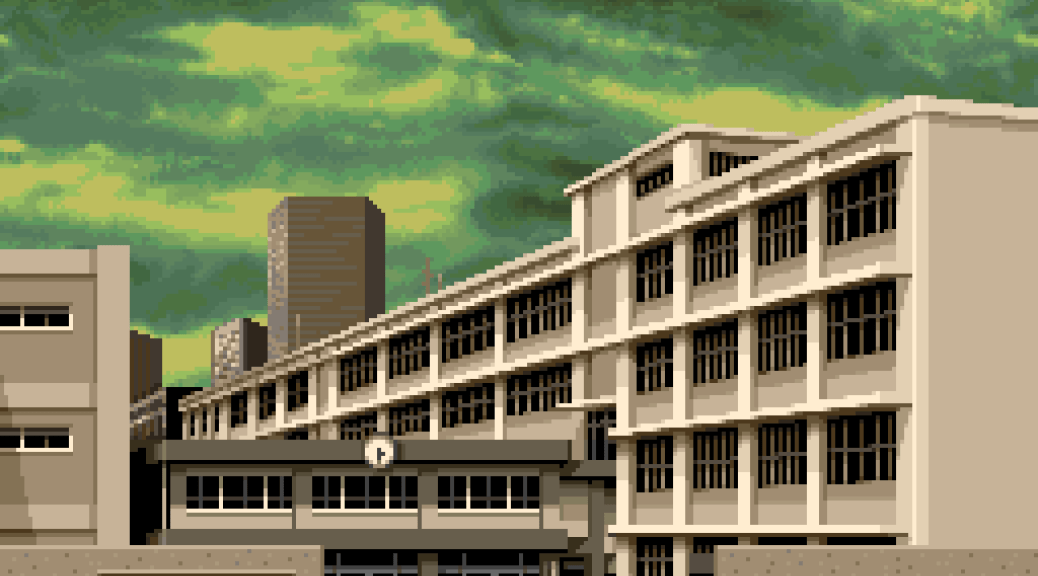
Shin Megami Tensei If…, Super Nintendo
Shin Megami Tensei If… is a spin-off from the main Shin Megami Tensei series that is smaller and more confined than previous games. It was developed and published by Atlus in 1994.
This time the story is set in a school where a bullied pupil tries to summon demons in the gym, to deal with his harassers, only to wind-up being possessed by them and threatening to destroy the world. You play a group of schoolkids who team-up to try to stop him.

Shin Megami Tensei II, Super Nintendo
Shin Megami Tensei II is the direct sequel to Shin Megami Tensei and was first published in Japan in 1994 by Atlus.
While the basic gameplay is essentially the same as before, with tile-based movement and first-person combat sections, overhead city map sections, and magic, occult and religious themes, the developers deliberately chose not to connect this sequel directly to its predecessor, so story-wise it is somewhat different, being set in the far-flung future.
 The King of Grabs