
Sensible Software‘s classic ‘titchy man’ overhead scrolling shooter, Cannon Fodder, is well-represented on the Jaguar, having been ported by a company called The Dome Software Developments, who did a worthy job with the conversion.
Tag Archives: shooter
Future Spy, Arcade
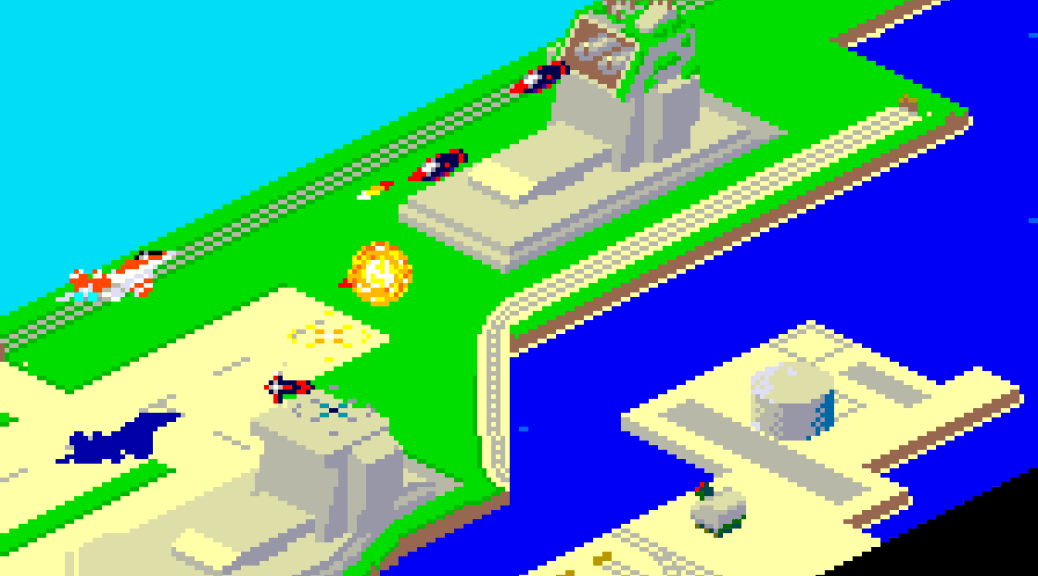
In Sega‘s 1984 arcade game, Future Spy, you fly an F-15 jet fighter across an isometric landscape, shooting down enemy aircraft while at the same time dropping bombs on ships, submarines, and ground forces.

Doom, PlayStation
The PlayStation version of Doom was was coded by Aaron Seeler for Williams Electronics and first published in 1995. The game runs on a modified version of the Atari Jaguar Doom engine and was the first time Ultimate Doom and Doom II were packaged together in one release.

Commando, Atari 7800
Capcom‘s classic scrolling shoot ’em up, Commando, was converted to the Atari 7800 by Dwain Skinner of Sculptured Software and first published by Atari Corporation in 1989.

Colt Canyon, PC
Colt Canyon is a single-player Wild West-based pixel art ‘twin stick’-style shooter developed by German company Retrific and published by Headup in 2020. You play a cowboy who must save his kidnapped partner from ruthless bandits. In fact: you can play as a variety of different characters – if you unlock them first.

Commando, ZX Spectrum
The ZX Spectrum version of Capcom‘s Commando was programmed by Keith Burkhill and Nigel Alderton, with graphics by Karen Trueman and Rory Green. It was first published by Elite Systems in 1985.

Super Asteroids & Missile Command, Atari Lynx
Super Asteroids & Missile Command are a pair of conversions of two classic Atari arcade games – Asteroids and Missile Command – squeezed onto one cartridge and released for the Atari Lynx in 1995. These two games were apparently the very last to be released for the Atari Lynx.
Continue reading Super Asteroids & Missile Command, Atari Lynx
Unreal II: The Awakening, PC
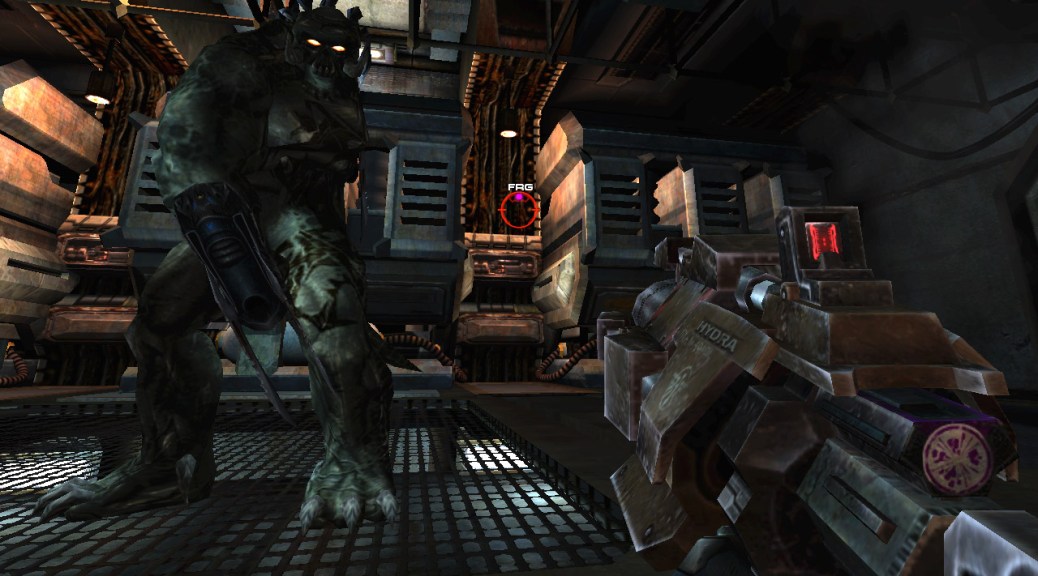
Unreal II: The Awakening is the sequel to Unreal and was developed by Legend Entertainment and published by Infogrames in 2003 under the Atari brand. It utilises Unreal Engine 2 and again features a single-player campaign, as well as multiplayer deathmatching.
Unreal, PC
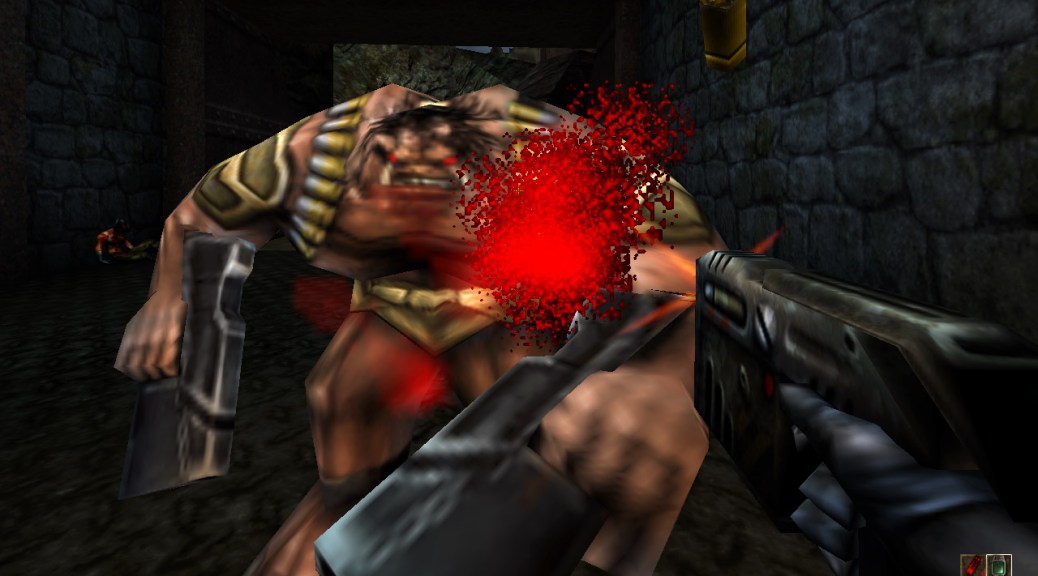
Unreal is a pioneering first-person shooter developed by Epic Games and Digital Extremes and first published by GT Interactive in 1998. It is the very first game in the Unreal series and was the first game to use the Unreal Engine, which was a ground-breaking 3D game engine at the time. Of course most gamers know about the Unreal Engine, and how it continues to innovate now, but this game is where Unreal first started.


