
Vradark’s Sphere is a Roguelike fantasy role-playing game that was created by Aleksander Udotov, for 128K Spectrums, and first released in 2018. To me it is the epitome of what I would call “Modern Retro” (ie. a modern game, made to look old or be played on old hardware), and it looks and plays fantastically well.
Tag Archives: Monsters

Aliens: Neoplasma, ZX Spectrum
Aliens: Neoplasma is a homebrew ZX Spectrum game that was released by a Russian dev team called “SaNchez” in 2019. The game is for Spectrum 128K models only and is a run-and-gun shooter with platforming elements. It’s available in English, Russian and Spanish (each language is a separate download).
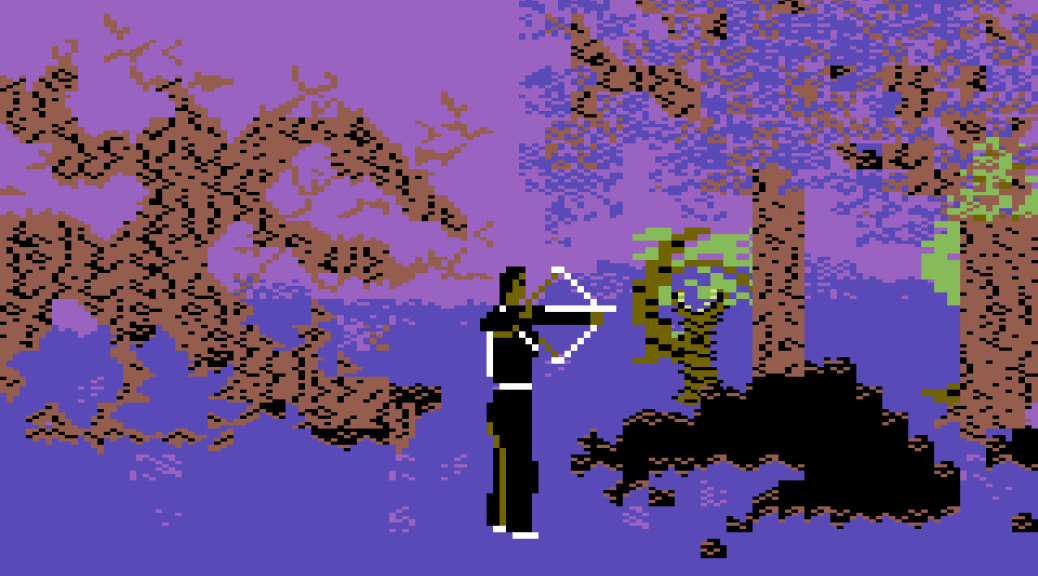
Beyond the Forbidden Forest, Commodore 64
Beyond the Forbidden Forest is the 1986 sequel to 1983’s classic 8-bit survival horror game, Forbidden Forest. It was again devised and programmed by Paul Norman, and published by Cosmi Corporation in North America and US Gold in Europe.
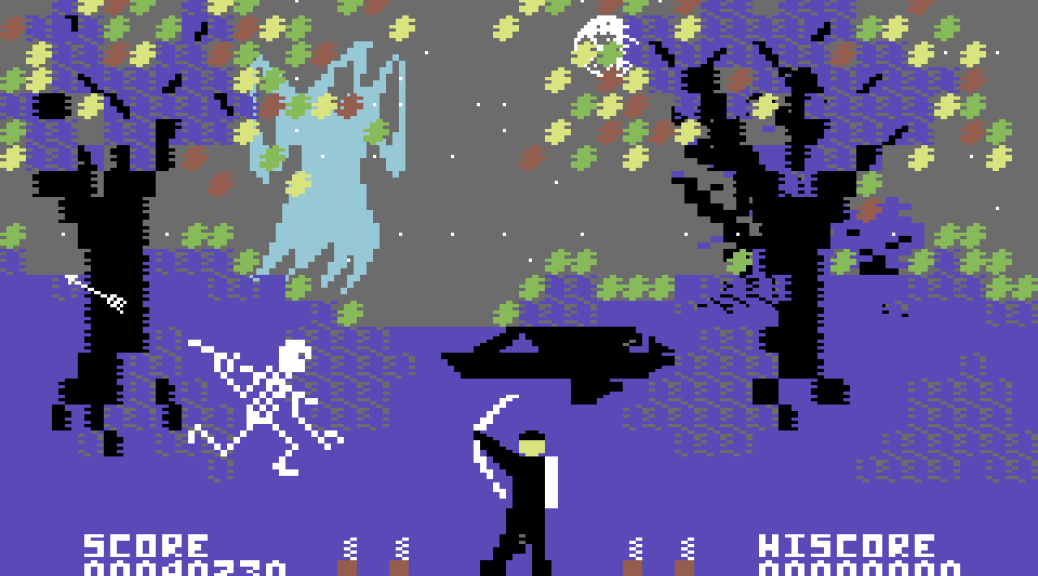
Forbidden Forest, Commodore 64
Created by Paul Norman for Cosmi Corporation, Forbidden Forest is a legendary survival horror game from 1983 in which you play an archer trying to avoid attacks from a variety of hostile creatures inside a sprawling forest.

Rainbow Islands, ZX Spectrum
The ZX Spectrum has an excellent port of Taito‘s classic arcade game, Rainbow Islands, thanks to the developers at Graftgold. It was first published by Ocean Software in 1990.

The Eidolon, ZX Spectrum
I didn’t even know that Lucasfilm Games‘ classic 8-bit fantasy exploration game, The Eidolon, was available for the ZX Spectrum until recently. It was ported to the Spectrum by P.A.W. Software and first published by Activision in 1986. And this is my first time playing it.

Three Wonders, Arcade
Three Wonders is an unusual arcade game from Capcom that was first released in 1991. What’s unusual about it is that the game is based around three separate games – each of which you can choose to play in any order, cooperatively with a friend, and that are supposedly linked by the game’s storyline and characters.

The Eidolon, Commodore 64
The Commodore 64 version of Lucasfilm Games‘ The Eidolon came out just after the Atari 8-bit original, in 1985. The game divided critics, but in my opinion it is an atmospheric and unusual cave exploration game, with weird-looking monsters and scary-looking dragons, and is still worth playing today.
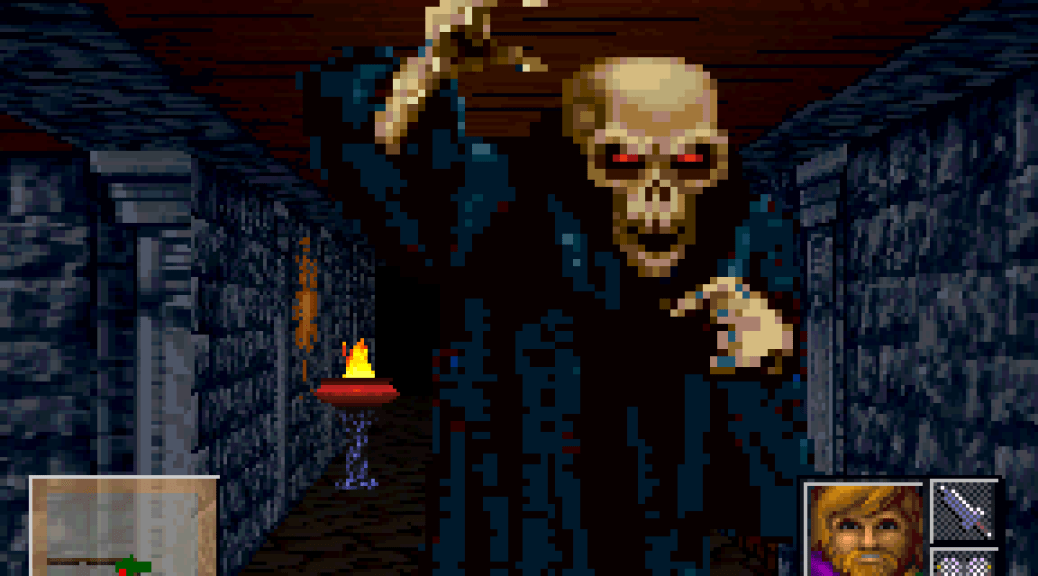
Slayer, 3DO
Based on TSR‘s Advanced Dungeons & Dragons Second Edition ruleset, Slayer is a first-person Role-Playing Game that was developed by Lion Entertainment and released exclusively for the 3DO in 1994. The game was published by SSI in North America; by Mindscape in Europe, and by T&E Soft in Japan (under the title “Lost Dungeon“).

Doom, 3DO
The beleaguered 3DO port of id Software‘s classic Doom is often referred to as “the worst port of Doom” by fans of the game, but it’s actually not a bad conversion at all. Yes: it is relatively slow, compared to other Doom ports, and yes: the game runs in a reduced-size window, but it still plays pretty well and does have its plus points.
 The King of Grabs