
The first sequel to the classic Half-Life 2 takes the form of an episodic chapter in the adventures of Gordon Freeman. It carries on directly from the end of Half-Life 2, with Gordon and Alyx actually going back into the crumbling Citadel to try to stop the reactor from exploding. Half-Life 2: Episode One was first released in 2006.
Tag Archives: helicopter

Zombi, ZX Spectrum
Ubisoft‘s point-and-click Dawn of the Dead rip-off originally came out for the Amstrad CPC in 1986, and this ZX Spectrum version followed four years later, in 1990. It was converted by a three-man team: Geoff Phillips, Colin Bradshaw-Jones, and S. Chance and is a faithful recreation of the Amstrad original, with the same clunky controls and zombie-bashing combat.

Commando Arcade, Commodore 64
Created by Nostalgia in 2015, Commando Arcade is a reworking of the original C64 Commando port by Elite, but with completely new graphics, sound, and levels. So, rather than it being written from scratch, the game was built around the framework of an existing game.

Infiltrator, Atari 8-bit
Infiltrator is a classic helicopter action game designed and programmed by Chris Gray and published in 1986 by US Gold (in Europe) and Mindscape (everywhere else).
The aim is to fly a chopper (called the Gizmo DHX-3) to an enemy compound, then infiltrate the base on one of three separate missions. Each mission is split into two halves: a first-person flying game, then an isometric stealth/exploration game.

Arnie, Commodore 64
Written by Chris Butler and published by Zeppelin Games in 1992, Arnie is an isometric scrolling shoot ’em up featuring a one-man army (unsurprisingly called Arnie), on a mission to infiltrate an enemy base and assassinate a General.
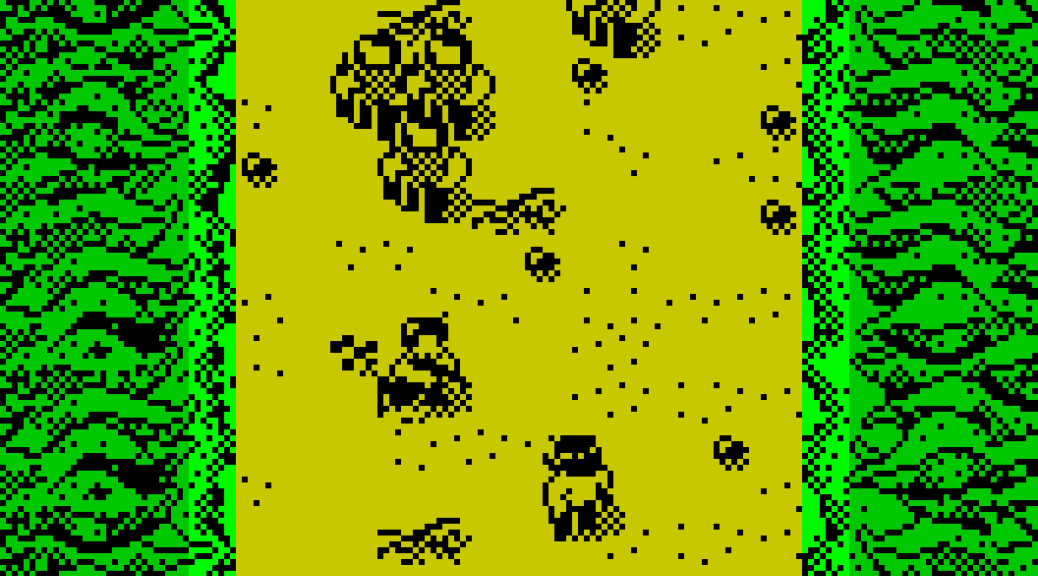
Ikari Warriors, ZX Spectrum
The 1987 conversion of Ikari Warriors is bit of an “auteur piece” on the ZX Spectrum. What I mean by that is: one guy made it on his own. He programmed the game; created the graphics, and did the sound. That man was David Shea, and the truth be told: he did an excellent job of it – managing to squeeze in most of the arcade game‘s features. Which is pretty impressive on a Spectrum.

Ikari Warriors, Commodore 64
This Commodore 64 conversion of SNK‘s classic arcade game, Ikari Warriors, is considered to be one of the best vertically-scrolling shooters on the system. It was programmed by John Twiddy and published by Elite Systems in 1986.

Metal Gear 2: Solid Snake, MSX
Metal Gear 2: Solid Snake is a direct sequel to the original Metal Gear and was first released for the MSX2 by Konami in 1990. It was again written and designed by Hideo Koijima and is much better than the half-baked pseudo sequel, Snake’s Revenge, by Ultra Games on the NES.
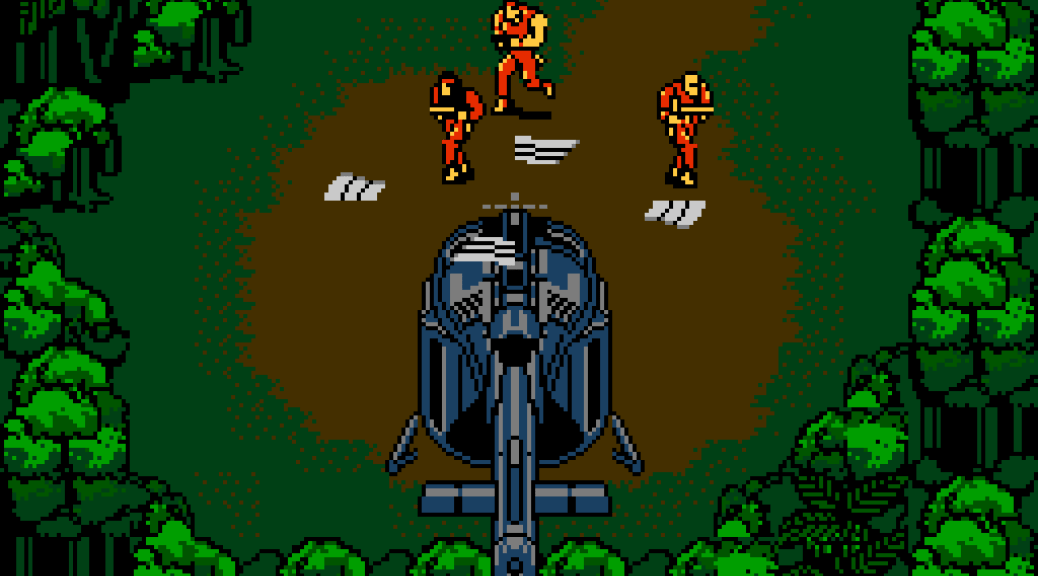
Snake’s Revenge, NES
Snake’s Revenge is a sequel to Metal Gear that was developed specifically for the North American and European NES markets by Konami and Ultra Games. It first came out in North America in 1990, and in Europe in 1992. Why there was a two-year gap between those releases is anyone’s guess.
Hideo Koijima wasn’t involved in the making of Snake’s Revenge and it is considered ‘non-canonical’, but he did make Metal Gear 2: Solid Snake for the MSX in response to it. I’m guessing that he wasn’t particularly enamoured with the idea of another team working on his signature series, but ultimately he (rather diplomatically) says that Snake’s Revenge is “not a bad game“.
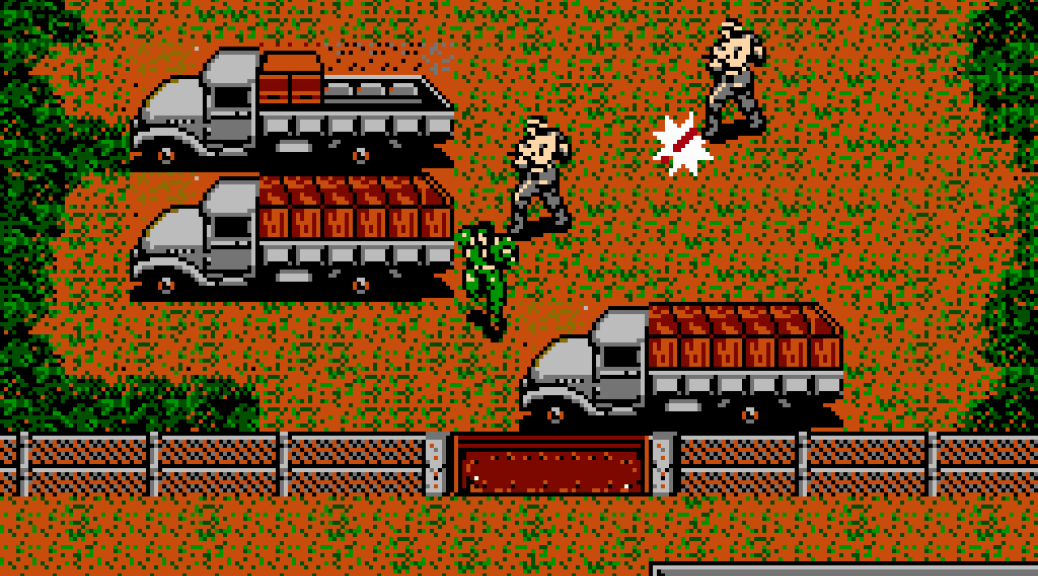
Metal Gear, NES
This reworked Nintendo Entertainment System port of the MSX version of Metal Gear first came out in 1987 (1988 in North America), just three months after the original. While it’s considered (rightly) to be inferior to the original MSX version it was a major hit and went on to sell over a million units in the United States alone.

