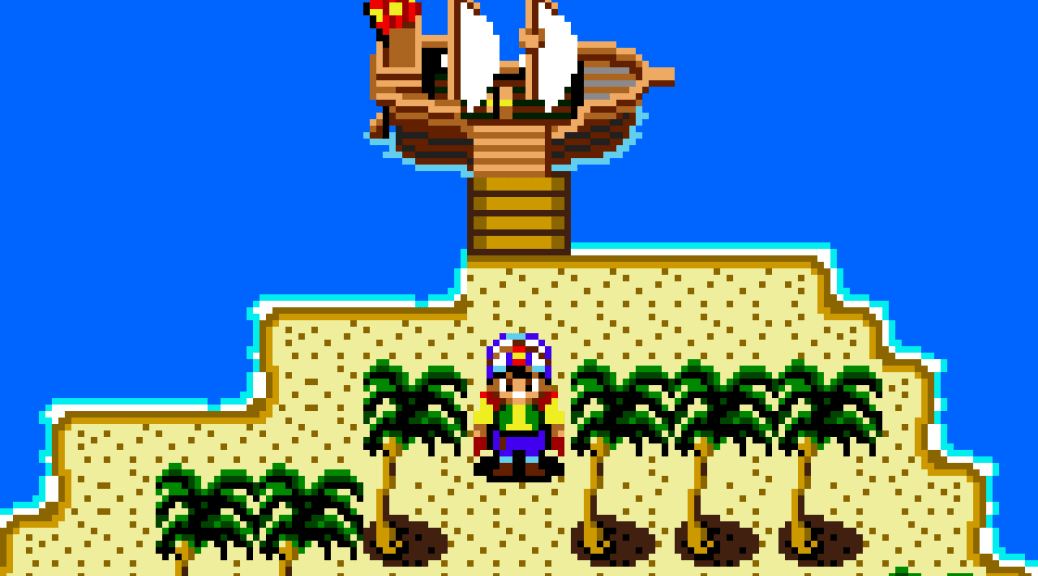
Not to be confused with Beyond Oasis on the Sega Megadrive, Defenders of Oasis is a turn-based Role-Playing Game for the Game Gear that is based on the “One Thousand and One Nights” middle-eastern folk tales, also known as “Arabian Nights“. It was developed and published by Sega in 1992.
Tag Archives: funny

Hamsters, Archimedes
Hamsters is a hilarious action game where the aim is to squash cute animals with a large wooden mallet and to collect the goodies that they drop as a result of being hit… Haha. Take that: cute animals!
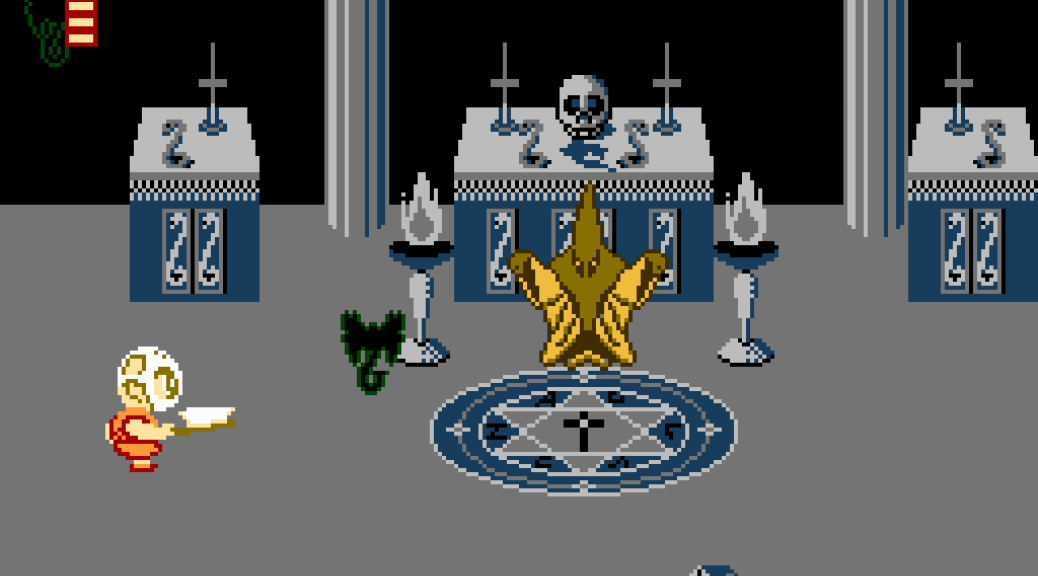
Splatterhouse: Wanpaku Graffiti, Famicom
Splatterhouse: Wanpaku Graffiti is a spin-off from the infamous Splatterhouse series and was a Japan only release, published by Namco for the Nintendo Famicom in 1989.
Rather than take the gruesome approach of the original game, in Wanpaku Graffiti the characters are “super deformed” (and made cute) and the game takes a comical approach to the presentation and gameplay, which was obviously deemed to be more fitting to a Famicom audience.

Splatterhouse, Arcade
Splatterhouse is an infamous side-scrolling horror-themed action game that was released into arcades by Namco in 1988. It is known for its grotesque opponents and for its satirisation of well-known horror films of the 1980s.

Vib-Ribbon, PlayStation
Vib-Ribbon is a unique game on the PlayStation. It is the only game I can think of that is mostly black and white and uses simple animated vector-style line art to present the visuals. That said: Vib-Ribbon is full of character and charm and goes to show what can be achieved when developers think out of the box.

Pepsiman, PlayStation
Now here’s a game that’ll make you laugh out loud… Pepsiman by Japanese developer Kindle Imagine Develop (aka KID). It was only ever released in Japan, although the game is entirely in English and features full motion video segments in English too.
Pepsiman was the Japanese Pepsi mascot who appeared in TV commercials for the famous soft drink manufacturer in the mid-to-late 1990s. He apparently became quite popular in Japan so naturally someone decided to make a video game based on him, and the resulting game is pretty funny. Pepsiman (the game) was apparently made on a low budget and sold for a low price when it came out, although I can’t find a reference to how much it sold for. If it was for the Japanese equivalent of less than ten pounds, then it was an okay purchase!

Revelations: Persona, PlayStation
Revelations: Persona is the first game in the Persona series, which is a spin-off from the Shin Megami Tensei series, and was first published by Atlus for the PlayStation in 1996. It was actually the first game in the entire Megami Tensei series to be officially released in the West.

Ganbare Goemon: Uchū Kaizoku Akogingu, PlayStation
Yippee! A Goemon game on the PlayStation! This one called Ganbare Goemon: Uchuu Kaizoku Akogingu (in English: “Ganbare Goemon: Space Pirate Akogingu“), and it’s apparently a direct sequel to Ganbare Goemon 3 although Sasuke and Yae are not playable characters in this game. This was the first Goemon game on the PlayStation and it was first published by Konami in 1996.
Thankfully this game was given an English fan translation in 2020 by Adventurous Translations, which makes it playable to non Japanese speakers. According to the readme file on the translation patch the game was not much fun to translate (mostly for technical reasons), and isn’t seen as being a very good game by the person who translated it. That said: I got the translation patch to work fine and am overjoyed that I can now play it in English, so a big thank you to Adventurous Translations for their efforts (they are much appreciated).
Continue reading Ganbare Goemon: Uchū Kaizoku Akogingu, PlayStation

No One Can Stop Mr. Domino!, PlayStation
No One Can Stop Mr. Domino! is a weird-but-interesting domino-toppling game for the PlayStation that was developed by Artdink and published by Acclaim in 1998.

APB, ZX Spectrum
Another fine conversion of Atari‘s classic arcade game, APB (All Points Bulletin), this time converted by Walking Circles for Tengen and first published by Domark in 1989.

