
The Megadrive/Genesis version of Sensible Software‘s classic Cannon Fodder is not the one I think of when I think “Cannon Fodder“, but it’s actually a really good port. The game was converted by PanelComp, who also made the excellent SNES version, and it too supports mouse play. Which is important, because without using a mouse it’s impossible to attain the right kind of intensity needed to play Cannon Fodder properly. IMHO.
Tag Archives: conversion

Cannon Fodder, Super Nintendo
The Super Nintendo version of Cannon Fodder was coded by Andy Onions, John Rocke and Steve Caslin, with graphics conversion by Doug Townsley and sound and music adaptation by Allister Brimble. The SNES port was published by Virgin Interactive Entertainment in 1994 and you’ll be pleased to know that it does indeed support the use of the SNES mouse, which makes all the difference.

Cannon Fodder, 3DO
Sensible Software‘s classic point-and-click shooter, Cannon Fodder, was ported by Krisalis Software and released for 3DO systems in 1994 by Virgin Interactive. And it is a playable and accurate port of the original, but unfortunately there doesn’t seem to be any mouse support – you can only play the game using a gamepad. Which is a little disappointing because Cannon Fodder was designed to be played with a mouse. Thankfully it still works okay with a gamepad*.

Cannon Fodder, PC
The MS-DOS version of Cannon Fodder was ported by Audio Visual Magic Ltd., and was not the first version of Cannon Fodder released (as some seem to think – I’m looking at you, Moby Games). No – the original version of Cannon Fodder was the Amiga version, which was developed by Sensible Software themselves.
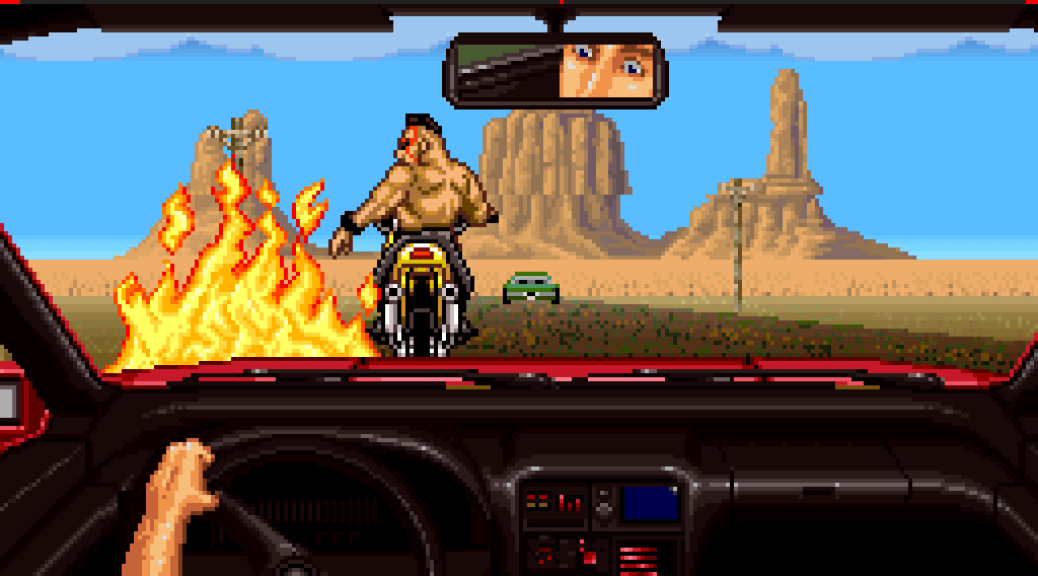
Super Chase HQ, Super Nintendo
Super Chase HQ is an enhanced port of the classic Taito driving game, Chase HQ. It appeared in arcades first, under the title “Super Chase: Criminal Termination” and was ported to the Super Nintendo by Taito themselves and first released in 1993. Like its arcade counterpart it is a single-player only game.

The Eidolon, Commodore 64
The Commodore 64 version of Lucasfilm Games‘ The Eidolon came out just after the Atari 8-bit original, in 1985. The game divided critics, but in my opinion it is an atmospheric and unusual cave exploration game, with weird-looking monsters and scary-looking dragons, and is still worth playing today.

Doom, 3DO
The beleaguered 3DO port of id Software‘s classic Doom is often referred to as “the worst port of Doom” by fans of the game, but it’s actually not a bad conversion at all. Yes: it is relatively slow, compared to other Doom ports, and yes: the game runs in a reduced-size window, but it still plays pretty well and does have its plus points.

Switchblade II, Atari Lynx
Switchblade II is a platform action game that originated on the Amiga; was developed by Gremlin Graphics, and published for the Atari Lynx by Atari Corporation in 1992. It is similar in some respects to Capcom‘s Strider, although the main character – Hiro – isn’t quite as dynamic as Strider Hiryu. The first Switchblade wasn’t released for the Lynx – just the sequel was.

Breakout, Atari 2600
Brad Stewart‘s 1978 Atari 2600 conversion of the pioneering 1976 arcade game, Breakout, is a software-based cartridge version that most people who’ve played the game will be familiar with. Mainly because – as far as I know – the original arcade version of Breakout is currently un-emulatable, because it utilizes mechanical components that prevent it from being played as a ROM file in something like MAME.

Megami Tensei Gaiden: Last Bible, Game Gear
Megami Tensei Gaiden: Last Bible is a handheld RPG that was developed by Multimedia Intelligence Transfer and initially published by Atlus for the original black and white Game Boy, in Japan only, in 1992. The Game Gear version was developed by Sega and was first released in 1994 – once again: in Japan only. A fan translation into English was released in 2019, which made the Game Gear version finally playable to Westerners. Which is great because the Game Gear port is the best version of the game available. Let me explain…
Continue reading Megami Tensei Gaiden: Last Bible, Game Gear
 The King of Grabs