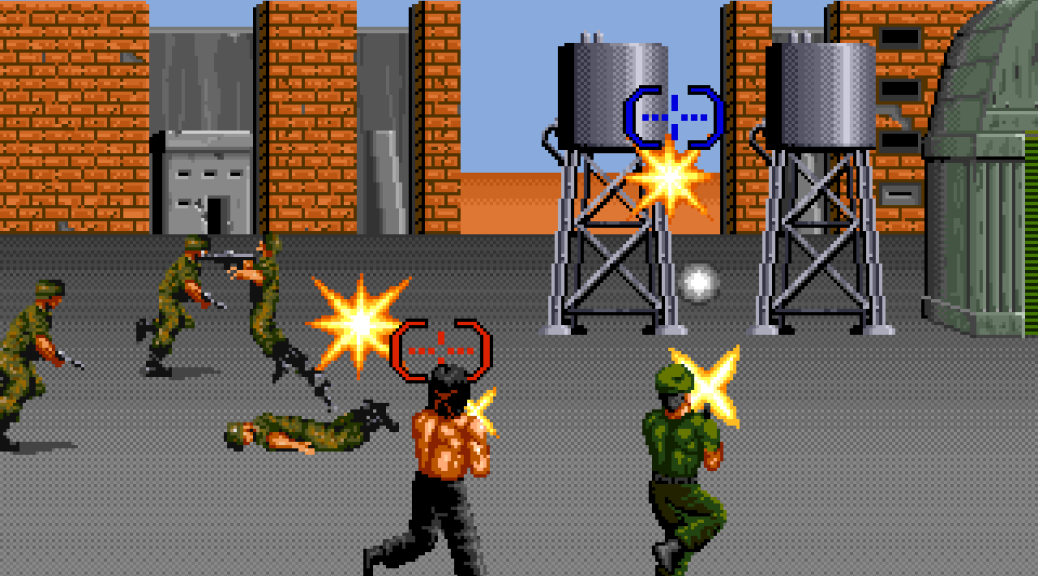
Based loosely on the 1989 film of the same name, Taito‘s Rambo III arcade game is a one or two-player third-person shooter, with relentless action through countless enemy-strewn landscapes.
Tag Archives: sequel

Super Chase: Criminal Termination, Arcade
Super Chase: Criminal Termination was first released into arcades by Taito in 1993, followed soon after by a Super Nintendo version called “Super Chase HQ“. It is an enhanced sequel to the classic Chase HQ, and Special Criminal Investigation, and features viewpoints that change, depending on where you are in the game, and what vehicle you’re driving. In fact, this moving camera feature has been so well implemented by the developers that it really enhances the dynamism of the exciting car-chase gameplay.

Operation Wolf 3, Arcade
Developed by East Technology for Taito, and first distributed into arcades in 1994, Operation Wolf 3 is – as the title suggests – the third game in the famous Operation Wolf series. It’s a lightgun shooter for one or two players, and it goes the route of using digitised graphics, which I personally think was a mistake, because the hand-drawn 2D graphics of Operation Wolf, and the sequel, Operation Thunderbolt, are much better than the dodgy visuals in this.

Switchblade II, Atari Lynx
Switchblade II is a platform action game that originated on the Amiga; was developed by Gremlin Graphics, and published for the Atari Lynx by Atari Corporation in 1992. It is similar in some respects to Capcom‘s Strider, although the main character – Hiro – isn’t quite as dynamic as Strider Hiryu. The first Switchblade wasn’t released for the Lynx – just the sequel was.

Switchblade II, Amiga
The sequel to Switchblade, Switchblade II originally came out on the Amiga and was developed and published by Gremlin Graphics in 1991. The designer/programmer of the original Switchblade, Simon Phipps of Core Design, had no involvement in the creation of this follow-up.
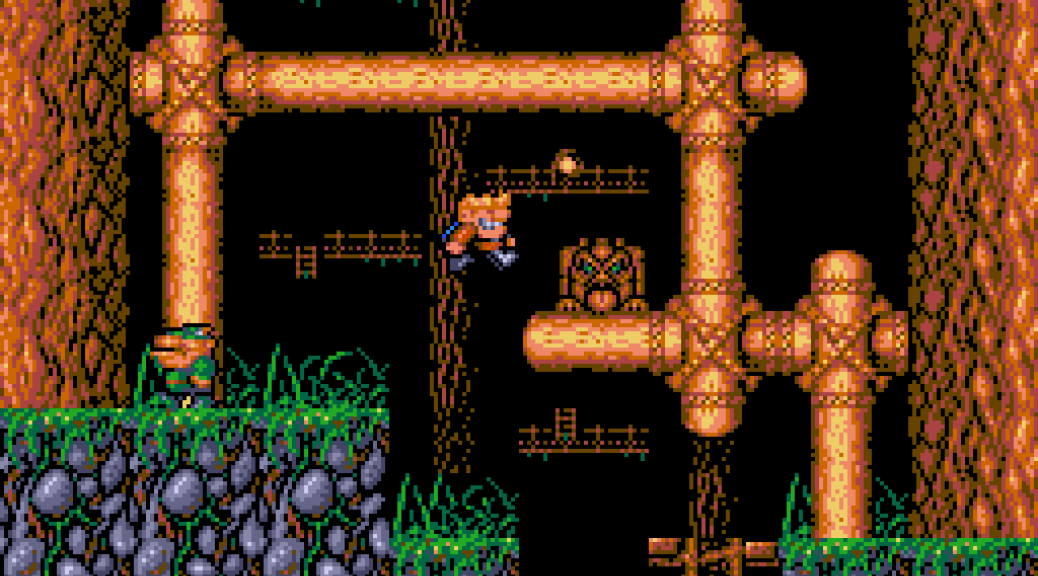
Rick Dangerous 2, Amiga
Rick Dangerous 2 is the sequel to 1989’s Rick Dangerous. It was developed by Core Design (with programming by Simon Phipps, graphics by Terry Lloyd, level design by Robert Churchill and sound/music by David Pridmore), and published by Micro Style (a Microprose sub-label) in 1990.

Lethal Enforcers II: Gun Fighters, Arcade
The second Lethal Enforcers, first released into arcades in 1994, goes in a different direction to the first Lethal Enforcers – Lethal Enforcers II: Gun Fighters being a lightgun shoot ’em up set in the ‘Wild West’, in 1873. What hasn’t changed, though, is the fact that Konami used the same technology for digitising the graphics in this game as they did the first, and it still looks pretty dodgy as a result…

Devilish: Ball Bounder, Nintendo DS
Devilish: Ball Bounder (aka Classic Action: Devilish in North America; aka Devilish in Europe) is the third game in the Devilish series and was released thirteen years after its predecessor, Devilish: The Next Possession for the Megadrive/Genesis. It was developed by Starfish Kaihatsu and released for the Nintendo DS in 2005 in Japan and Europe, and 2007 in North America.

Devilish: The Next Possession, Megadrive/Genesis
Devilish: The Next Possession (known in Japan as Bad Omen) is the Megadrive/Genesis sequel to the 1991 Game Gear game, Devilish. It was developed by Genki and first released in 1992.
Continue reading Devilish: The Next Possession, Megadrive/Genesis

Megami Tensei Gaiden: Last Bible III, Super Nintendo
The third game in the Last Bible series (a subseries of the Megami Tensei games), was developed by Multimedia Intelligence Transfer and published by Atlus – in Japan only – for the Super Famicom in 1995. It is a Role-Playing Game with random encounters and turn-based combat, and features the unique Megami Tensei trait of talking to monsters to try to recruit them, calling them into your party, and fusing them together to make more powerful monsters who will fight with you. This is a Japanese-only release that currently benefits from fan translations into both English and Spanish, which makes this excellent game playable to a good proportion of the Western world.
Continue reading Megami Tensei Gaiden: Last Bible III, Super Nintendo
 The King of Grabs