Treasure Trap is an isometric platform adventure developed by Doodlebug Designs and published by Electronic Zoo in 1989. It was released for both the Amiga and the Atari ST and it is the ST version that I’m looking at today.
Tag Archives: maps
Pokémon Gold Version, Game Boy Color
Pokémon Gold and Silver Versions were developed by Game Freak and published by Nintendo in 1999 in Japan and 2000 everywhere else. They are ‘second generation’ Pokémon games and were released simultaneously as twin titles, as has become the norm with Pokémon games.
These were the first proper, full-colour Pokémon games, with graphics that have been created to take advantage of the Game Boy Color‘s extended palette (Pokémon Yellow, which preceded this game, didn’t really do that; the graphics were simply colourised from the black and white originals). And you can tell from the very beginning that the visuals in Gold/Silver are a step-up from what we saw previously.
Pokémon Yellow Version, Game Boy Color
Pokémon Yellow (aka Pokémon Yellow Version: Special Pikachu Edition) is a remake of Pokémon Red/Blue/Green that was released for the Game Boy Colour in 1998.
Pokémon Red Version, Game Boy
Pokémon Red Version was the very first Pokémon game and it was released for the original black and white Game Boy in 1996.
Like all subsequent Pokémon games it came as a pair of releases, so that players could have Pokémon exclusive to their version of the game and so that trading was required between versions – if you wanted to catch every single available Pokémon. Some might view that as cynical, but it wasn’t really intended to make people buy both versions, just to encourage link-up play and trading between them. It does however mean that you can’t catch all the available Pokémon if you only have one version of the game, and have no way of trading with someone else who has the other version.
In Japan, Pokémon Red (originally titled Pocket Monsters: Red) was accompanied by Pokémon Green (Pocket Monsters: Green), but in North America and Europe Pokémon Red was accompanied by Pokémon Blue, which is basically a remake of Green.
Wario: Master of Disguise, Nintendo DS
Wario: Master of Disguise was developed by Suzak and published for the Nintendo DS by Nintendo in 2007. It utilises dual screens (of course), and also requires use of the DS touchscreen when playing.
Infiltrator, Atari 8-bit
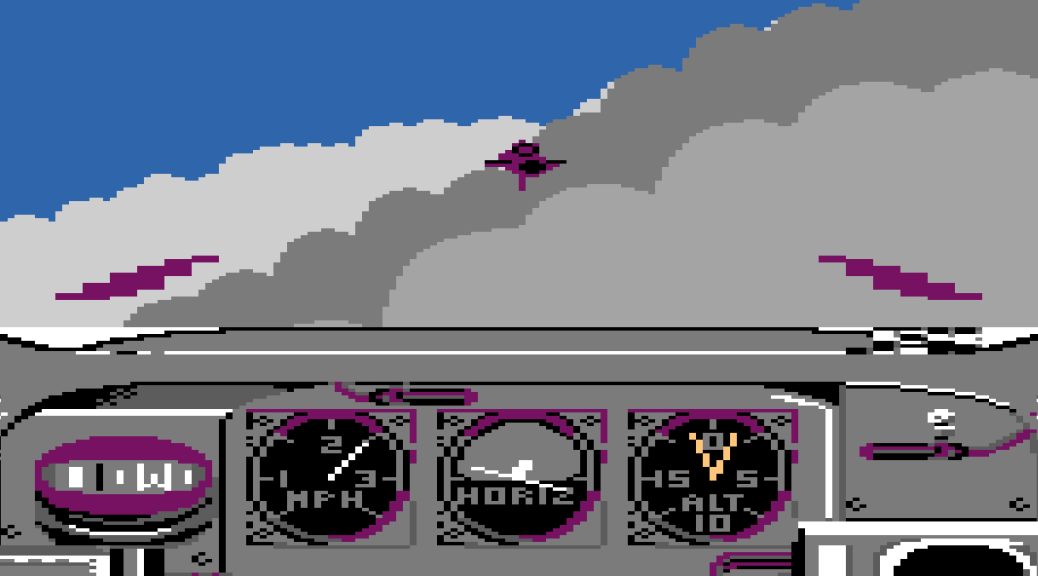
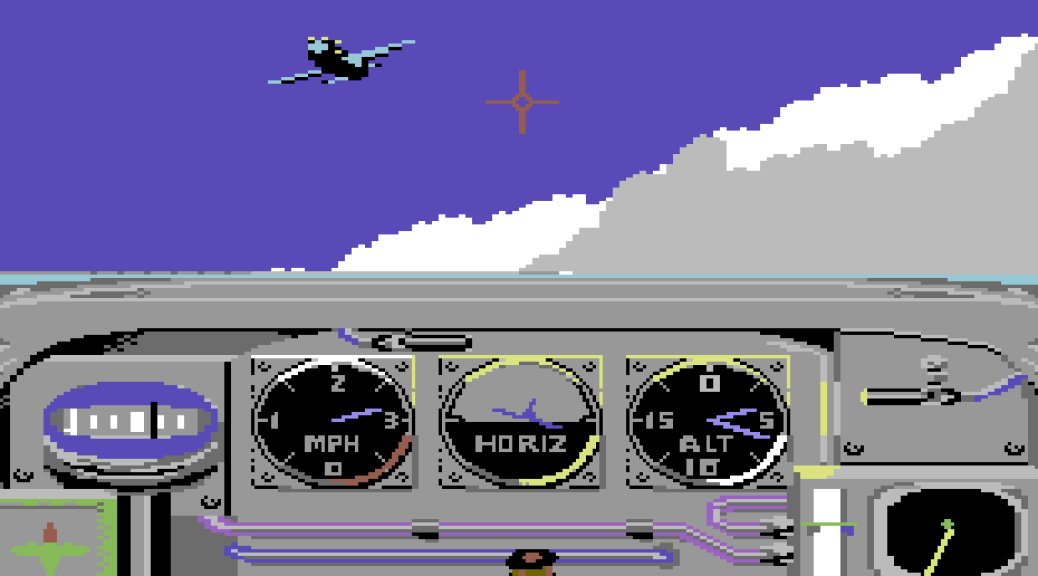
Infiltrator is a classic helicopter action game designed and programmed by Chris Gray and published in 1986 by US Gold (in Europe) and Mindscape (everywhere else).
The aim is to fly a chopper (called the Gizmo DHX-3) to an enemy compound, then infiltrate the base on one of three separate missions. Each mission is split into two halves: a first-person flying game, then an isometric stealth/exploration game.
Apocalypse, Archimedes
Apocalypse is a fast-paced, overrated 3D shoot ’em up that was written by Gordon J. Key (the same guy who wrote E-Type) and published by The Fourth Dimension for the Acorn Archimedes in 1990.
Colonization, Amiga
Also known as Sid Meier’s Colonization, this turn-based strategy game is based on the European colonisation of the New World, starting in 1492 and lasting until 1850. It’s essentially an updated and more-developed version of Sid Meier‘s previous game, Civilization. Which is no bad thing since Civilization is a superb, classic strategy game.
Revelations: Persona, PlayStation
Revelations: Persona is the first game in the Persona series, which is a spin-off from the Shin Megami Tensei series, and was first published by Atlus for the PlayStation in 1996. It was actually the first game in the entire Megami Tensei series to be officially released in the West.
Turbo Esprit, ZX Spectrum
Considered by those who know it as an early precursor to Grand Theft Auto, Mike Richardson‘s excellent Turbo Esprit is an action/driving game where the aim is to catch and arrest drugs smugglers by driving around a city and pinpointing them using a map. It was first published for the ZX Spectrum by Durell Software in 1986.