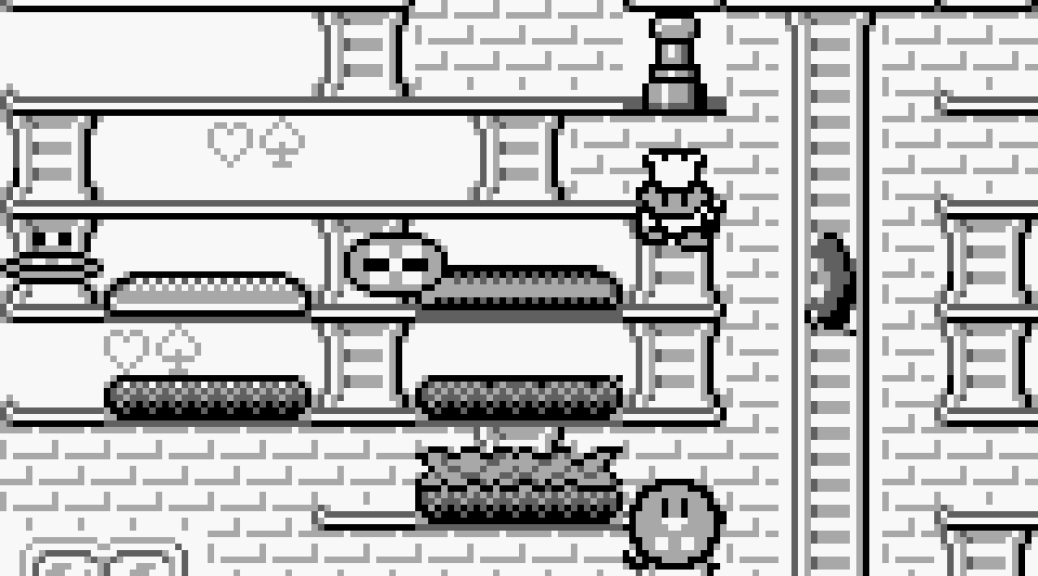
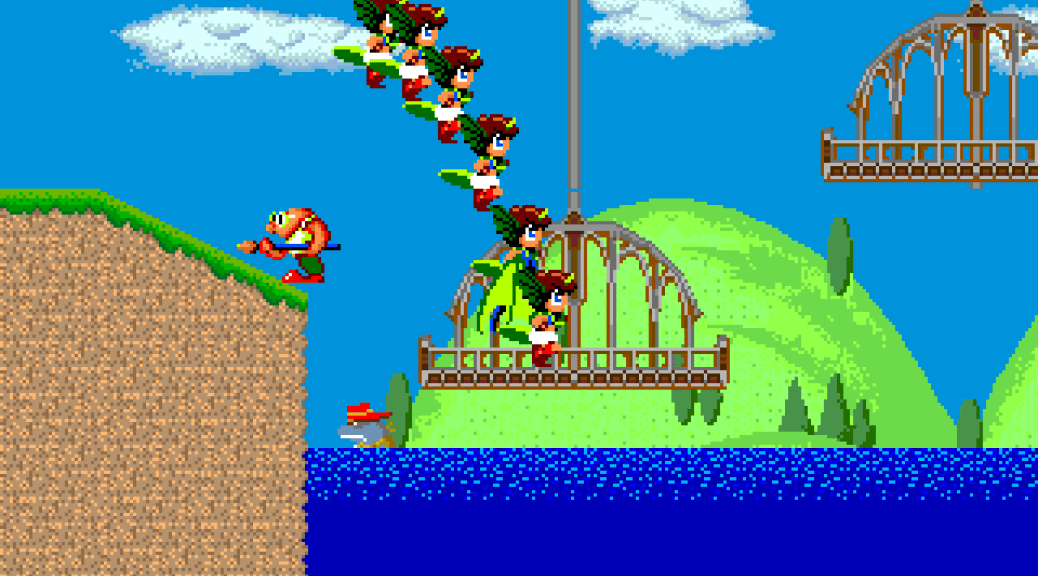
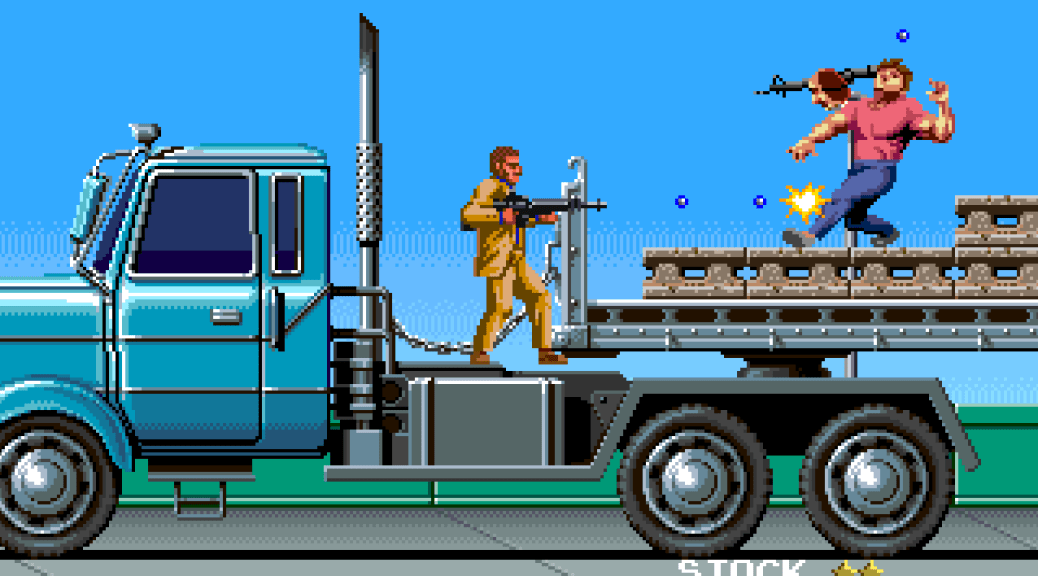
The Atari ST version of the 1989 arcade platform game, Toki, was developed and published by Ocean Software in 1991. And it is a decent adaptation of the arcade game, but with a reduced colour palette and screen size.
Tag Archives: 2D graphics
Flat, two-dimensional graphics, usually constructed of pixels. Not three-dimensional.
It Came From The Desert II, Amiga
It Came From The Desert II is an add-on/expansion pack for the classic ‘giant ant’ Cinemaware game, It Came From The Desert, and was first released in 1990. The story in this is set five years after the events of the first game. You don’t need the first game to play It Came From The Desert II, although you can load a save from part one, to continue from where you left off.
Turbo, Arcade
Sega‘s 1981 arcade racer, Turbo, was designed and programmed by Steve Hanawa and was manufactured in three formats: a standard, full-sized upright cabinet, a mini cabinet, and a deluxe, seated cockpit cabinet. All three versions had a steering wheel, a gear lever with high and low gears, and an accelerator pedal.
Super Asteroids & Missile Command, Atari Lynx
Super Asteroids & Missile Command are a pair of conversions of two classic Atari arcade games – Asteroids and Missile Command – squeezed onto one cartridge and released for the Atari Lynx in 1995. These two games were apparently the very last to be released for the Atari Lynx.
Continue reading Super Asteroids & Missile Command, Atari Lynx
Heartland, ZX Spectrum
Heartland is a platform action game developed and published by Odin Computer Graphics for the 48K ZX Spectrum in 1986. It features gameplay that is similar to previous Odin games, Nodes of Yesod and Arc of Yesod, with a well-animated protagonist exploring a maze-like platform world of doors and elevators.
Haunted Castle, Arcade
Haunted Castle is an obscure Castlevania arcade game, developed by Konami and first released in 1988. Until recently, I’d never seen it before, and playing it now I have to say that it is pretty unsophisticated for a late Eighties arcade game, and it pales into insignificance compared to other Castlevania games, like Super Castlevania IV or Castlevania: Symphony of the Night. It’s also insanely difficult. Maybe unfairly so.
Sinbad and the Throne of the Falcon, Atari ST
The 1988 Atari ST conversion of Cinemaware‘s Sinbad and the Throne of the Falcon has considerably better graphics than the Amiga original, even though the ST can’t quite display as many colours on-screen as the Amiga can.
Continue reading Sinbad and the Throne of the Falcon, Atari ST
Sinbad and the Throne of the Falcon, Amiga
I don’t know why, but the Amiga version of Cinemaware‘s classic Sinbad and the Throne of the Falcon looks absolutely terrible. The graphics are appalling and the presentation overall is very rough around the edges. Compare it to the Commodore 64 version and it’s easy to see the disparity.
Rod Land, Arcade
Rod Land is a one or simultaneous two-player platform game created by Jaleco and first distributed into arcades in 1990. In it you control one of two fairies – Tam or Rit – each armed with a magic wand (or a ‘rod’, as the game’s title implies) which can immobilise monsters that chase you on each stage. The aim of the game is to rescue your ‘mom’ (and later, your dad) who has been kidnapped and taken to the top of a large tower.
Rollaround, Commodore 64
Rollaround is an isometric action/puzzle game written by Tony Kelly of Mr. Chip Software and was published by Mastertronic in 1987. The gameplay is a combination of Marble Madness, Bobby Bearing, Spindizzy and Q*Bert, where the aim is to control a rolling ball that moves around a map of screens, rolling over tiles, activating switches, and collecting cross tiles for points.