
It’s not often you get a game that’s based on a Beatles song, and Yellow Submarine for the MSX is one such rare example. Published by Takeru in 1987 Yellow Submarine is of course not an official license and was slipped out to the Japanese MSX market – on cartridge – in the hope that no one at Apple Records would notice. If they did, it appears that nothing was done about it.
Tag Archives: 2D graphics
Flat, two-dimensional graphics, usually constructed of pixels. Not three-dimensional.
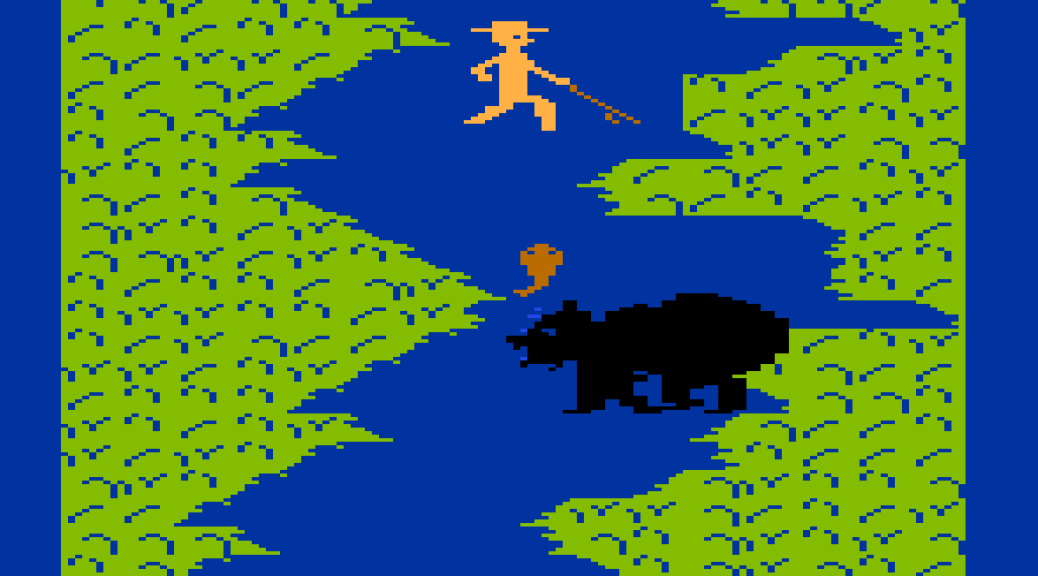
Salmon Run, Atari 8-bit
Written by Bill Williams (the writer and designer of Sinbad and the Throne of the Falcon, among other games), for the Atari Program Exchange, and first released in 1982, Salmon Run is a clever, and uniquely different, video game based upon the life cycle of a fish – a salmon, specifically – that is trying to swim upstream to its spawning ground.

Trog, Arcade
Trog is an arcade maze game developed by Midway Manufacturing and distributed on their Bally Midway label in 1990. It caters for up to four simultaneous players and features “Claymation” characters and cut scenes (although they call it “PLAYmation” on the title screen, probably because the word “Claymation” is trademarked). Claymation is when all the characters are made of, and animated with, plasticine or coloured clay (think Wallace & Gromit and you’ll get it).

Impossamole, PC Engine
The 1991 PC Engine/TurboGrafx-16 version of Gremlin Graphics‘ classic Monty Mole game is a rare treat: it’s a British-developed PC Engine game, and an alright one at that. And, believe it or not, but the PC Engine version of the game is the one that’s currently available on Steam and GOG.com.

Combat School, ZX Spectrum
The ZX Spectrum conversion of Konami‘s arcade game, Combat School, was developed and published by Ocean Software in 1987.

Timecop, Super Nintendo
Developed by French company Cryo Interactive and published by JVC for the Super Nintendo in 1995, Timecop is based on the 1994 film, starring Jean-Claude Van Damme and directed by Peter Hyams. The game is arguably one of the worst titles ever released for the SNES…
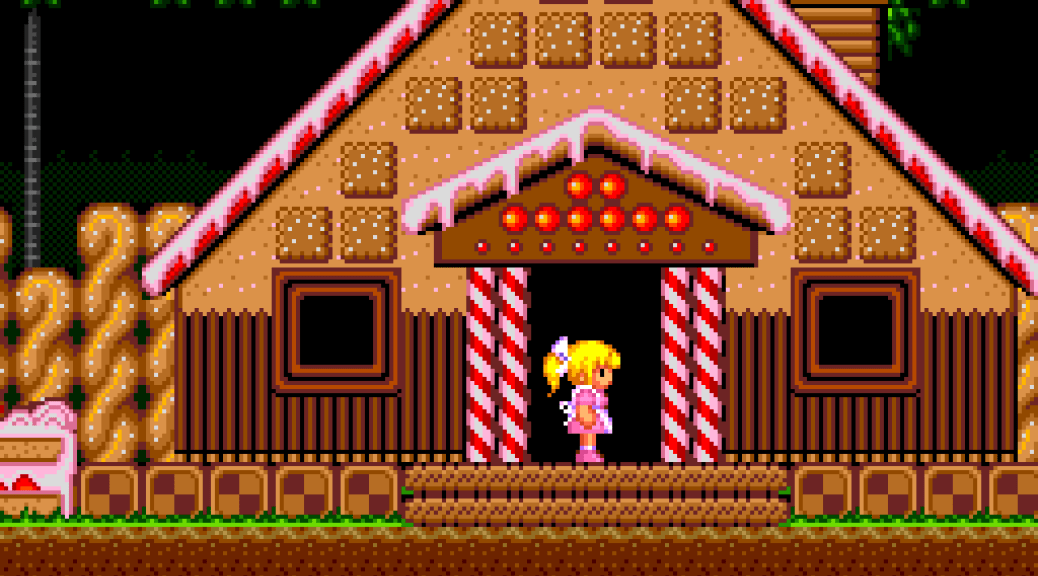
The Fairytale Dreams of Alice, PC Engine
Originally released for the PC Engine in 1990 in Japan only as “Fushigi no Yume no Alice” (aka Alice in Wonderdream), this challenging and colourful platform game was fan-translated in 2021 as The Fairytale Dreams of Alice and is now fully playable in English.

U.N. Squadron, Arcade
Released in Japan as “Area 88” and based on the Manga series of the same name, U.N. Squadron is a horizontally-scrolling bullet hell shooter arcade game developed and distributed by Capcom in 1989. It features three playable characters, each flying a different aircraft, and one or simultaneous two-player gameplay.

Another Bible, Super Game Boy
Another Bible is the fourth game in the Megami Tensei ‘Last Bible‘ spin-off series and was originally released for the original Game Boy, in Japan only, in 1995. An English fan translation, by Aeon Genesis, was released in 2002 and the game is also Super Game Boy compatible, so that’s the version I’m showing here.
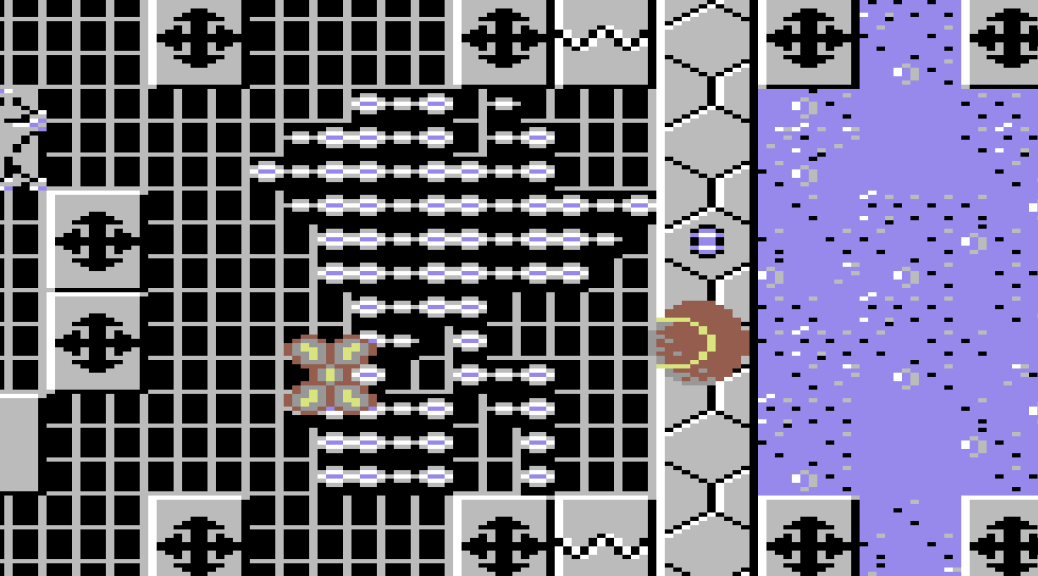
Re-Bounder, Commodore 64
Re-Bounder is the 1987 sequel to the brilliant ball-bouncing game, Bounder. It was once again developed and published by Gremlin Graphics and this time features both horizontally and vertically-scrolling gameplay, whereas the previous game scrolled only vertically.
 The King of Grabs