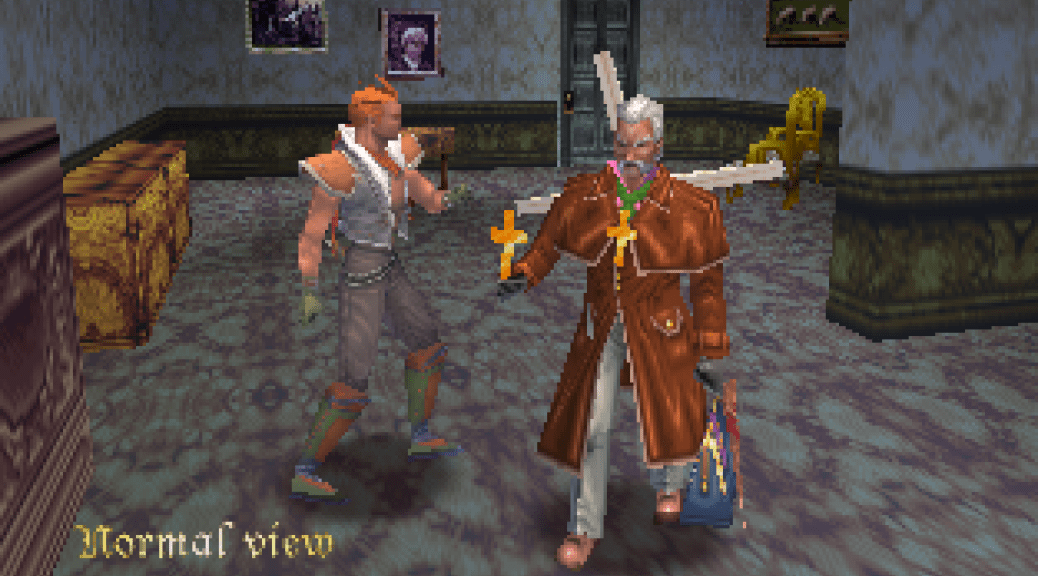
Developed by Konami‘s Kobe division and first released in 1999, Castlevania on the N64 (sometimes referred to as “Castlevania 64“) is a third-person 3D game – the first 3D game, in fact, in the popular horror/platform/action series.
Tag Archives: skeletons

Vradark’s Revenge, ZX Spectrum Next
The sequel to Vradark’s Sphere on the ZX Spectrum, Vradark’s Revenge is another fantasy-based Roguelike from the same development team, SaNchez, only this time it has been created specifically for the ZX Spectrum Next, which is an enhanced, modern ZX Spectrum remake/variant that first came out in 2017.
Vradark’s Revenge was initially released in 2022 and an emulated version, that runs in Windows, was later released on Steam in 2023 through publisher “Drunk Fly Oy” (which is a bizarre company name if ever there was one).

Vradark’s Sphere, ZX Spectrum
Vradark’s Sphere is a Roguelike fantasy role-playing game that was created by Aleksander Udotov, for 128K Spectrums, and first released in 2018. To me it is the epitome of what I would call “Modern Retro” (ie. a modern game, made to look old or be played on old hardware), and it looks and plays fantastically well.
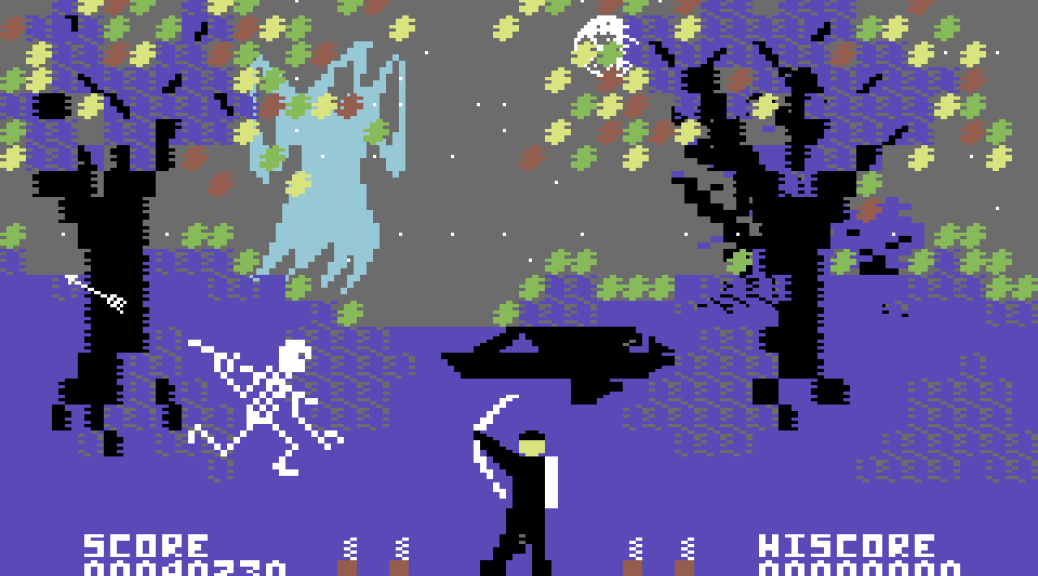
Forbidden Forest, Commodore 64
Created by Paul Norman for Cosmi Corporation, Forbidden Forest is a legendary survival horror game from 1983 in which you play an archer trying to avoid attacks from a variety of hostile creatures inside a sprawling forest.
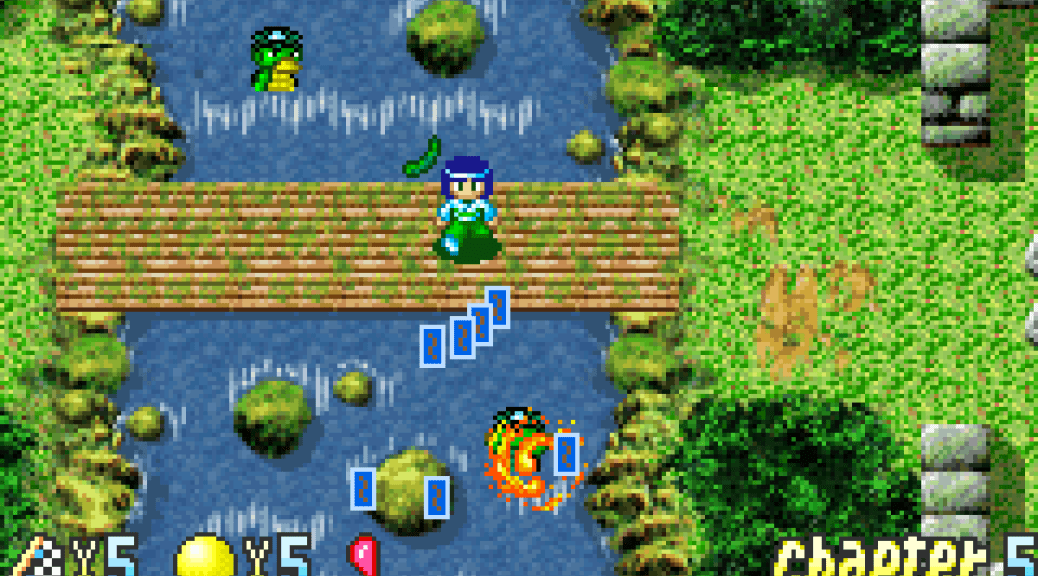
Pocky & Rocky with Becky, Game Boy Advance
Pocky & Rocky with Becky for the Game Boy Advance is the fourth game in the Pocky & Rocky series (following on from Kiki Kaikai, Pocky & Rocky, and Pocky & Rocky 2). The game was developed and published by Altron in Japan in 2001 and was subsequently localized and published by Natsume in North America in 2002.

Pocky & Rocky 2, Super Nintendo
The sequel to Pocky & Rocky (known as Kiki Kaikai in Japan) was developed by Natsume and published by Ocean Software in Europe (by Natsume themselves in Japan and North America). Pocky & Rocky 2 was first released in 1994 and is a similar scrolling shooter to its predecessor, but with multiple companions, instead of just one.

Wiz, ZX Spectrum
Created by Silhouette Software and published for the ZX Spectrum by Melbourne House in 1987, Wiz is an obscure scrolling action game where you control a wizard who must climb levels to gain magical powers so that he can break the link that joins the dark world to the light world. Whatever that means…

Ghoul Panic, Arcade
First released into arcades in 1999, Ghoul Panic by Namco is a spooky Halloween-style lightgun shooter for one or two players that is heavily inspired by Namco‘s Point Blank series. The game was developed by Eighting/Raizing and features colourful, well-animated 3D graphics throughout.

Point Blank, Arcade
Point Blank (aka Gun Bullet in Japan) is a minigame-based, humorous lightgun shooter for one or two players. It was created by Namco and initially distributed into arcades in 1994.

Devilish: Ball Bounder, Nintendo DS
Devilish: Ball Bounder (aka Classic Action: Devilish in North America; aka Devilish in Europe) is the third game in the Devilish series and was released thirteen years after its predecessor, Devilish: The Next Possession for the Megadrive/Genesis. It was developed by Starfish Kaihatsu and released for the Nintendo DS in 2005 in Japan and Europe, and 2007 in North America.
 The King of Grabs