
For the fourth instalment in the Quake series id Software returned its emphasis back to the single-player story-driven mode of the first two Quake games. Actually, the majority of development on Quake 4 was actually done by Wisconsin-based Raven Software, with id Software supervising.
Tag Archives: guns
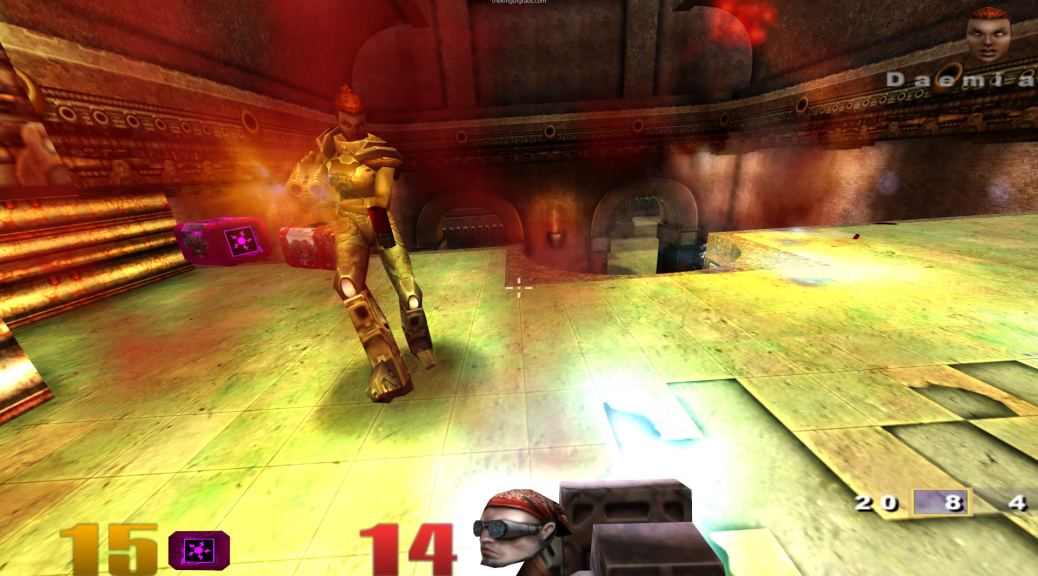
Quake III Arena, PC
Quake III took a different route to the previous Quakes – in this one it was all about deathmatching and player versus player arenas. Gone was the single-player, story-driven, puzzle/action side of the game, and in came finely-tuned deathmatch arenas. It’s not called Quake III Arena for nothing…

Turrican II: The Final Fight, Commodore 64
Turrican II: The Final Fight is the outstanding sequel to the excellent Turrican – a classic run-and-gun platform shooter created by German coder Manfred Trenz. It was originally published by Rainbow Arts for the Commodore 64 in 1991.

Turrican, Commodore 64
Turrican was written by German coder Manfred Trenz and was first published for the Commodore 64 by Rainbow Arts in 1990. It is a scrolling platform shooter that has similarities to Nintendo‘s Metroid series of games, and also owes a lot to the obscure Data East arcade game Psycho-Nics Oscar.
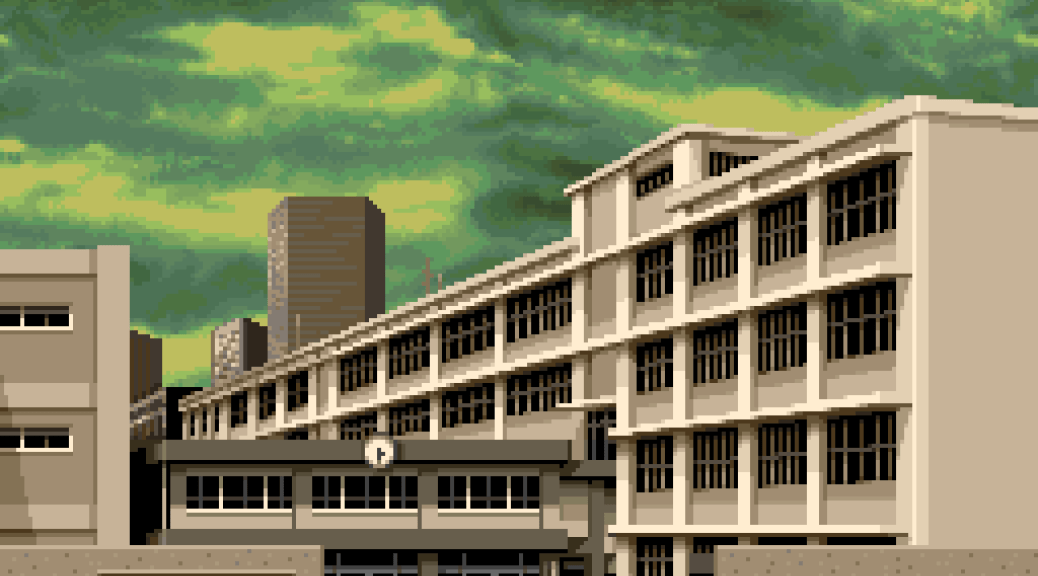
Shin Megami Tensei If…, Super Nintendo
Shin Megami Tensei If… is a spin-off from the main Shin Megami Tensei series that is smaller and more confined than previous games. It was developed and published by Atlus in 1994.
This time the story is set in a school where a bullied pupil tries to summon demons in the gym, to deal with his harassers, only to wind-up being possessed by them and threatening to destroy the world. You play a group of schoolkids who team-up to try to stop him.

Shin Megami Tensei II, Super Nintendo
Shin Megami Tensei II is the direct sequel to Shin Megami Tensei and was first published in Japan in 1994 by Atlus.
While the basic gameplay is essentially the same as before, with tile-based movement and first-person combat sections, overhead city map sections, and magic, occult and religious themes, the developers deliberately chose not to connect this sequel directly to its predecessor, so story-wise it is somewhat different, being set in the far-flung future.

Shin Megami Tensei, Super Nintendo
This cult Japanese Role Playing Game was originally released for the Super Nintendo in 1992 in Japan. It was developed by Atlus and is the third game in the Megami Tensei series, and the first in the central Shin Megami Tensei series.
The game mixes elements of philosophy, occultism, science fiction, religion, and role-playing in a somewhat unique way. It remained untranslated into English for a decade, because of its controversial content and Nintendo‘s strict policy guidelines. It wasn’t until 2002, and an unofficial fan translation patch by team Aeon Genesis, that the original SNES release received an English translation. An official English translation was eventually released on iOS in 2014 by Atlus.

Digital Devil Story: Megami Tensei II, Famicom
The second game in the Megami Tensei series was developed by Atlus and published for the Nintendo Famicom by Namco in 1990. It’s another Japan-only RPG featuring demon-summoning and turn-based combat and is considered by many to be much better than the first game.
Continue reading Digital Devil Story: Megami Tensei II, Famicom

Desert Strike, Atari Lynx
This conversion of the classic Sega Megadrive/Genesis game, Desert Strike, is about as good as you could expect on the Atari Lynx. Meaning: that it is very, very good indeed.
In fact: it is surprisingly close to the original, but obviously with smaller, more condensed graphics.
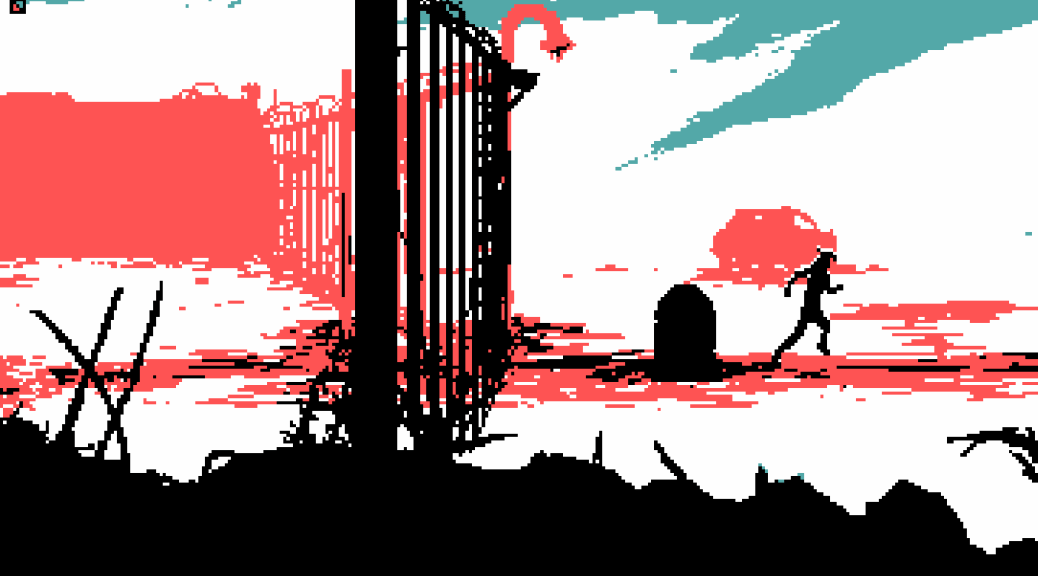
The Eternal Castle, PC
The Eternal Castle is a stunning platform/action indie game from Leonard Menchiari, Daniele Vicinanzo, and Giulio Perrone, and published by Playsaurus in 2019.
It is a tribute to games such as Another World, Flashback, Limbo, and INSIDE, and features a lone character, running from left to right, moving from puzzle to puzzle, trying to survive in a weird, dark world full of technology, destruction, mystery and death.
 The King of Grabs