Tag Archives: Cult Hit

Ultima Underworld: The Stygian Abyss, FM Towns

Origin/Blue Sky Productionsclassic MS-DOS RPG, Ultima Underworld: The Stygian Abyss, was released for the FM Towns in 1993 by Electronic Arts Victor, Inc.*

*= Electronic Arts Victor was a joint venture between Electronic Arts and the Victor Musical Industries subsidiary of JVC, established in September 1992 in Tokyo. Electronic Arts Victor‘s mission was to translate Electronic Arts‘ library of games to Japanese language and to distribute them in Japan, as well as to create original titles for the Japanese market.

Continue reading Ultima Underworld: The Stygian Abyss, FM Towns

Syndicate, FM Towns

Although the FM Towns port of Bullfrog‘s classic Syndicate is in Japanese, it’s still a great game to play if you know what you’re doing. Of course this is not the right version of Syndicate to play if it’s your first time (unless you can read Japanese), but it is a sharp port with crisp high resolution graphics and responsive controls.

Continue reading Syndicate, FM Towns

Marvel Super Heroes, Arcade

Marvel Super Heroes is a one-on-one fighting game developed by Capcom and distributed into arcades in 1995. It is the second Capcom beat ’em up based on characters from the Marvel Comics line and is loosely based on “The Infinity Gauntlet” storyline from the Marvel Universe. The gameplay follows the Street Fighter II template for fighting games and uses six buttons and a joystick for each player. The game can be played in either normal or ‘turbo’ mode.

Continue reading Marvel Super Heroes, Arcade

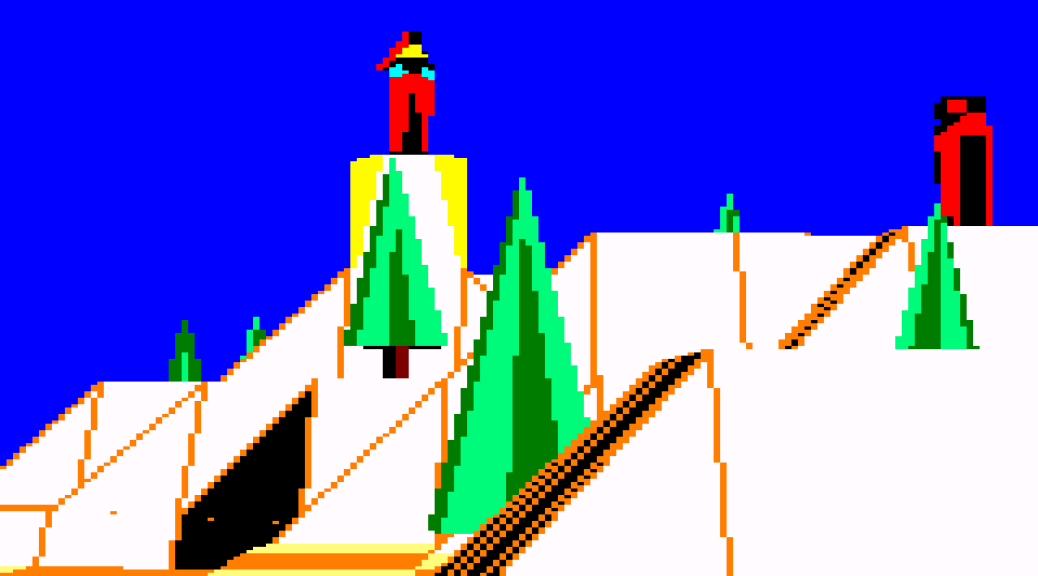
The Sentinel, Amstrad CPC

Geoff Crammond‘s classic The Sentinel was first released for the Amstrad CPC by Firebird in 1987, and it is one of the best 8-bit versions of this weird and wonderful game.

Continue reading The Sentinel, Amstrad CPC

The Eidolon, Atari 8-Bit

Using an enhanced version of the fractal engine created for Rescue On Fractalus, The Eidolon is a first-person action game – developed by Lucasfilm Games and published by Epyx in North America in 1985 and Activision in Europe in 1986 – that divided critics when it was first released. While Zzap!64 magazine gave it 97% and a gold medal; raved about the game, and said that it was “not to be missed“, the reviewers of Computer Gaming World disliked it, describing it as “one of the worst games of 1986“… There’s no accounting for taste…

Continue reading The Eidolon, Atari 8-Bit

Castlevania III: Dracula’s Curse, NES/Famicom

The third game in the Castlevania series, Castlevania III: Dracula’s Curse, was first released for the Nintendo Famicom in 1989 in Japan (under the title of “Akumajō Densetsu“). A North American NES release followed in 1990, and a European release in 1992.

Continue reading Castlevania III: Dracula’s Curse, NES/Famicom

Castlevania II: Simon’s Quest, NES/Famicom

The second game in the Castlevania series, Castlevania II: Simon’s Quest, was originally released in Japan (as “Dracula II – Noroi no Fuuin“) for the Famicom Disk System in 1987, and in North America for the NES in 1988. Europe had to wait until 1990 for a release of the game.

Continue reading Castlevania II: Simon’s Quest, NES/Famicom

Castlevania: Symphony of the Night, Sega Saturn

Konami‘s brilliant PlayStation game, Castlevania: Symphony of the Night, was released for the Sega Saturn in 1998, but it was only ever released in Japan (under the title “Akumajou Dracula X: Gekka no Yasoukyoku“). Thankfully, an English translation patch is available to make the game playable to those who can’t read Japanese. The patch – created by ‘Knight of Dragon’ – also features numerous bug fixes and improvements.

For those who’ve never played Symphony of the Night before: it is a direct sequel to Rondo of Blood and is rightly regarded as one of the best Castlevania games in the long-running series (if not THE best).

Continue reading Castlevania: Symphony of the Night, Sega Saturn

Cameltry, Super Nintendo

Cameltry is a simple-but-absorbing gravity game where you rotate the landscape around in order to make a ball fall through a maze – eventually reaching the goal. The quicker you complete a level the more chance you have of extra time being added to your next round.

Continue reading Cameltry, Super Nintendo

The Sentinel, ZX Spectrum

The ZX Spectrum version of Geoff Crammond‘s classic puzzle game, The Sentinel, was ported by Software Creations (with assistance from Mr. Crammond himself) and published by Firebird Software in 1987.

Continue reading The Sentinel, ZX Spectrum