Tag Archives: 2D graphics

Flat, two-dimensional graphics, usually constructed of pixels. Not three-dimensional.

Bionic Commando (US version), Commodore 64

This is the US-developed port of Capcom‘s Bionic Commando. It was created by Pacific Dataworks International and published by Capcom in 1988. If you want to see the (IMHO vastly superior) British version of the game: click here.

Continue reading Bionic Commando (US version), Commodore 64

Bionic Commando, Commodore 64

There are two versions of Bionic Commando for the Commodore 64 – a British version, developed by Software Creations and published by GO!, and a US version, developed by Pacific Dataworks International and published by Capcom. Both were released in 1988.

The game shown here is the British version, which – in my humble opinion – is by far the better of the two releases.

Continue reading Bionic Commando, Commodore 64

Space Invaders, Super Game Boy

The 1994 Game Boy version of Taito‘s classic Space Invaders is legendary for its Super Game Boy enhancements. It not only features a variety of well-designed borders and enhanced colour palettes, but it also includes an exclusive, separate ‘arcade’ port that is only accessible when using a Super Game Boy on a SNES.

Continue reading Space Invaders, Super Game Boy

Wonder Momo, PC Engine

Developed by Namco and published – in Japan only – by NEC Avenue in 1989, Wonder Momo is a conversion of a weird Japanese arcade game featuring a female lead character who must fight off attackers during a theatre stage play. And, if that sounds bizarre, then – well – that’s because it is! Unlike the arcade original, the PC Engine version of Wonder Momo has been fan-translated into English and Spanish, so is more accessible to Western audiences.

Continue reading Wonder Momo, PC Engine

Wonder Momo, Arcade

I first encountered Namco‘s Wonder Momo on the PC Engine, because it had received a fan translation, and I was curious to see what the game was about. I then discovered that it was a conversion of a 1987 arcade game, featuring a young girl called Momo, who can turn into a ‘superhero’ by building up her “Wonder Meter“.

This bizarre arcade game was only ever released in Japan, but has subsequently built up a cult following around the world, and has also inspired manga/anime, and resulted in a sequel that was released in 2014.

Continue reading Wonder Momo, Arcade

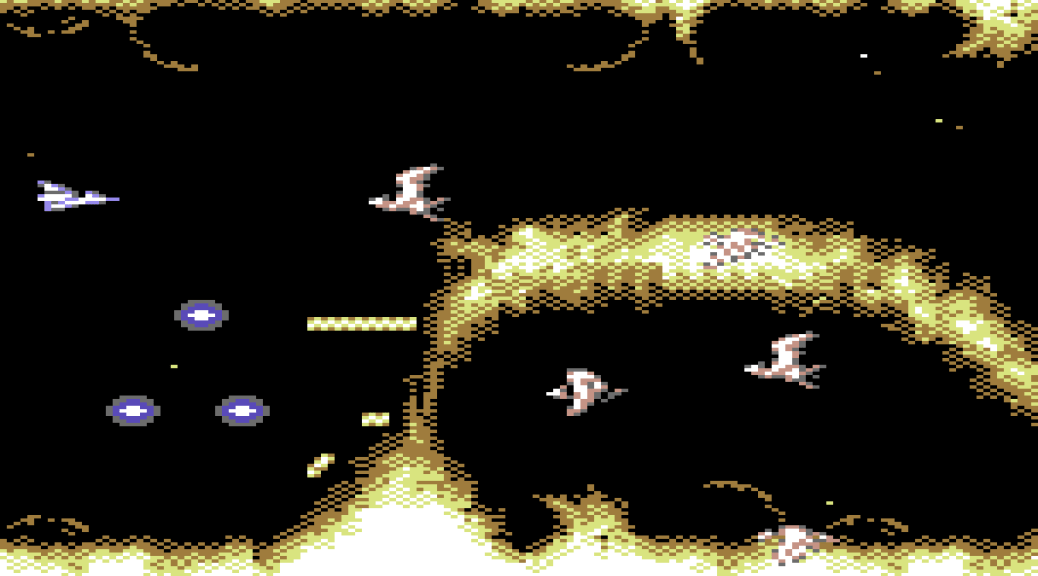
Salamander, MSX

The MSX port of Konami‘s classic arcade shooter, Salamander, was first released in Japan – on cartridge – in 1987. And although it shares the name and certain elements from the arcade game, this is a completely new version of Salamander, with a new storyline, new characters, ships and levels. It is sometimes referred to as “Salamander: Operation X“.

Continue reading Salamander, MSX

Atomic Runner, Megadrive/Genesis

A conversion of the 1988 arcade game, Atomic Runner Chelnov. Developer/publisher Data East dropped the “Chelnov” part from the title of the 1992 Megadrive/Genesis release, but the gameplay stays more or less the same.

You must shoot and jump your way through seven continually-scrolling stages, only stopping to fight bosses at the end of each.

Continue reading Atomic Runner, Megadrive/Genesis

Legend of the River King, Game Boy Color

Developed by TOSE Co., Ltd. and published by Victor Interactive Software in Japan and Natsume in North America and Europe, Legend of the River King is a JRPG that is based around the sport/pastime of fishing. It was initially released for the Game Boy in 1997, and the Game Boy Color version (which is Super Game Boy enhanced) came out in 1999.

Continue reading Legend of the River King, Game Boy Color

Express Raider, Arcade

In Data East‘s 1986 Wild West-themed scrolling action game – Express Raider (aka “Western Express” in Japan) – you’re not trying to be the good guy; you’re actually the bad guy, trying to hold up a series of trains and steal as much gold and money as possible.

Continue reading Express Raider, Arcade

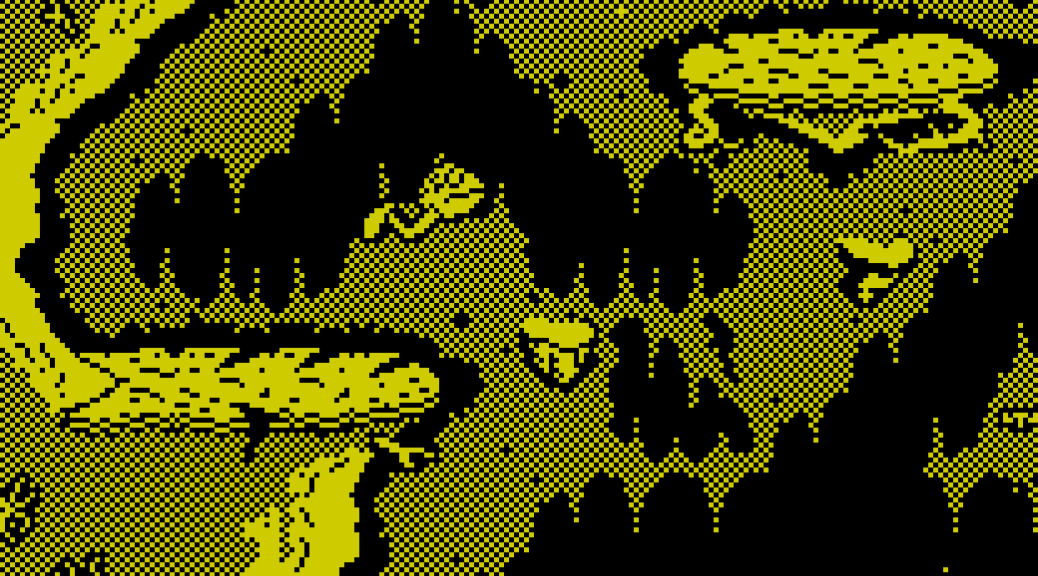
Poogaboo: La Pulga 2, PC

Poogaboo: La Pulga 2 is the rather obscure sequel to the ZX Spectrum classic, Bugaboo (The Flea), aka La Pulga. It was written by the original author of La Pulga (Paco Suárez), and was published by Opera Soft, for PC MS-DOS, the ZX Spectrum, MSX and Amstrad CPC, in 1991.

Continue reading Poogaboo: La Pulga 2, PC