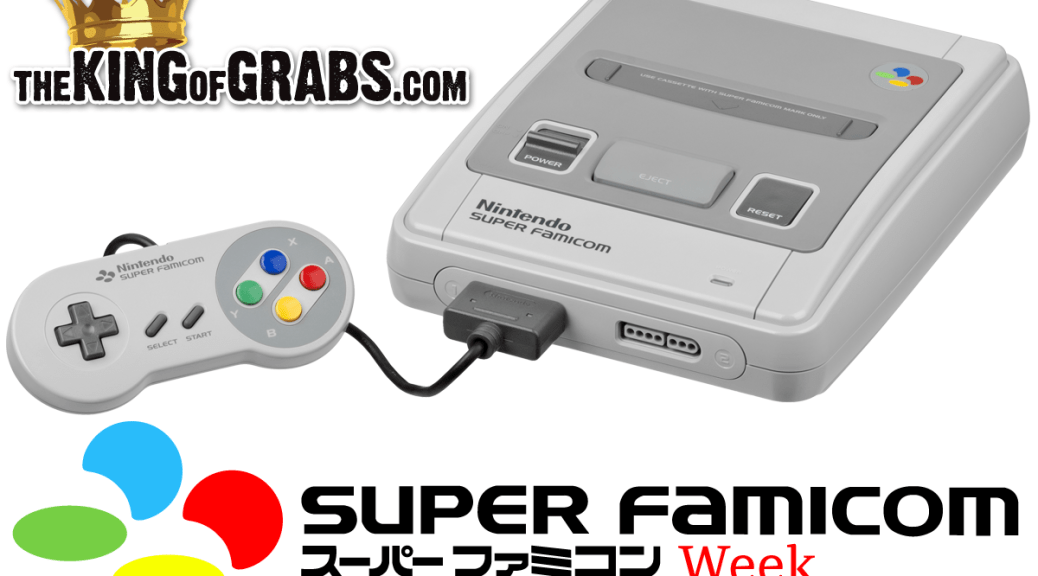
The Super Nintendo Entertainment System (SNES for short) was first released in Japan as the Super Famicom in 1990.
After the success of the NES, any follow-up console from Nintendo would really have to be “super” to keep the ball rolling, and the SNES certainly was just that.
Countless great video games were released for the Super Nintendo and the system stands out in retro gaming history as something unique and powerful – compared to what had gone before it.
We’re spoiled now. Modern consoles can render a hundred thousand polygons in an instant. But back in 1990 you were lucky if you got hardware sprites and smooth-scrolling backgrounds. Thankfully the Super Nintendo had all of that. And it had “Mode 7” too – a now legendary graphics technique that allowed flat textures to move around in 3D space. Later on it had a special chip, called the Super FX Chip, that gave it more power and better 3D graphics capabilities.
The Super Nintendo played host to thousands of games overall, and a percentage have gone down in video gaming history as some of the best ever. The allure of the Super Nintendo is still strong. Be that in real hardware, which is still quite easy to get hold of, or via the magic of emulation.
This week I’m going to be celebrating the brilliance of the Super Nintendo Entertainment System by adding a collection of grabs from great SNES games. Well, ones that we haven’t featured already, anyway. 🙂
Here’s a list of links to what was published that week:
Addams Family Values,
Super Mario Kart,
International Superstar Soccer Deluxe,
Sim Ant,
F-Zero,
Dungeon Master,
E.V.O.: Search For Eden,
The Lost Vikings,
Teenage Mutant Ninja Turtles IV: Turtles In Time,
Super Bomberman,
Lufia II: Rise of the Sinistrals,
Krusty’s Super Fun House,
Pocky & Rocky,
Smash TV
Click here to list all the Super Nintendo games we’ve featured so far.
Enjoy!
The King of Grabs