
New Adventure Island was first released by Hudson Soft in June 1992 in Japan, for the PC Engine, and later that same year for the TurboGrafx-16 in North America. It is more or less a remake of the original Adventure Island, which in turn was a port of the Sega arcade game, Wonder Boy.
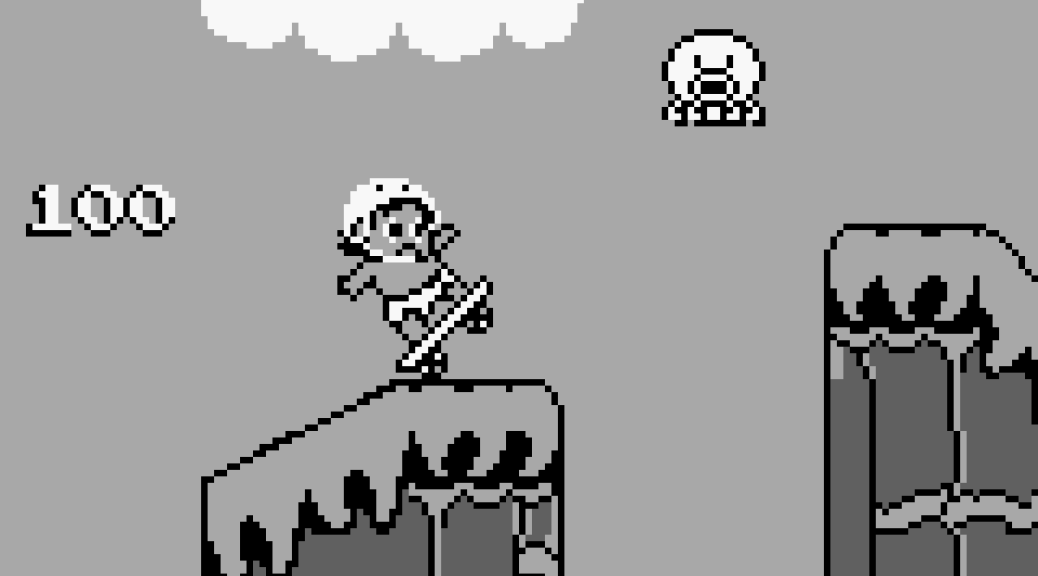
Adventure Island, Game Boy
Thankfully this is an adaption of Adventure Island II on the NES/Famicom, rather than a port of the original Adventure Island. I say “Thankfully” because the original Adventure Island was nothing more than a port of the Sega‘s 1986 arcade game, Wonder Boy, and Adventure Island II on the NES/Famicom was a step towards something a bit more substantial. Which is what we’re getting here.
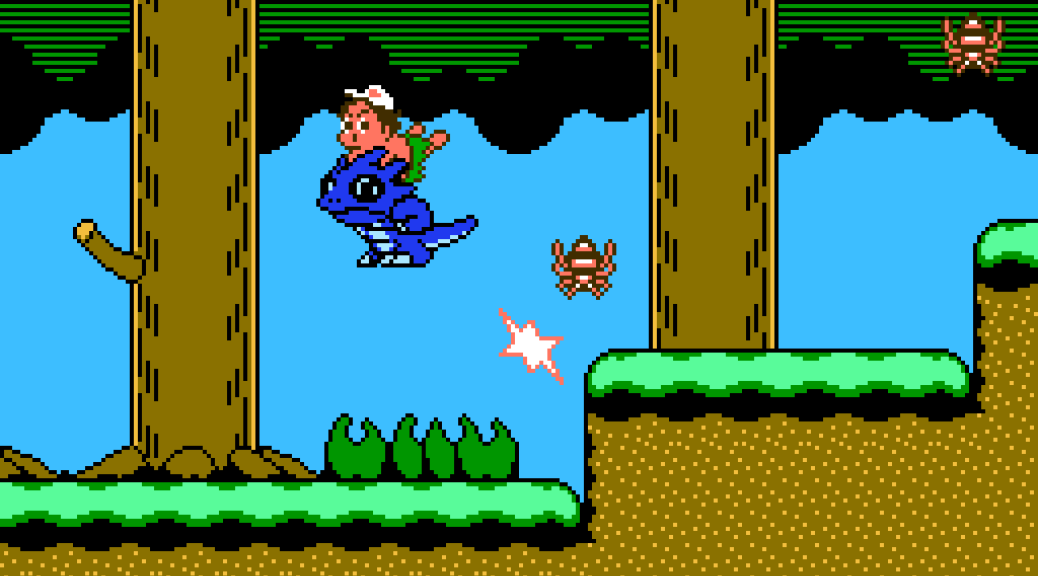
Adventure Island II, NES/Famicom
Adventure Island II is the sequel to Adventure Island, although whereas the first Adventure Island was an adaptation of the Wonder Boy arcade game, this second title in the series is an original game in its own right and features a number of improvements over the first Adventure Island. Adventure Island II was developed by Now Production and first published by Hudson Soft in 1991.

Adventure Island, NES/Famicom
Hudson Soft‘s Adventure Island on the NES/Famicom is an adaptation of Sega‘s Wonder Boy arcade game, although subsequent Adventure Island games were original titles and the series went on to become a relatively popular ‘spin-off’ in its own right. Adventure Island was initially released in Japan in 1986, then in North America 1988, and finally in Europe in 1992.

Kaboom!, Atari 2600
Another simple Atari 2600 game with compelling gameplay: Kaboom! is a 1981 Activision game where you must catch falling bombs (dropped by what looks like a burglar, but we’ll call him The Mad Bomber) onto a set of bats, without allowing any bombs to hit the ground below you.

Frankenstein Special
Simply: a collection of games based on the infamous 1818 Mary Shelley novel, Frankenstein; or, The Modern Prometheus.

Frankenstein: Through the Eyes of The Monster, Sega Saturn
Frankenstein: Through the Eyes of The Monster is a Myst-style point-and-click adventure game starring Tim Curry as Dr. Frankenstein. It was developed by Amazing Media and was first published for the PC by Interplay in 1995, and the Sega Saturn version – shown here – came out later, in 1997.
Continue reading Frankenstein: Through the Eyes of The Monster, Sega Saturn

Mary Shelley’s Frankenstein, Megadrive/Genesis
The Megadrive/Genesis version of Bits Studios‘ Mary Shelley‘s Frankenstein is a bit of a poor relation to the Super Nintendo version of the game. Mainly because the lack of colour in the visuals tends to make this version look a bit rough when compared to the SNES version. But it is what it is: a fairly bog standard platform game loosely based on Kenneth Branagh‘s 1994 film.
Continue reading Mary Shelley’s Frankenstein, Megadrive/Genesis
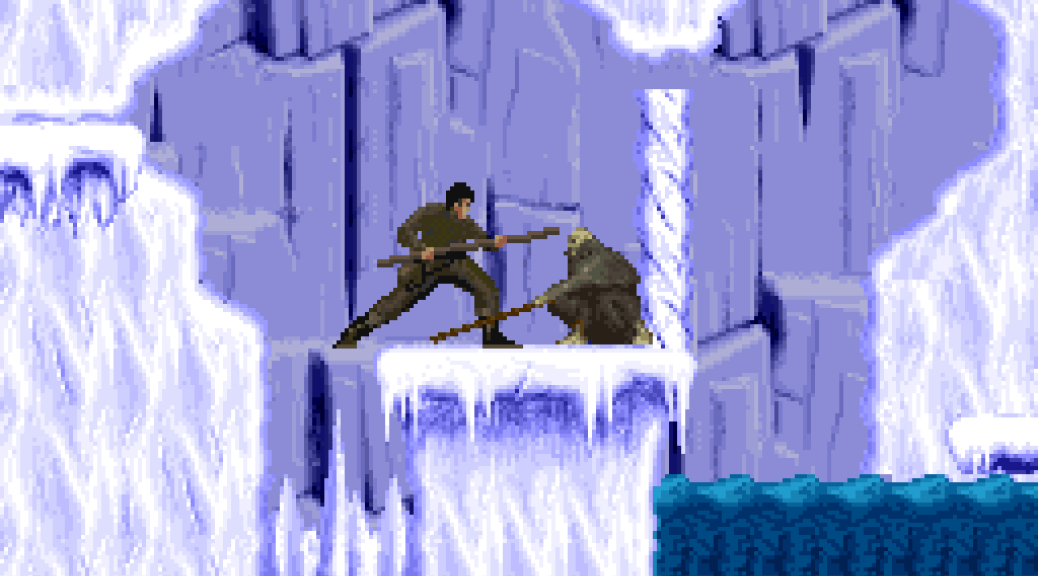
Mary Shelley’s Frankenstein, Super Nintendo
The 1994 Super Nintendo game, Mary Shelley’s Frankenstein, is an adaptation of the film of the same name, starring Robert De Niro, Helena Bonham Carter and Kenneth Branagh. It was developed by British company Bits Studios and published by Sony Imagesoft in North America only.
Continue reading Mary Shelley’s Frankenstein, Super Nintendo

Frankenstein, PC
Developed by Junkyard and published for MS-DOS by Merit Studios in 1994, this adaptation of Mary Shelley‘s infamous horror story is a cartoon platform game where you have to collect pieces of The Monster’s body and put them back together again (ie. the same as in most video game adaptations of Frankenstein).

