
Hexen is the 1995 MS-DOS-based sequel to Heretic and is another fantasy-themed first-person shooter utilising the Doom engine. Or at least: a modified version of the Doom engine. It was again developed by Raven Software and published by id Software, and John Romero once again acted as producer of the game.
Tag Archives: weapons
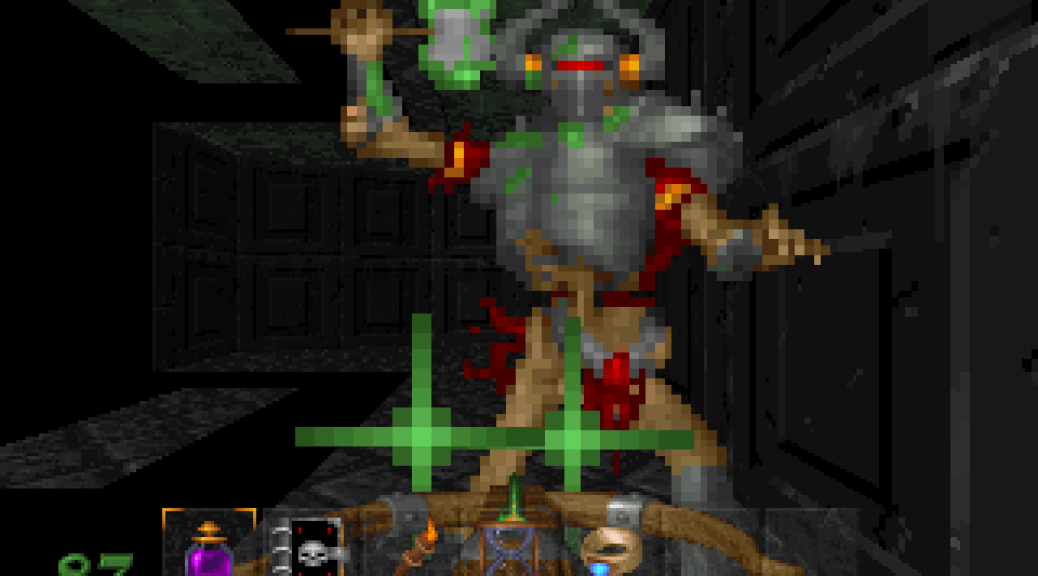
Heretic, PC

Arena, Game Gear
The game’s full North American title is Arena: Maze of Death, but it was released as just Arena in Europe so that’s what I’m going to call it. It’s an isometric shoot ’em up with you playing a “pro-democratic freedom fighter” called Guy Freelander who must fight his way through a variety of industrial locations in order to reach a television station to broadcast proof of an evil corporation’s wrongdoings.
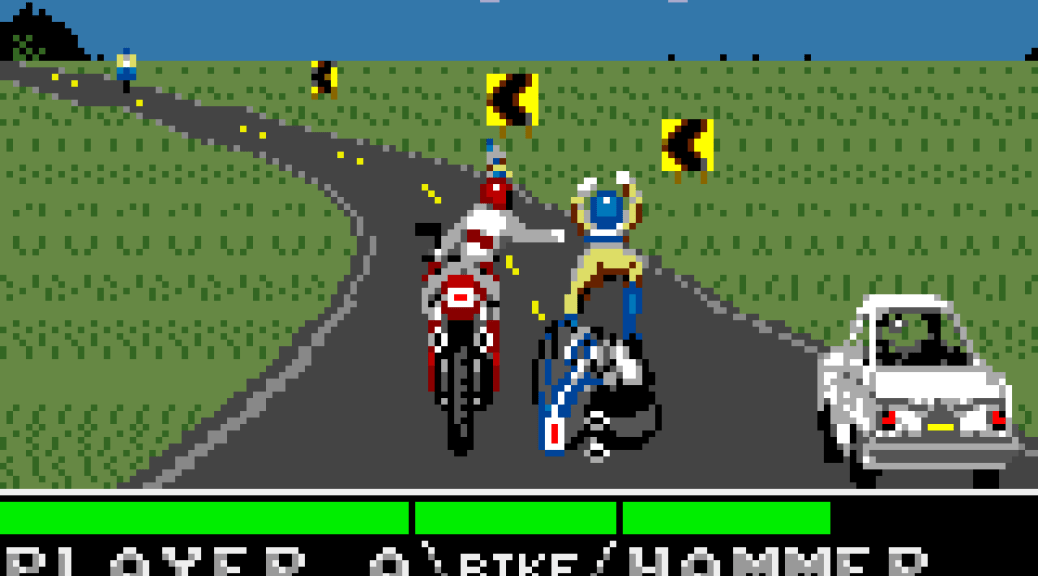
Road Rash, Game Gear
A handheld conversion of the classic Megadrive motorbike racing game that works very well on the Game Gear. Game Gear Road Rash was programmed by Gary Priest for Probe Software and published by US Gold in 1993.

TimeSplitters: Future Perfect, XBox
TimeSplitters: Future Perfect is a first-person shooter developed by Free Radical Design and published by Electronic Arts in 2005. It is the third game in the TimeSplitters series and was released for XBox (the version shown here), GameCube, and PlayStation 2.
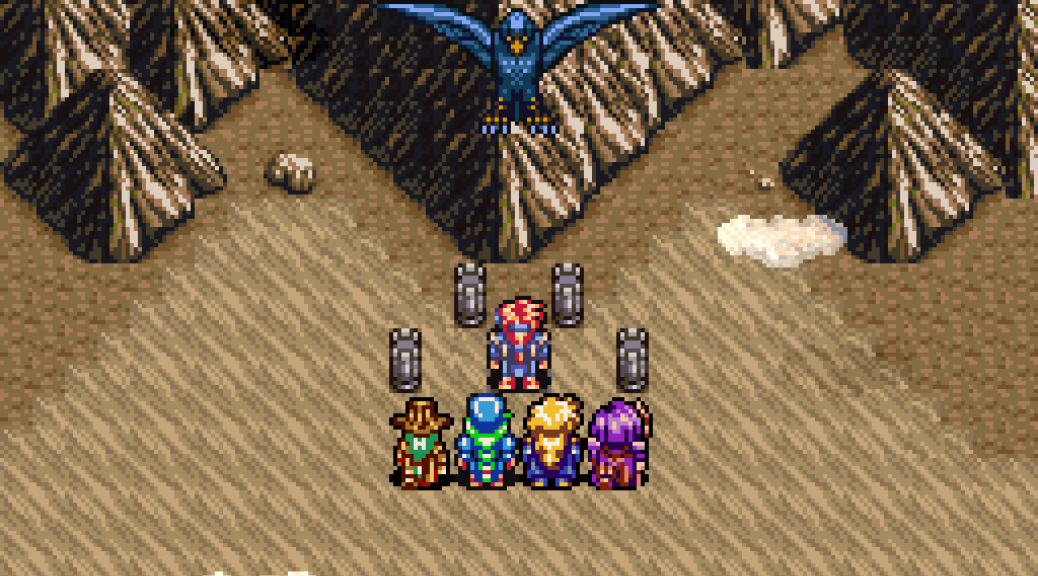
Emerald Dragon, Super Nintendo
Emerald Dragon is a Japan-only RPG that was developed by Alfa System and published by MediaWorks for the Super Nintendo in 1995. It was given an English fan translation (by Translation Corporation) in 2014, which is great because it is an excellent game!

Ghosts ‘N Goblins Arcade, Commodore 64
Ghosts ‘N Goblins Arcade is another 2015 release from Nostalgia that re-makes the original (flawed) Elite port of Ghosts ‘N Goblins, and it features completely new graphics, sound, and gameplay features that bring it more into line with the original Ghosts ‘N Goblins arcade game.

Ghosts ‘N Goblins, Commodore 64
This 1986 Commodore 64 conversion of Capcom‘s classic Ghosts ‘N Goblins was programmed by Chris Butler. Chris also created the graphics, which are pretty good overall, if a little spartan in places. Mark Cooksey created the music.

Defenders of Oasis, Game Gear
Not to be confused with Beyond Oasis on the Sega Megadrive, Defenders of Oasis is a turn-based Role-Playing Game for the Game Gear that is based on the “One Thousand and One Nights” middle-eastern folk tales, also known as “Arabian Nights“. It was developed and published by Sega in 1992.

Nemesis 3: The Eve of Destruction, MSX
The second Gradius/Nemesis sequel developed and released exclusively for the MSX by Konami, Nemesis 3: The Eve of Destruction is another great ‘bullet hell’ progressive weapons shooter that really shows what the MSX is capable of.

