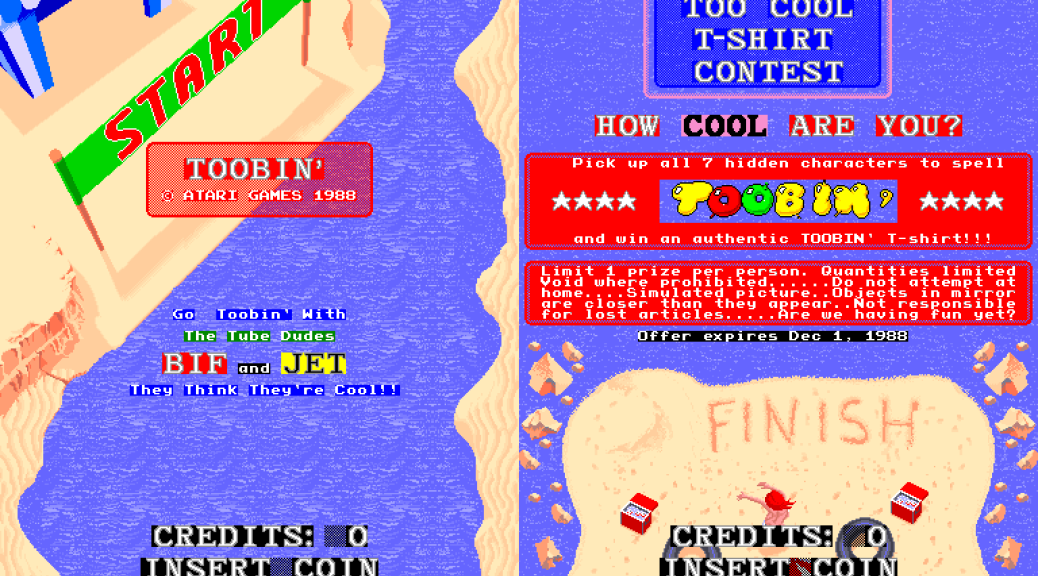
Some old arcade games are instantly recognisable. Toobin’ – by Atari Games – is one of them.
It’s the only video game I can think of that utilises ‘kids floating down a river on a rubber tube’ style gameplay mechanics.
Some old arcade games are instantly recognisable. Toobin’ – by Atari Games – is one of them.
It’s the only video game I can think of that utilises ‘kids floating down a river on a rubber tube’ style gameplay mechanics.
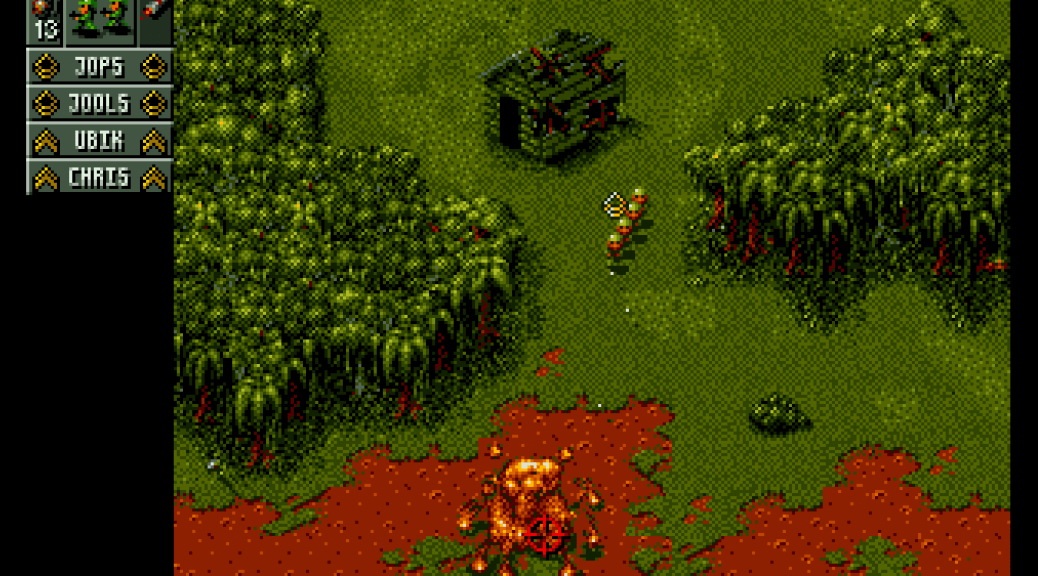
Sensible Software‘s brilliant Cannon Fodder is possibly their finest hour.
From the hilarious intro song, to the compelling action of the main game – Cannon Fodder is about as much fun as computerised war, with little titchy men and a mouse could possibly be.
Scuba Dive (Durell Software, 1983) features such a simple game idea, but one that works exceptionally well on the ZX Spectrum.
What is interesting about Demon’s Crest – a 1994 Super Nintendo release from Capcom – is that it is a spin-off from the Ghosts ‘N Goblins series.
Eagle-eyed gamers will recognise the red-skinned, demonic lead character – called Firebrand – as an enemy from the original Ghosts ‘N Goblins arcade game. In fact: Demon’s Crest is actually the third game featuring Firebrand, after Gargoyle’s Quest (Game Boy), and Gargoyle’s Quest II (NES).
Namco‘s fairly unassuming 1985 release, Dig Dug II, is a fun sequel to the classic digging game, except in this game you are (the character) Dig Dug – on an island, with either your hose or your drill as weapons – and must defeat all the monsters to progress.
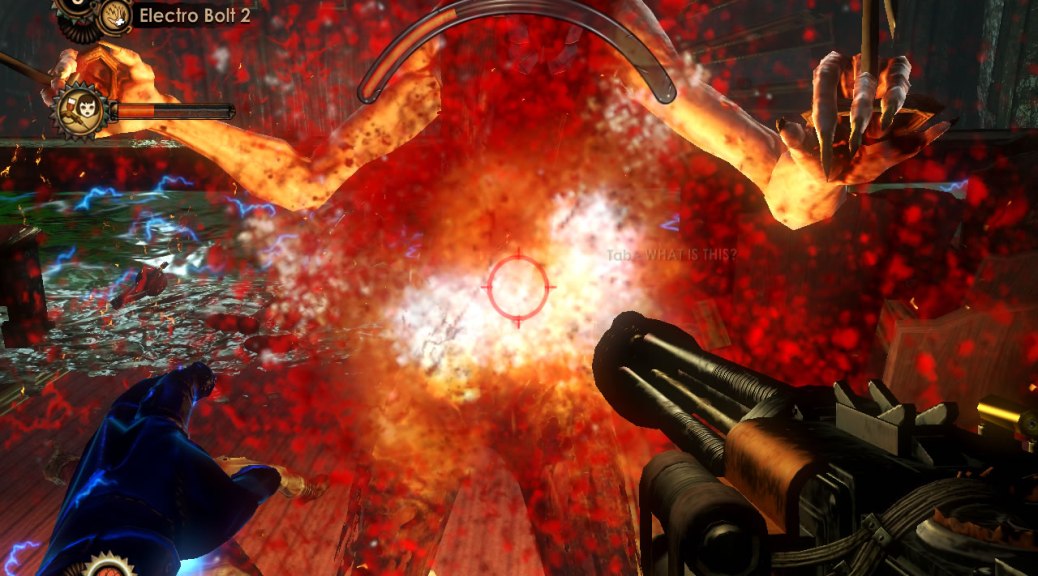
BioShock 2 was first released in 2010 by 2K Games.
Personally, I think BioShock 2 just edges it over its predecessor, because the setting is really interesting (rather than hunting Big Daddies, in this one you get to play AS a Big Daddy), and also because this sequel has a decent multiplayer side (the first BioShock had no multiplayer). And also because the game mechanics are slightly more detailed than the first game.
BioShock was first released in 2007 by 2K Games.
It has garnered something of a reputation over the years – for being a game with real drama and emotion. And it is true to say that BioShock is not your average type of first person shooter.
Jeremy Smith and Peter Irvin‘s groundbreaking Exile first came out on the BBC Model B in 1988 and was later converted to other systems. Including for the Commodore 64.
John Phillips‘ fabulous Nebulus attracted rave reviews when it was first released in 1987, and – to be honest – it still gathers rave reviews now. The Commodore 64 original in particular.
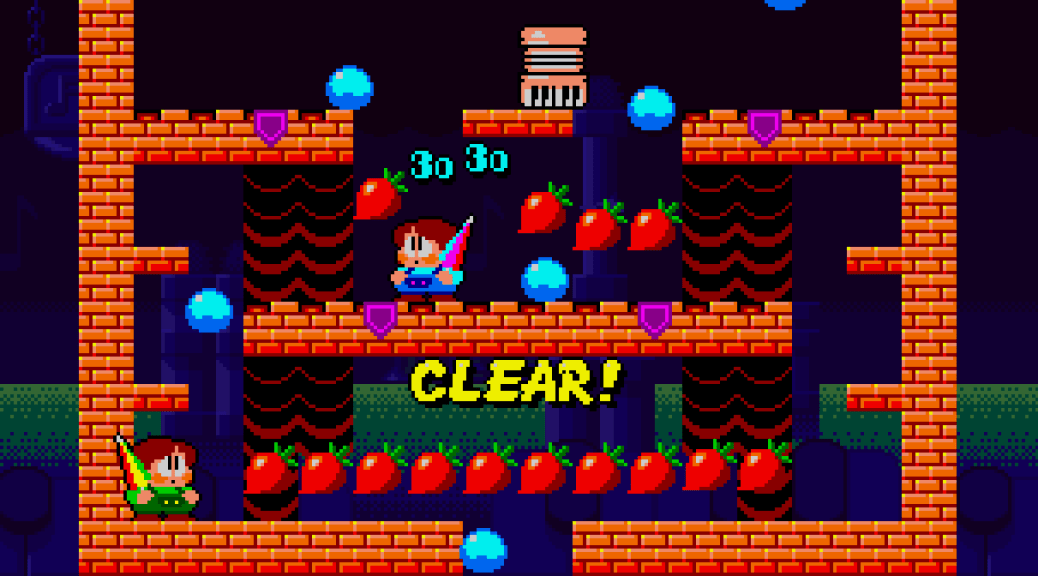
Parasol Stars is a wonderful sequel to Taito‘s classic Rainbow Islands, although it was never released in arcades.
The game was initially developed exclusively for the NEC PC Engine in 1991, and later released on other formats by Ocean Software. The brilliant Amiga version was released in 1992 and remains a firm favourite among Bubble Bobble series fans.




 The King of Grabs