Tag Archives: climbing

Roland on the Ropes, Amstrad CPC

Just like Amsoft‘s Roland in the Caves was a re-titling of Indescomp‘s ZX Spectrum classic Bugaboo the Flea, Roland on the Ropes is a re-titling of Indescomp‘s ZX Spectrum game, Fred.

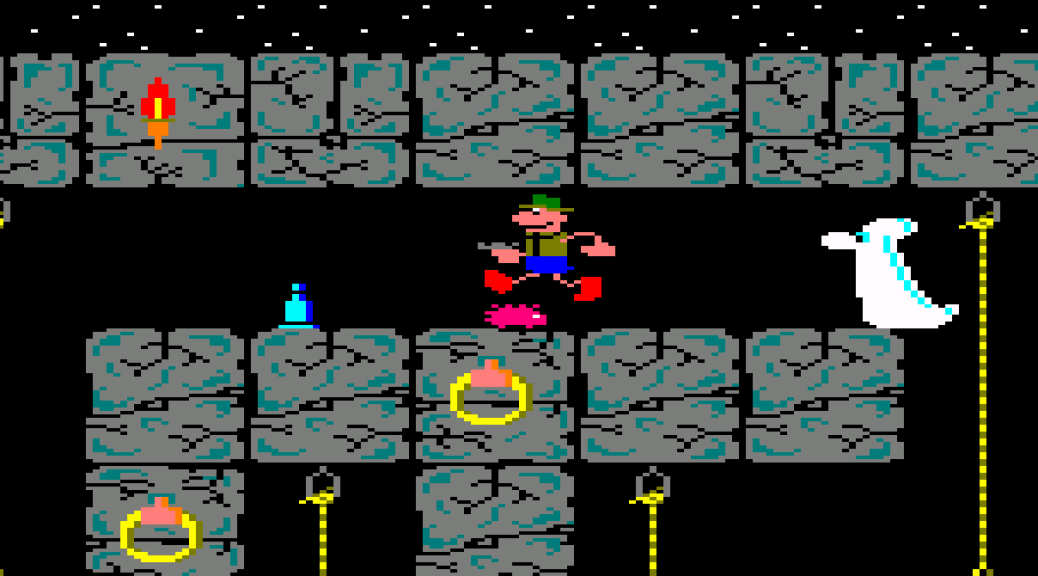
In Roland on the Ropes you play a cartoon-like tomb raider type character exploring a scrolling maze of platforms and ropes, looking for treasure and also trying to stop ghosts, mummies, and other creatures from killing you by shooting them with a gun. Your bullets are limited but you can find more ammo littering the cave to top up your gun. Ultimately your aim is to find the exit to the next level, as well as score as many points as possible.

Continue reading Roland on the Ropes, Amstrad CPC

Fred, ZX Spectrum

Written by famous Spanish software house Indescomp, Fred is a scrolling platform/maze game where you control a cartoon Indiana Jones-type character plundering treasures from an Egyptian tomb, while avoiding contact with ghosts and mummies.

Fred was first released in 1984. In its native Spain the game was published by Investronica, while in the UK and other parts of Europe the game was published by Quicksilva.

Continue reading Fred, ZX Spectrum

Indiana Jones’ Greatest Adventures, Super Nintendo

Indiana Jones’ Greatest Adventures is a run-and-gun platform/action game developed by Factor 5 (the German team who made Super Turrican, among others), with the supervision of LucasArts, and published by JVC in 1994.

The game features sequences based on the first three Indiana Jones films; the first being Raiders of the Lost Ark obviously; the second being Temple of Doom (my favourite), and the third being The Last Crusade.

Continue reading Indiana Jones’ Greatest Adventures, Super Nintendo

The Legend of Zelda: Twilight Princess, GameCube

The Legend of Zelda: Twilight Princess was developed and published by Nintendo for the GameCube and Wii in 2006 and is an unusual, beautifully-produced game with stunning visuals and evocative gameplay. It was the final first-party release from Nintendo for the GameCube.

Twilight Princess features involving, varied, and ever-evolving gameplay, with a more mature-looking Link in the title role (possibly in response to criticism of its predecessor, 2002’s The Wind Waker, due to its cartoony, cel-shaded graphics). The story involves Link trying to stop Hyrule from being engulfed by a corrupt parallel dimension called The Twilight Realm.

Continue reading The Legend of Zelda: Twilight Princess, GameCube

Jumpman Junior, Atari 8-bit

Jumpman Junior is the Atari 8-bit cartridge version of Randy Glover‘s classic 8-bit platform game, Jumpman. It was first published by Epyx in 1983.

Since the game came on cartridge the number of levels has been reduced, down to 12, but they are at least all-new levels and not recycled levels from the disk version.

Continue reading Jumpman Junior, Atari 8-bit

Doom, PC

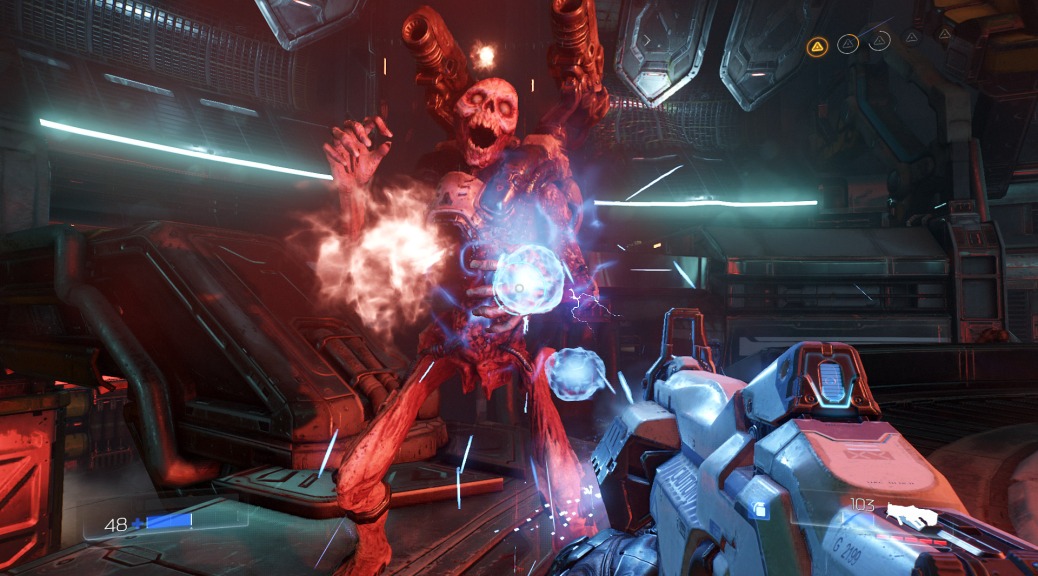
This is the 2016 version of Doom, sometimes referred to as “Doom 4“, because it is essentially the fourth iteration of the classic id Software first-person shooter.

And: it really is quite something

Continue reading Doom, PC

Cool Spot, Megadrive/Genesis

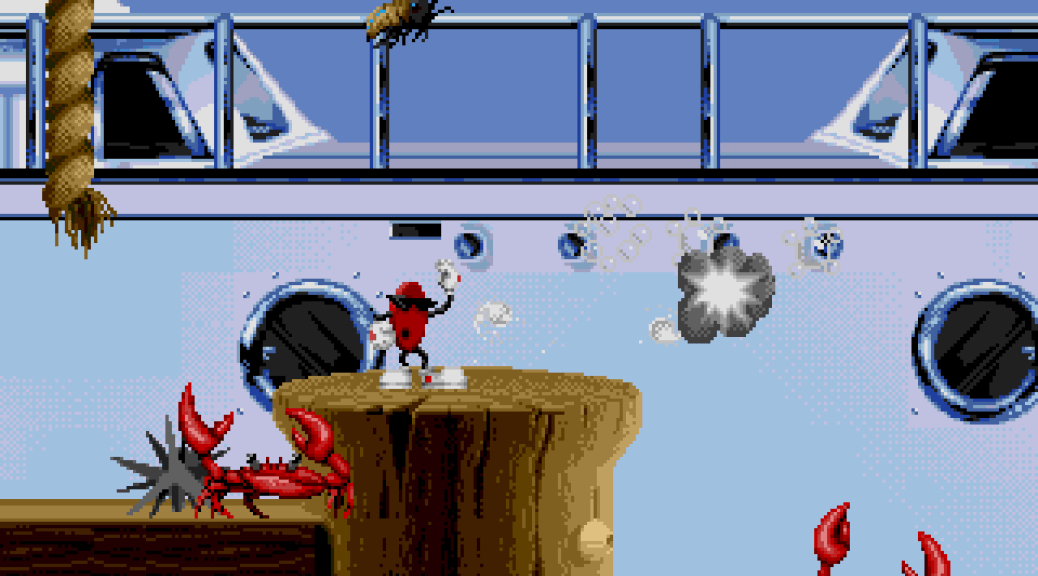
Cool Spot is a cartoony platform game featuring the brand mascot* for the soft drink 7 Up. It was programmed by David Perry and first published by Virgin Games for the Sega Megadrive/Genesis in 1993.

Continue reading Cool Spot, Megadrive/Genesis

Bruce Lee, Amstrad CPC

The Amstrad CPC version of Datasoft‘s Bruce Lee, developed by Timedata Ltd., is excellent – not far off the Atari 8-bit and Commodore 64 versions, which are rightly regarded as retro-gaming classics.

Continue reading Bruce Lee, Amstrad CPC

Bruce Lee, ZX Spectrum

Bruce Lee on the ZX Spectrum was developed by Ocean Software and is an excellent conversion of the Atari 8-bit original. It’s playable, solid, and remains great fun to play to this day. It even retains the simultaneous two-player mode from the original.

Continue reading Bruce Lee, ZX Spectrum

Bruce Lee, BBC Micro

Bruce Lee on the BBC Micro is… well, let’s just say that it’s “different” to the classic Atari 8-bit or Commodore 64 originals. Not hugely different in terms of gameplay – more: different in terms of how it looks, and in the detail. The game was published by US Gold and Micro Power in 1986.

Continue reading Bruce Lee, BBC Micro