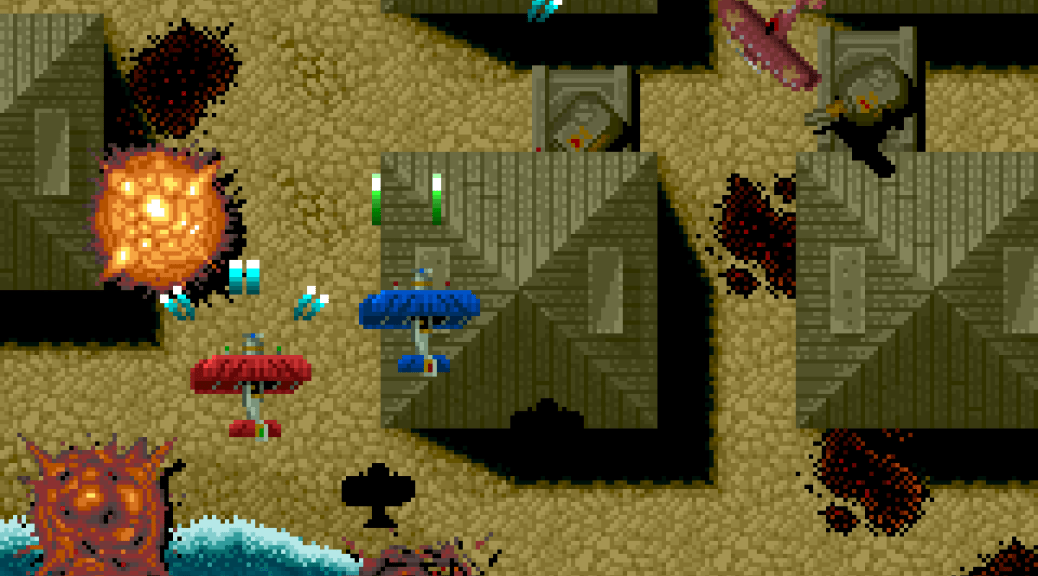
Fire Shark is a vertically-scrolling shoot ’em up developed by Toaplan and first distributed into arcades in 1989. It is the sequel to Flying Shark, which came out in 1987, and once again features biplanes that must blast their way through ten different stages of military mayhem.
Category Archives: Systems
Video gaming systems.

Flying Shark, Arcade
Developed by Toaplan and first released into arcades in 1987, Flying Shark (aka Sky Shark in North America) is a challenging vertically-scrolling bullet hell shooter with a military theme. You fly a biplane over jungle and sea and must blast your way through five increasingly more difficult levels.
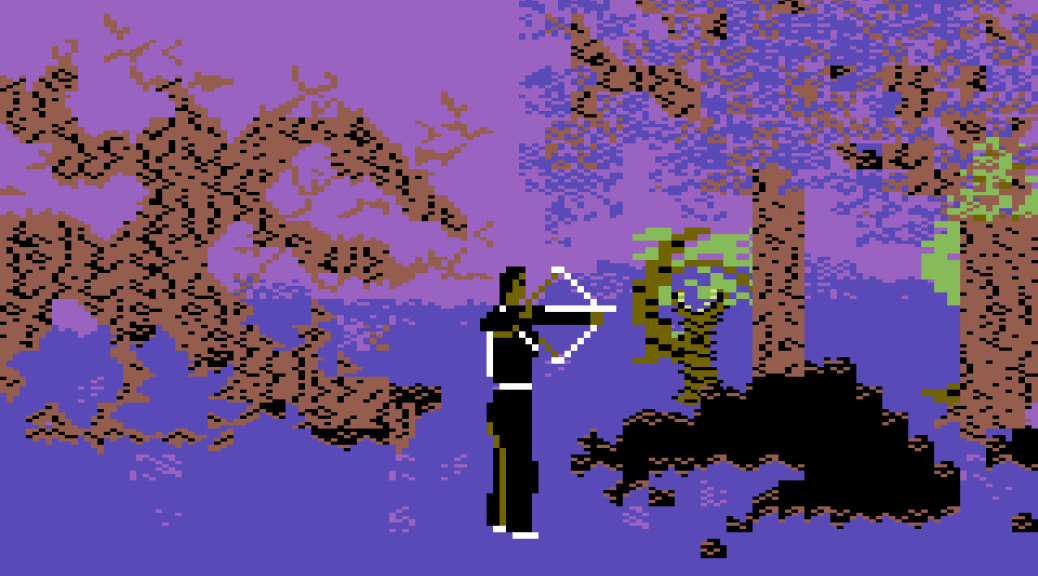
Beyond the Forbidden Forest, Commodore 64
Beyond the Forbidden Forest is the 1986 sequel to 1983’s classic 8-bit survival horror game, Forbidden Forest. It was again devised and programmed by Paul Norman, and published by Cosmi Corporation in North America and US Gold in Europe.
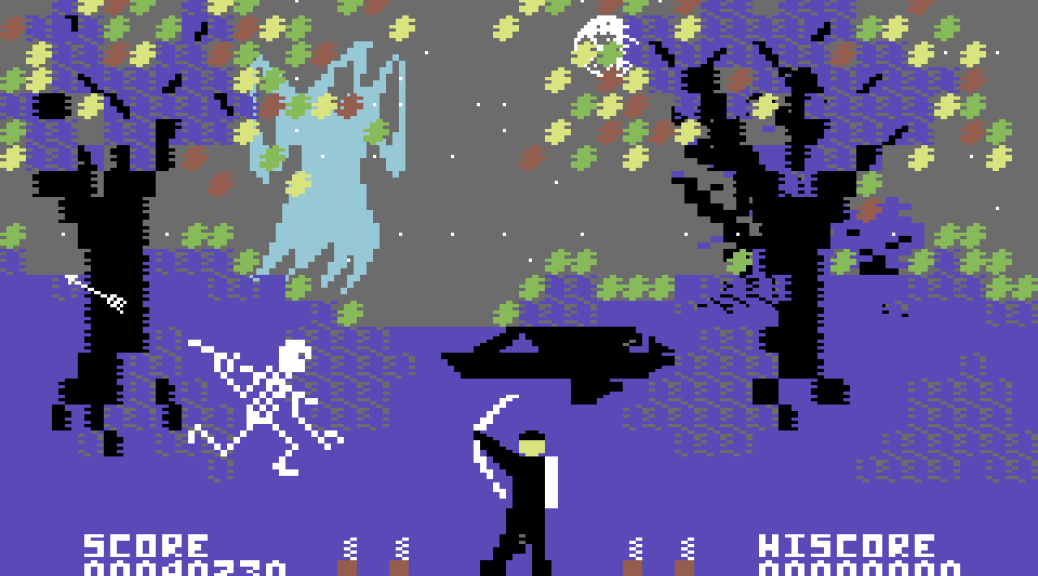
Forbidden Forest, Commodore 64
Created by Paul Norman for Cosmi Corporation, Forbidden Forest is a legendary survival horror game from 1983 in which you play an archer trying to avoid attacks from a variety of hostile creatures inside a sprawling forest.

Dragon’s Curse, PC Engine
Dragon’s Curse is the American TurboGrafx-16 conversion of the classic Sega Master System game Wonder Boy III: The Dragon’s Trap. It was ported by original developer Westone and published by NEC in 1990 in North America and Hudson Soft in Japan in 1991. In Japan the game was confusingly released as “Adventure Island” (not to be confused with Hudson Soft‘s own Adventure Island series), and has a short intro sequence not seen in the American version.

Rainbow Islands, ZX Spectrum
The ZX Spectrum has an excellent port of Taito‘s classic arcade game, Rainbow Islands, thanks to the developers at Graftgold. It was first published by Ocean Software in 1990.

Magnetron, ZX Spectrum

Quazatron, ZX Spectrum
Quazatron is an isometric action/puzzle game written by Steve Turner of Graftgold and published by Hewson Consultants in 1986. It is essentially a ZX Spectrum remake of Andrew Braybrook‘s Commodore 64 classic, Paradroid.

Pippo, ZX Spectrum
Created by two Italians, Giovanni Zanetti and Paolo Malnati, and first published by Mastertronic in 1986, Pippo is a beautifully-produced puzzle game that plays somewhat similarly to Gottleib‘s Q*Bert.

The Eidolon, ZX Spectrum
I didn’t even know that Lucasfilm Games‘ classic 8-bit fantasy exploration game, The Eidolon, was available for the ZX Spectrum until recently. It was ported to the Spectrum by P.A.W. Software and first published by Activision in 1986. And this is my first time playing it.
 The King of Grabs