
This 1991 handheld conversion of Irem‘s classic arcade game, R-Type, is surprisingly good.
Yes: it’s monochrome, and yes: the graphics are tiny, but the gameplay is spot on, which is the most important thing.
This 1991 handheld conversion of Irem‘s classic arcade game, R-Type, is surprisingly good.
Yes: it’s monochrome, and yes: the graphics are tiny, but the gameplay is spot on, which is the most important thing.
The ZX Spectrum conversion of Irem‘s classic arcade game R-Type is considered by many to be one of the best games ever made for Sir Clive‘s classic 8-bit home computer.
For the fourth instalment in the Quake series id Software returned its emphasis back to the single-player story-driven mode of the first two Quake games. Actually, the majority of development on Quake 4 was actually done by Wisconsin-based Raven Software, with id Software supervising.
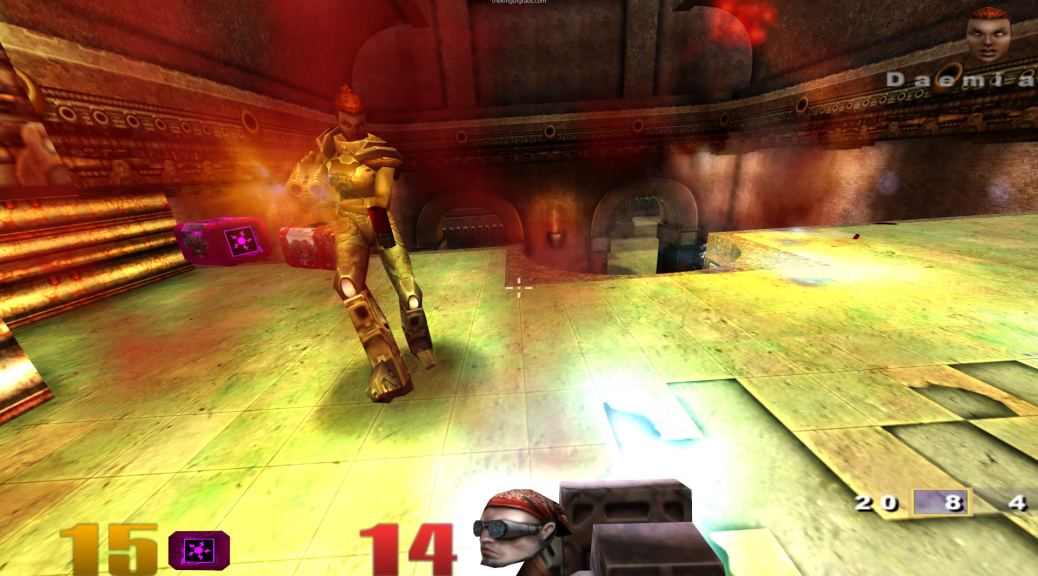
Quake III took a different route to the previous Quakes – in this one it was all about deathmatching and player versus player arenas. Gone was the single-player, story-driven, puzzle/action side of the game, and in came finely-tuned deathmatch arenas. It’s not called Quake III Arena for nothing…
Turrican II: The Final Fight is the outstanding sequel to the excellent Turrican – a classic run-and-gun platform shooter created by German coder Manfred Trenz. It was originally published by Rainbow Arts for the Commodore 64 in 1991.
Turrican was written by German coder Manfred Trenz and was first published for the Commodore 64 by Rainbow Arts in 1990. It is a scrolling platform shooter that has similarities to Nintendo‘s Metroid series of games, and also owes a lot to the obscure Data East arcade game Psycho-Nics Oscar.
Kyuuyaku Megami Tensei (aka Megami Tensei: The Old Testament), is an enhanced remake of the first two Megami Tensei games that were originally released on the Nintendo Famicom. It was published in Japan for the Super Famicom in 1995.
Like most of the early Megami Tensei games these two titles weren’t released in the West due to them having controversial content based on religious and occult themes. Thankfully, though, they were liked enough by gamers to be given fan translations into English, and this SNES re-release was first fan-translated in 2014. It has also been fan translated into Spanish.
The second game in the Megami Tensei series was developed by Atlus and published for the Nintendo Famicom by Namco in 1990. It’s another Japan-only RPG featuring demon-summoning and turn-based combat and is considered by many to be much better than the first game.
Continue reading Digital Devil Story: Megami Tensei II, Famicom
This is the very first Megami Tensei game, released for the Nintendo Famicom in 1987, and it looks very basic compared to later Megami Tensei games, but was the foundation on which a successful series was built.
Based on a trilogy of fantasy novels by Japanese author Aya Nishitani, Megami Tensei was originally created as TWO distinct role-playing games. One version (this game) was developed by Atlus and published by Namco in 1987 for the Famicom. A separate version for home computers was co-developed by Atlus and Telenet Japan and published by Telenet Japan the same year.
The original game was never officially released in the West due to its use of religious themes, and Nintendo‘s sensitivity to them, but an English fan translation does exist that can be applied as a ROM hack.
Continue reading Digital Devil Story: Megami Tensei, Famicom
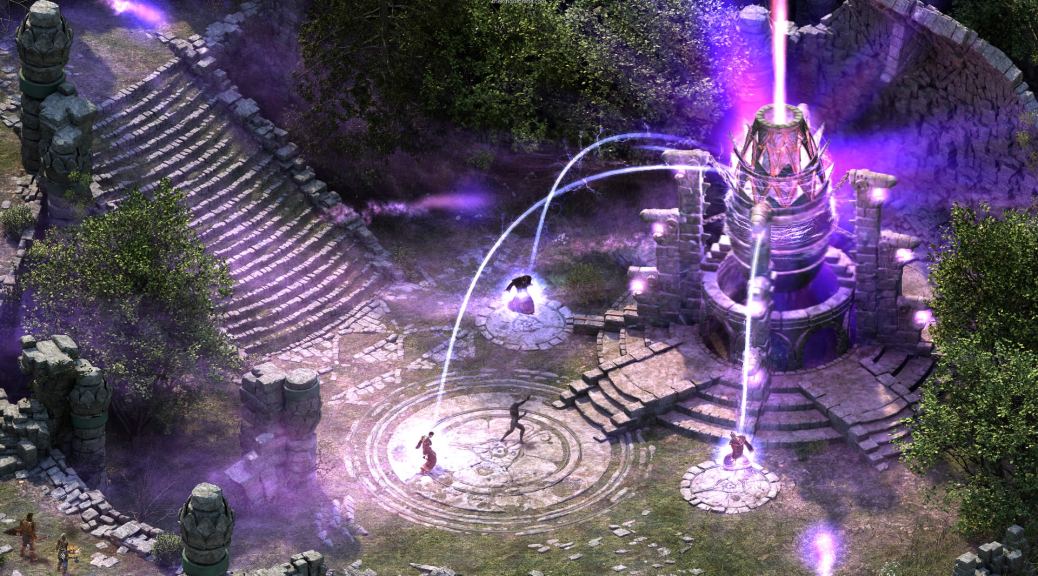
Developed by Obsidian Entertainment and first released in 2015, Pillars of Eternity is an isometric RPG very much in the style of Baldur’s Gate, with a multi character party system, quests and turn-based combat.




 The King of Grabs