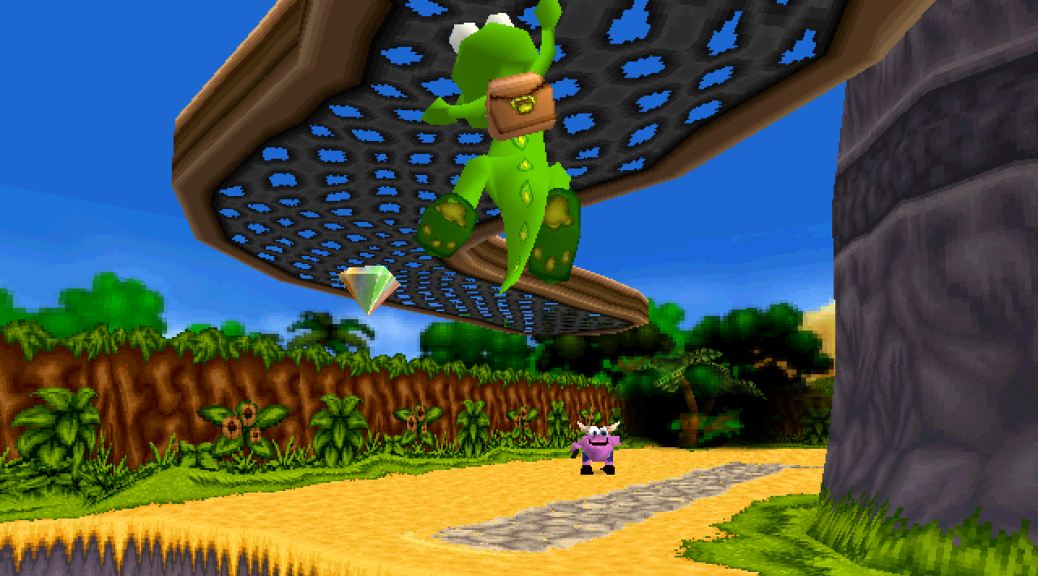
First released for the Sony PlayStation in 1999, and is the sequel to the smash hit Croc: Legend of the Gobbos, Croc 2 is a 3D platform game developed by Argonaut Software and published by Fox Interactive.
Tag Archives: Two-Player
Games that two people can play simultaneously.
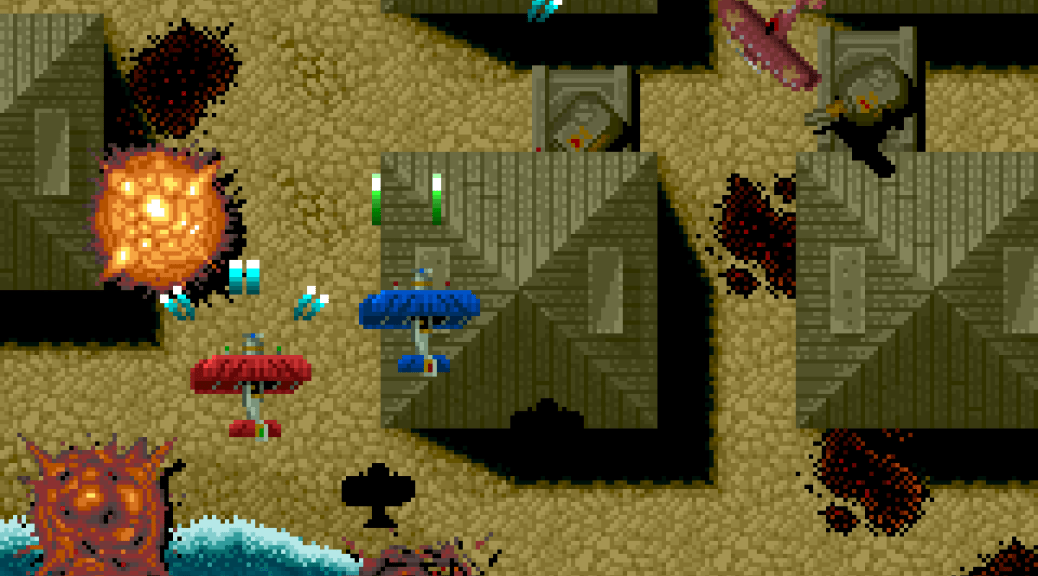
Fire Shark, Arcade
Fire Shark is a vertically-scrolling shoot ’em up developed by Toaplan and first distributed into arcades in 1989. It is the sequel to Flying Shark, which came out in 1987, and once again features biplanes that must blast their way through ten different stages of military mayhem.

Three Wonders, Arcade
Three Wonders is an unusual arcade game from Capcom that was first released in 1991. What’s unusual about it is that the game is based around three separate games – each of which you can choose to play in any order, cooperatively with a friend, and that are supposedly linked by the game’s storyline and characters.
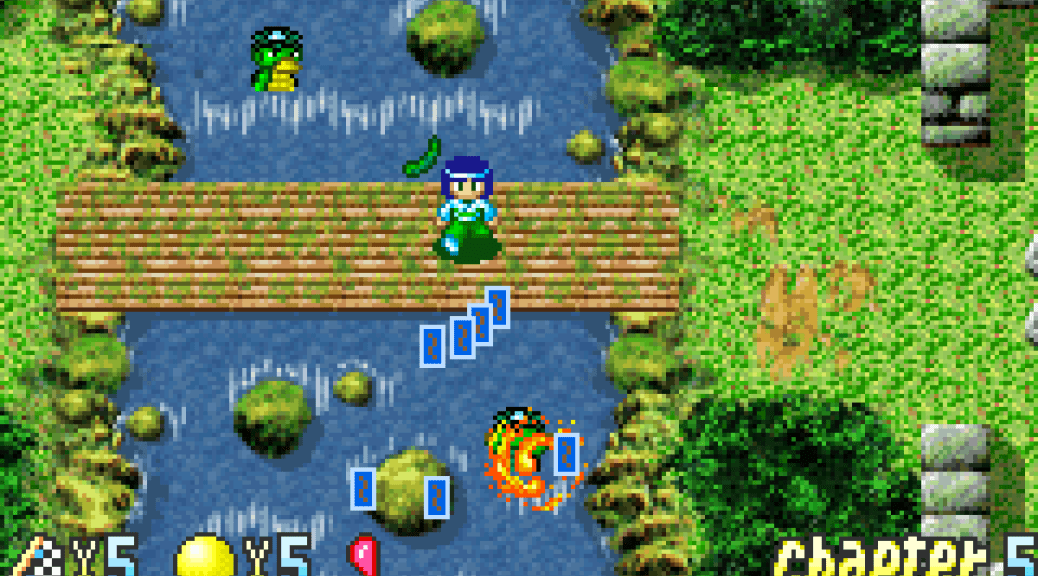
Pocky & Rocky with Becky, Game Boy Advance
Pocky & Rocky with Becky for the Game Boy Advance is the fourth game in the Pocky & Rocky series (following on from Kiki Kaikai, Pocky & Rocky, and Pocky & Rocky 2). The game was developed and published by Altron in Japan in 2001 and was subsequently localized and published by Natsume in North America in 2002.

Pocky & Rocky 2, Super Nintendo
The sequel to Pocky & Rocky (known as Kiki Kaikai in Japan) was developed by Natsume and published by Ocean Software in Europe (by Natsume themselves in Japan and North America). Pocky & Rocky 2 was first released in 1994 and is a similar scrolling shooter to its predecessor, but with multiple companions, instead of just one.
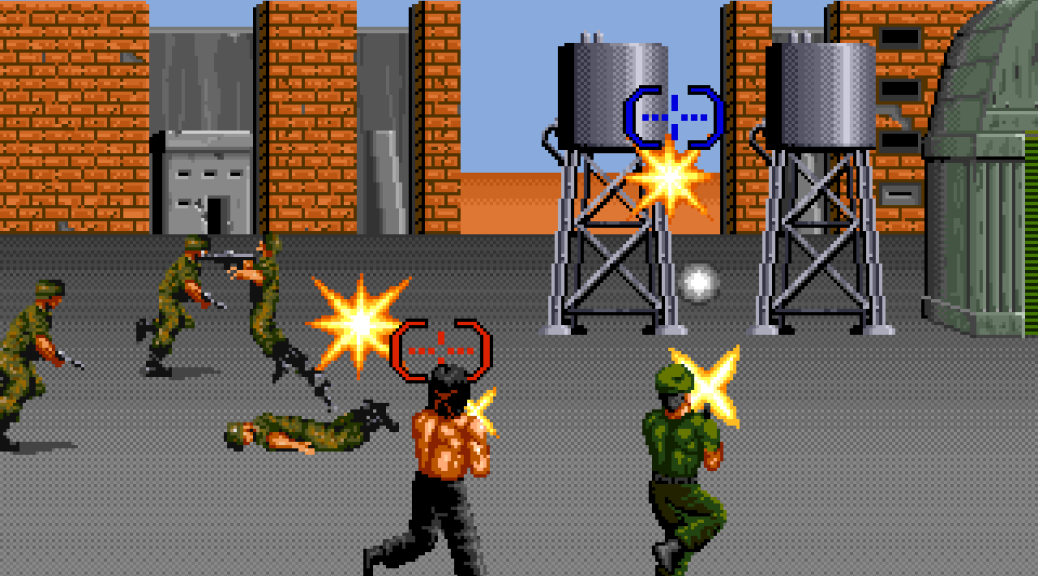
Rambo III, Arcade
Based loosely on the 1989 film of the same name, Taito‘s Rambo III arcade game is a one or two-player third-person shooter, with relentless action through countless enemy-strewn landscapes.

Virtua Cop, Arcade
Virtua Cop is an arcade lightgun shooter developed by Sega AM2, directed by Katsunori Itai and supervised by Yu Suzuki. It was first released into arcades by Sega in 1994.

Ghoul Panic, Arcade
First released into arcades in 1999, Ghoul Panic by Namco is a spooky Halloween-style lightgun shooter for one or two players that is heavily inspired by Namco‘s Point Blank series. The game was developed by Eighting/Raizing and features colourful, well-animated 3D graphics throughout.

Point Blank, Arcade
Point Blank (aka Gun Bullet in Japan) is a minigame-based, humorous lightgun shooter for one or two players. It was created by Namco and initially distributed into arcades in 1994.

Under Fire, Arcade
I’ve played a number of bad lightgun shooters with digitised graphics recently and Taito‘s 1994 arcade game, Under Fire, is probably the worst of the bunch.

