
The beleaguered 3DO port of id Software‘s classic Doom is often referred to as “the worst port of Doom” by fans of the game, but it’s actually not a bad conversion at all. Yes: it is relatively slow, compared to other Doom ports, and yes: the game runs in a reduced-size window, but it still plays pretty well and does have its plus points.
Tag Archives: soundtrack

Megami Tensei Gaiden: Last Bible III, Super Nintendo
The third game in the Last Bible series (a subseries of the Megami Tensei games), was developed by Multimedia Intelligence Transfer and published by Atlus – in Japan only – for the Super Famicom in 1995. It is a Role-Playing Game with random encounters and turn-based combat, and features the unique Megami Tensei trait of talking to monsters to try to recruit them, calling them into your party, and fusing them together to make more powerful monsters who will fight with you. This is a Japanese-only release that currently benefits from fan translations into both English and Spanish, which makes this excellent game playable to a good proportion of the Western world.
Continue reading Megami Tensei Gaiden: Last Bible III, Super Nintendo

Syndicate, FM Towns
Although the FM Towns port of Bullfrog‘s classic Syndicate is in Japanese, it’s still a great game to play if you know what you’re doing. Of course this is not the right version of Syndicate to play if it’s your first time (unless you can read Japanese), but it is a sharp port with crisp high resolution graphics and responsive controls.

Chaos Strikes Back, FM Towns
Chaos Strikes Back is a continuation of the classic Role-Playing Game, Dungeon Master. It’s a sequel – but not the sequel – to the first game, and was originally released as a stand-alone expansion disk on the Atari ST. On the FM Towns it was published on CD-ROM by Victor Musical Industries in 1990, and there’s a bit of faffing around to do before you can actually start the game*. Thankfully you can at least do this in English as there’s an option to play in that language.
*= Before you can play Chaos Strikes Back you must either create a new party (by entering the prison and choosing from the available portraits), and then save it to a new 720Kb floppy disk; or load a set of characters from a pre-existing FM Towns Dungeon Master save. You then need to enter the CSB portrait editor utility program and then click on ‘Make New Adventure’ to activate and save a new Chaos Strikes Back file to the disk. Only then will you be able to load and start the game…
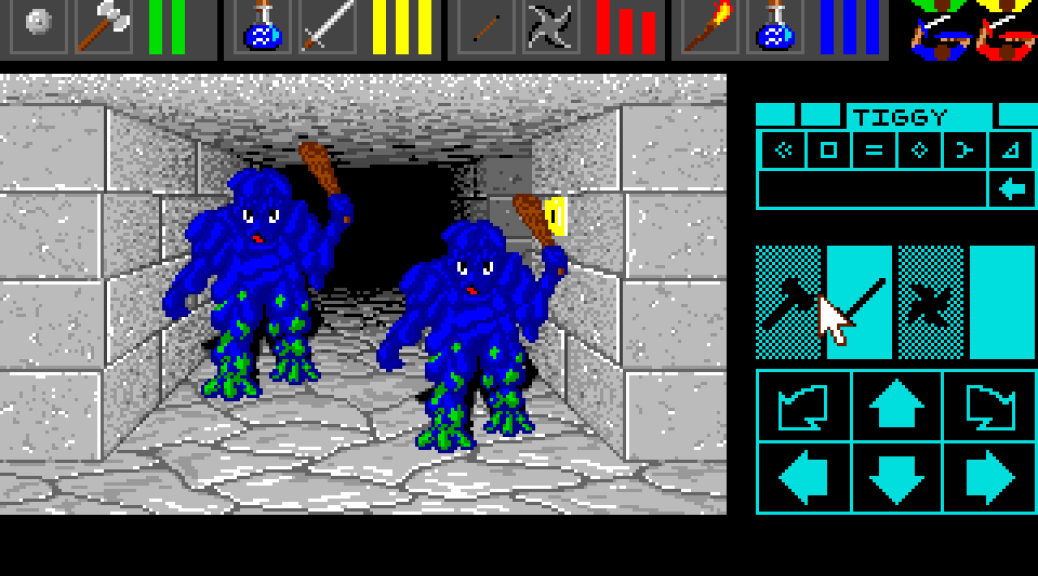
Dungeon Master, FM Towns
The FM Towns version of the classic Dungeon Master was ported by FTL Games (the game’s original developer) and published by Fujitsu in 1989 (two years after the original Atari ST version, and three years before the DOS version came out). This was a Japan-only release, on CD-ROM, but the game is playable in both English and Japanese, which is great.

Shadow of the Beast, FM Towns
Shadow of the Beast on the FM Towns was first published in Japan only by Cross Media Soft – a brand of Victor Musical Industries (a subsidiary of JVC) – in 1991, and came on CD-ROM.
Tim Ansell, who programmed the FM Towns version of Shadow of the Beast (and Shadow of the Beast II), founded the famous British developer The Creative Assembly in 1987 and this was one of a number of contract ports that he did for Psygnosis in the late ’80s and early ’90s.

High School Graffiti Mikie, Arcade
High School Graffiti Mikie is a revised version of Konami‘s classroom chase game, Mikie, with gameplay that’s been toned down to make it less violent.
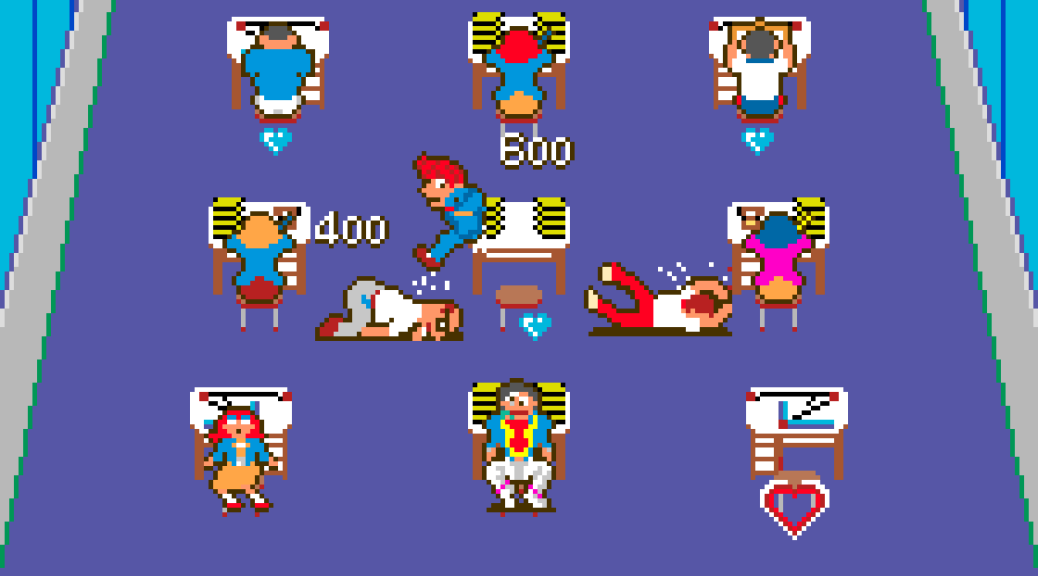
Shinnyū Shain Tōru-kun, Arcade
Here’s a set of screenshots from the altered Japanese version of Konami‘s classic 1984 arcade game, Mikie. Known as “Shinnyū Shain Tōru-kun” (“Freshman Employee Toru“) in Japan.
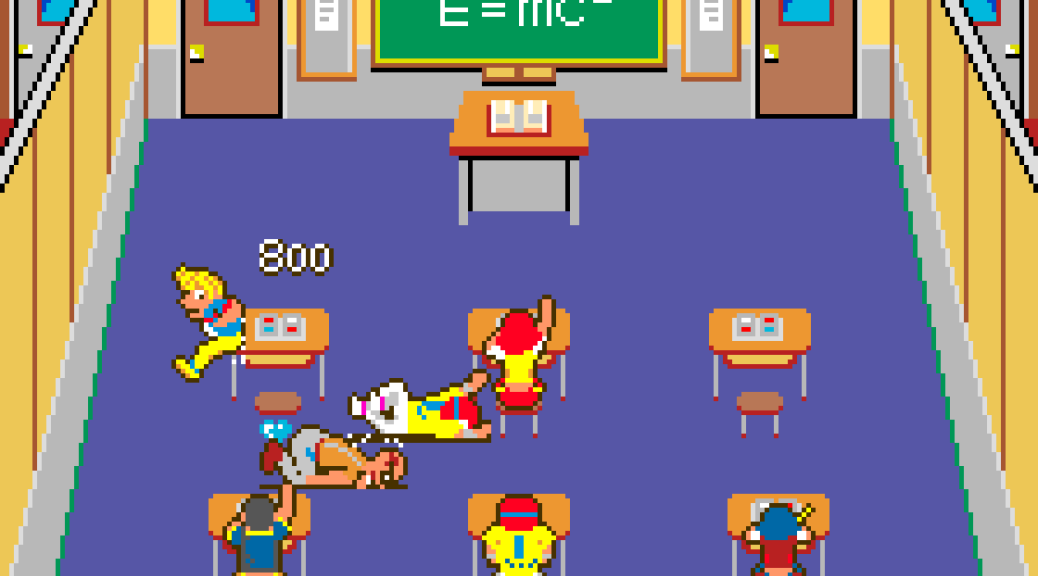
Mikie, Arcade
Konami‘s classic 1984 arcade game, Mikie, is a strange one. You play a schoolkid who must collect hearts across a series of five different stages and to ultimately deliver them to his girlfriend, Mandy, who is waiting for him outside school.

Marble Madness, FM Towns
The FM Towns version of Marble Madness is pretty damn special. Not only does it have a unique symphonic rendition of the game’s famous soundtrack, but it also has a Time Trial mode, and you can also choose the colour of your marble! It was only ever released in Japan, and – like the excellent X68000 version – it was ported by Tengen and published by Home Data Corporation in 1991.
 The King of Grabs