
Boktai 2: Solar Boy Django is the 2004 follow-up to the excellent Boktai: The Sun Is Your Hand – a clever isometric adventure designed by Metal Gear Solid creator Hideo Koijima.
Continue reading Boktai 2: Solar Boy Django, Game Boy Advance
Boktai 2: Solar Boy Django is the 2004 follow-up to the excellent Boktai: The Sun Is Your Hand – a clever isometric adventure designed by Metal Gear Solid creator Hideo Koijima.
Continue reading Boktai 2: Solar Boy Django, Game Boy Advance
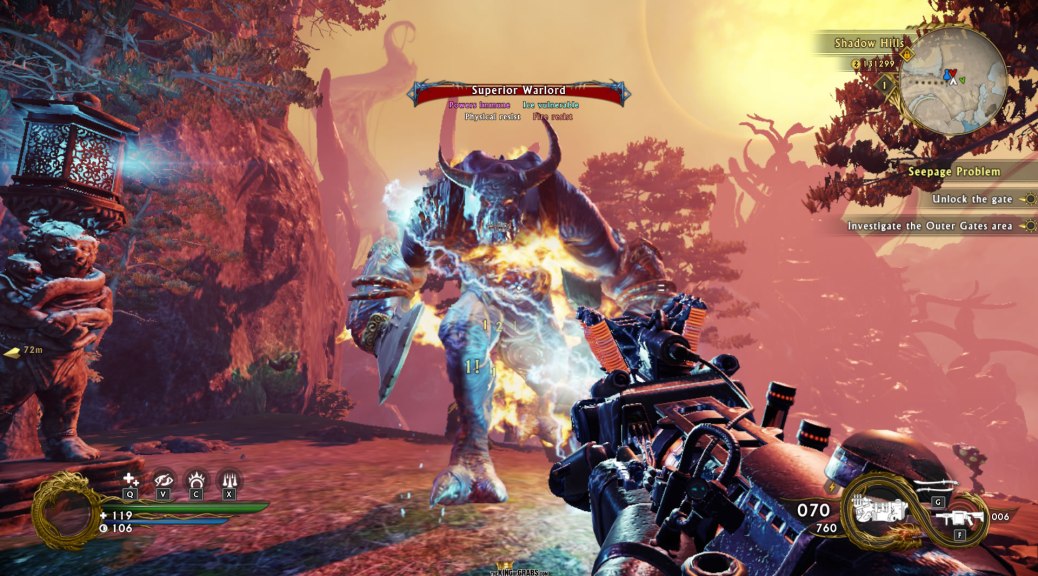
A modern remake of the classic 3D Realms shooter is a great idea – the original adventures of Lo Wang (the lead character in the Shadow Warrior games, and the character you play in this) were a lot of fun.
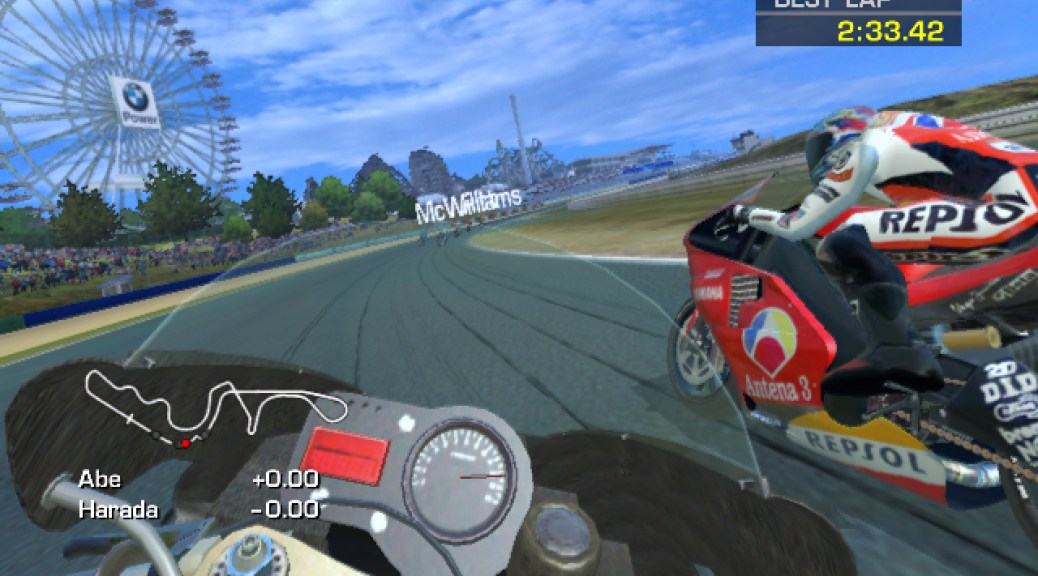
MotoGP 2 is a great, high octane bike racing game, first released by THQ in 2003. It was developed by UK-based Climax Brighton for the original XBox, and for Microsoft Windows.
Andrew Braybrook‘s classic C64 shooter, Uridium, was given a 16-bit release courtesy of Joe Hellesen and Mindscape in 1986.
An Elder Scrolls Legend: Battlespire is a spin-off from the famous Elder Scrolls series of RPGs by Bethesda Softworks. It first came out in 1997 – between Daggerfall and Morrowind – and is an MS-DOS-based action/RPG with fairly primitive 3D graphics.
Back in 1984 in the UK there was an infamous, historic miner’s strike that lasted for over a year and caused hardship for many communities. Rather than sit and spectate, young Peter Harrap wrote a satirical platform game about a mining mole and published it, with all the profits going to help the struggling, striking miners. That game was Wanted: Monty Mole, and it launched Pete Harrap on his career making video games, and also the Monty Mole ‘franchise’. Although I can’t really call it a franchise because it wasn’t. It was simply a series of games.
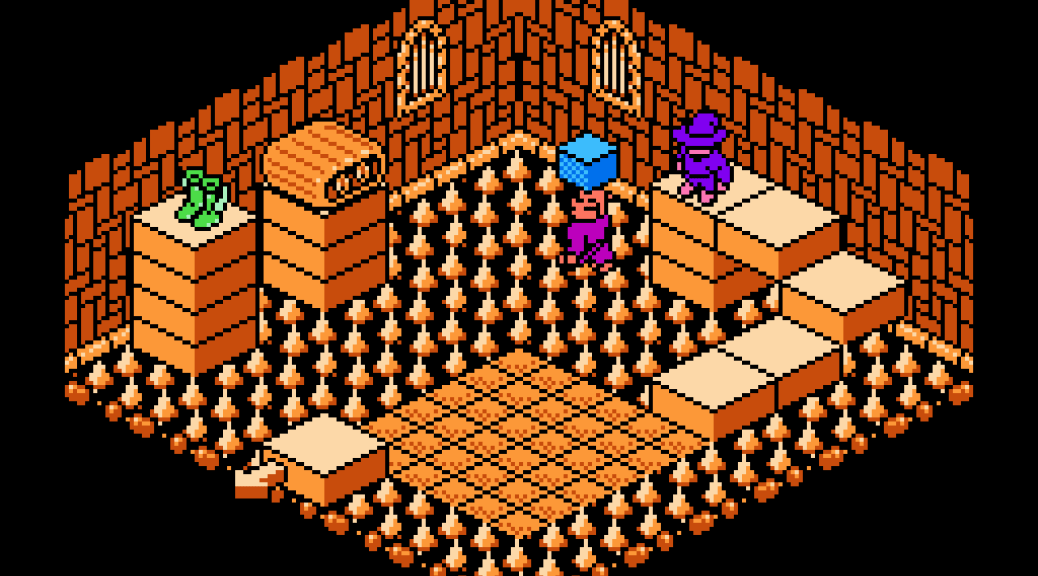
Solstice is a neat isometric platform/puzzle game from British developer Software Creations. It was published by Sony for the Nintendo Entertainment System in 1990 and is the (spiritual?) predecessor to the Super Nintendo game Equinox.
Not a sequel, but a ‘data disk’ add-on that you load through the original Mercenary. The Second City starts off pretty much the same as Mercenary – crashing on a planet (this time the other side of the one you explored in Mercenary, and also a different colour) and having to explore to get on and eventually escape.
A 16-bit conversion of Paul Woakes‘ classic 8-bit exploration sequel to Mercenary. Well, not really a sequel – more a continuation… The real sequel came later.
The Atari ST‘s power (relative to the Commodore 64) means smoother, faster 3D graphics; more colours (useful, when colours are used to identify rooms and places underground); and more sensitive controls.
A fine 16-bit conversion of the classic Mercenary by Paul Woakes, written by Woakes himself it seems. And why wouldn’t it be? It’s a great game and deserves doing right, so who better to code it than the original creator?




 The King of Grabs