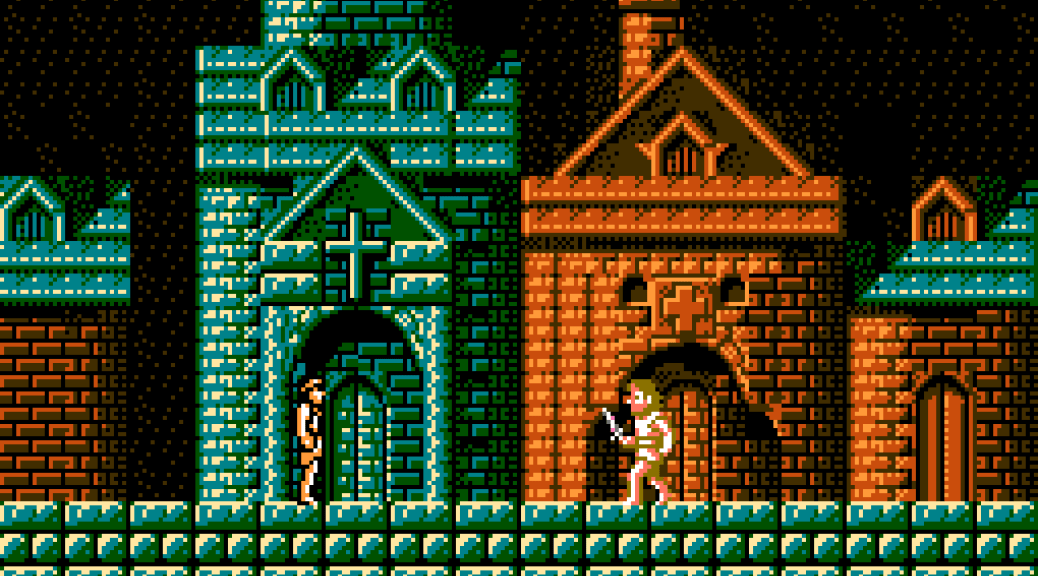
Faxanadu is an action/platform game, developed by Hudson Soft and first published for the Nintendo Famicom in 1987. It is a spin-off from the Falcom Dragon Slayer series and its name is a combination of the words “Famicom” and “Xanadu“, so could even be considered a remake of the second Dragon Slayer game.
Tag Archives: NES/Famicom
Nintendo Entertainment System and Famicom games.

Lagrange Point, NES/Famicom
Released in Japan only by Konami in 1991, Lagrange Point is a science fantasy JRPG set on a human colony ship in space (located at the Lagrangian points between Earth and the Sun). Communications are lost between colonies, so a search team is sent in to investigate.

Paperboy 2, NES/Famicom
The NES version of Paperboy 2 was ported by Eastridge Technology and published by Mindscape in North America only in 1991. It’s a playable game with some good ideas, but is frustratingly difficult to play at times.
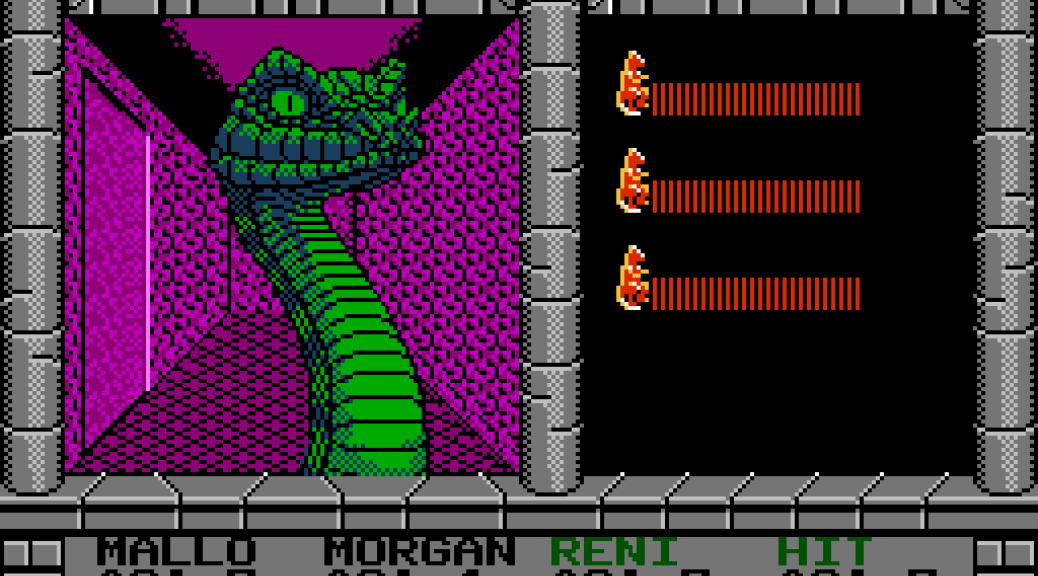
Swords and Serpents, NES/Famicom
Developed by Interplay Productions and published by Acclaim Entertainment in 1990, Swords and Serpents is a first-person, party-based RPG with tile-based movement for up to four players. You can either build a party of four characters yourself, in single-player mode, or up to four different players can control one party member each in multiplayer mode*.
*= An adapter, like the ‘NES Satellite‘, or another four-player expansion peripheral, is required if you’re going to play with that many players (but, let’s face it, very few will, although it’s nice – and fairly unique – to have the option to do that).

Rainbow Islands, NES/Famicom
The NES version of Rainbow Islands was developed and published by Taito (it was published by Ocean Software in Europe) in 1992. It is a decent enough port of the classic arcade game but does have some deficiencies compared to the original.

Marble Madness, NES
The NES conversion of Marble Madness was developed by Rare and published by Milton Bradley, in North America and Europe, in 1989. I don’t think the game was ever released in Japan, though. And it’s a very good port, with some small enhancements and decent controls and playability.

Castlevania III: Dracula’s Curse, NES/Famicom
The third game in the Castlevania series, Castlevania III: Dracula’s Curse, was first released for the Nintendo Famicom in 1989 in Japan (under the title of “Akumajō Densetsu“). A North American NES release followed in 1990, and a European release in 1992.
Continue reading Castlevania III: Dracula’s Curse, NES/Famicom

Castlevania II: Simon’s Quest, NES/Famicom
The second game in the Castlevania series, Castlevania II: Simon’s Quest, was originally released in Japan (as “Dracula II – Noroi no Fuuin“) for the Famicom Disk System in 1987, and in North America for the NES in 1988. Europe had to wait until 1990 for a release of the game.
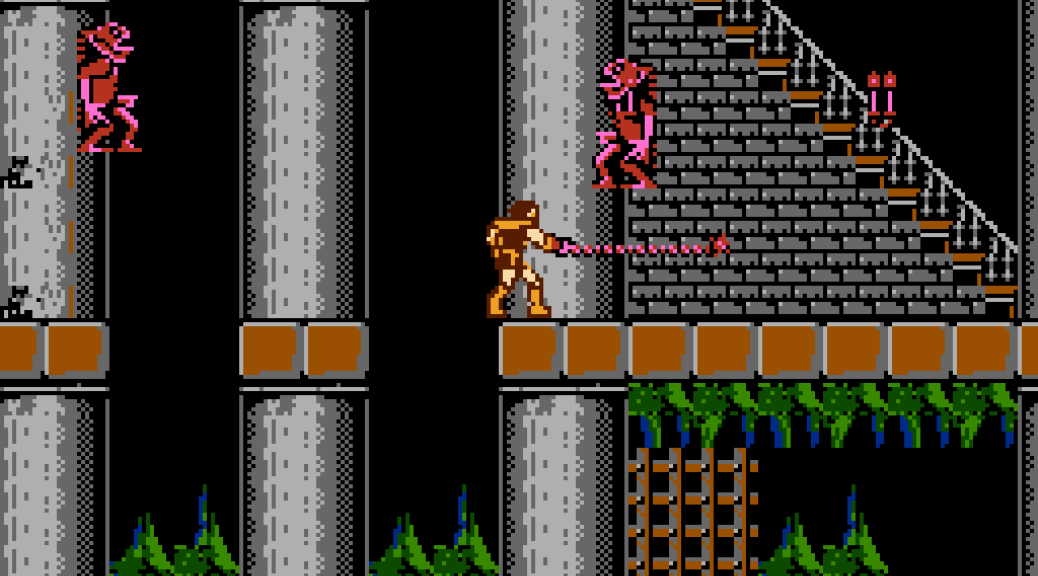
Castlevania, NES/Famicom
The first Castlevania game was initially released in Japan, by Konami, under the title of “Akumajō Dracula” in 1986. Versions for the MSX2 and Famicom Disk System were developed simultaneously, with the Famicom version coming out on 26th September, and the MSX version a month later, on 30th October. That same game was later released in Europe on 30th October 1987 – translated into English – under the title of “Vampire Killer“.
When it came time to convert the game to the Nintendo Entertainment System for a North American release it was decided to re-title the game as “Castlevania“*. This turned out to be a significant decision as it became a big hit and grew to become a popular and well-known series of video games. The name “Castlevania” entered into the lexicon of classic, instantly-recognisable game titles, later becoming a portmanteau of “Metroid” and “Castlevania” (“Metroidvania“) to describe an entire sub-genre of action/platform games that all share similar gameplay features.
*= Although it’s not clear who actually came up with the name “Castlevania” it has been reported that the change was due to Konami of America senior vice president Emil Heidkamp‘s discomfort with the religious connotations of the title “Akumajō Dracula“, which he believed translated as “Dracula Satanic Castle” (although some argue that it translates as “Demon Castle Dracula“).
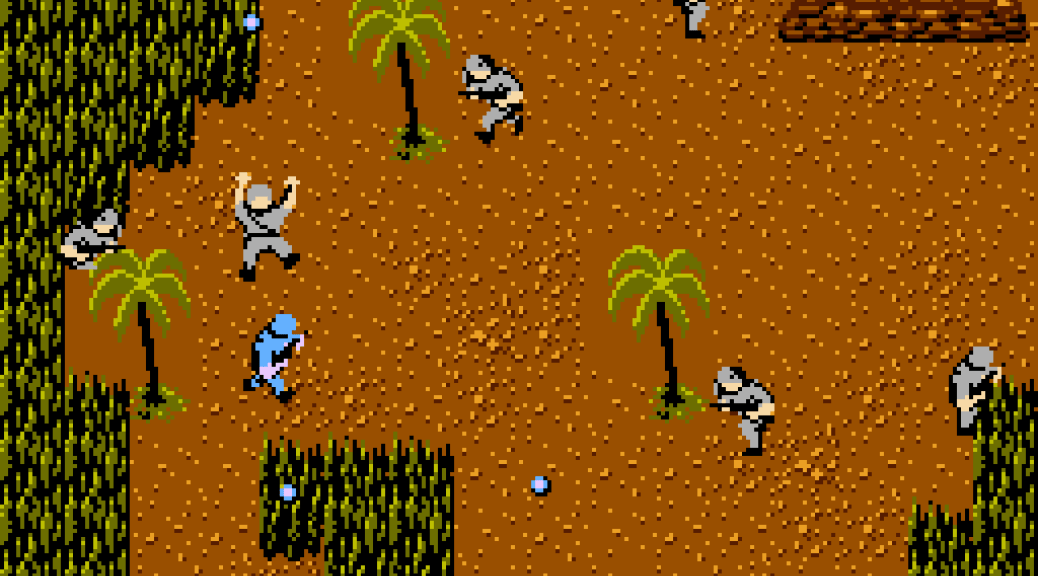
Commando, NES/Famicom
The 1986 NES version of Commando is a flickery mess to be honest, although that didn’t stop the game becoming a smash hit – selling over one million cartridges worldwide.
 The King of Grabs