
The Atari ST version of Argonaut Software‘s pioneering 3D shooter, Starglider, first came out in 1986 – a year before the Amiga version (for some reason – I don’t know why).
Tag Archives: Cult Game
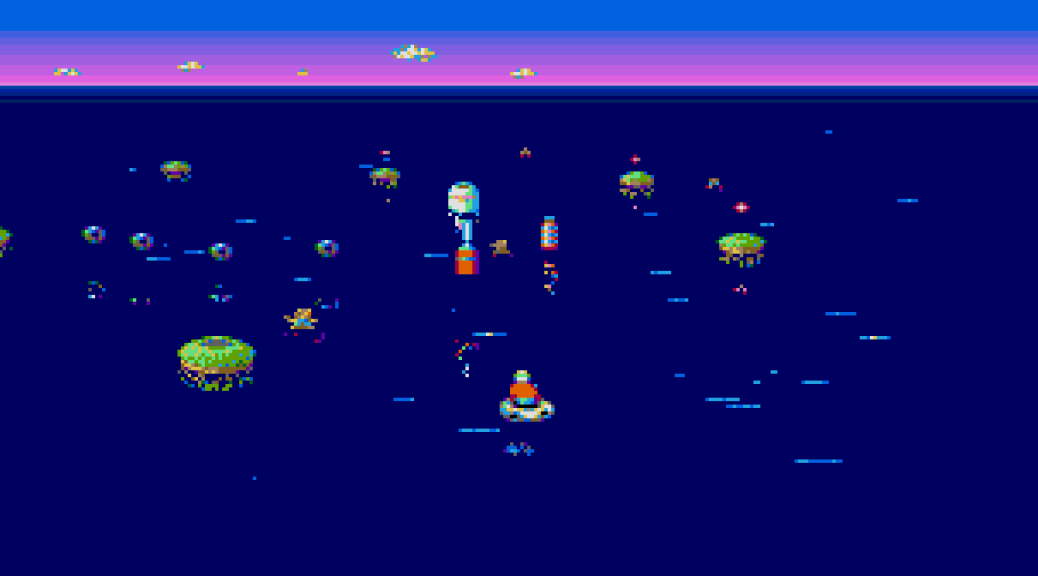
Typhoon Thompson in Search for the Sea Child, Atari ST
Developed by Dan Gorlin Productions and originally released for the Atari ST by Brøderbund in 1988, Typhoon Thompson in Search for the Sea Child is a simple but brilliant shooter/collect ’em up with analogue controls.
Continue reading Typhoon Thompson in Search for the Sea Child, Atari ST

Super Street Fighter II Turbo, 3DO
The 3DO has a surprisingly good port of Capcom‘s classic beat ’em up, Super Street Fighter II. It was released as Super Street Fighter II Turbo and features a few tweaks that differentiate it from other versions of the game, such as fight speed (three settings) and a difficulty slider (eight settings).

Castlevania Chronicles, PlayStation
Castlevania Chronicles is a remake of Akumajō Dracula – the first Castlevania game – and it was developed by Konami Computer Entertainment Tokyo (KCET) and first published by Konami in 2001. In it, you play as the vampire hunter Simon Belmont, who must defeat Dracula and save Transylvania from the vampire’s tyranny.

X, Game Boy
This game – called simply “X” – was a Japan-only release, in 1992, on the original black and white Game Boy, but its conception and development would later have a profound effect on Nintendo‘s confidence in producing 3D-based games.
X was created by British developer Argonaut Software (specifically, by Dylan Cuthbert, who was later infamously ‘poached’ by Nintendo from Argonaut), and was a demonstration of their ability to produce 3D-based games on home video game systems. This impressed Nintendo, who then tasked Argonaut with creating a new 3D game on their Super Nintendo console, which eventually became the classic Star Fox. And the rest is history… Sort of.

Nebulus, ZX Spectrum
The ZX Spectrum port of Nebulus was coded by John M. Phillips – the author of the original C64 version – and is therefore a very authentic conversion of this excellent platform/puzzle game. It was first published by Hewson Consultants in 1987.

Xanadu Next, PC
Xanadu Next was developed by Falcom and published for Windows PCs in Japan in 2005. It is a continuation of the Dragon Slayer series and a spin-off from Xanadu: Dragon Slayer II. The game remained untranslated into English until a worldwide release by XSEED Games in 2016. And I have to say: it’s a wonderful game, and is arguably the pinnacle of the long-running franchise.

Legacy of the Wizard, NES/Famicom
Legacy of the Wizard is the North American localisation of Dragon Slayer IV, released for the Nintendo Entertainment System by Brøderbund in 1989. It’s a fantasy-based platform/action game featuring a family of four heroes – and their pet – on a mission to retrieve a mystical sword and slay a dragon, inside a sprawling dungeon.

Dragon Slayer IV: Draslay Family, MSX
Originally released in Japan as “Dragon Slayer IV: Drasle Family“, the version I’m showing here is the fan-translated MSX2 version of the fourth game in the Dragon Slayer series. The game was developed and published by Falcom in 1987, and the fan translation was released by “MSX Translations” in 2010 under the title of “Dragon Slayer IV: Draslay Family“.
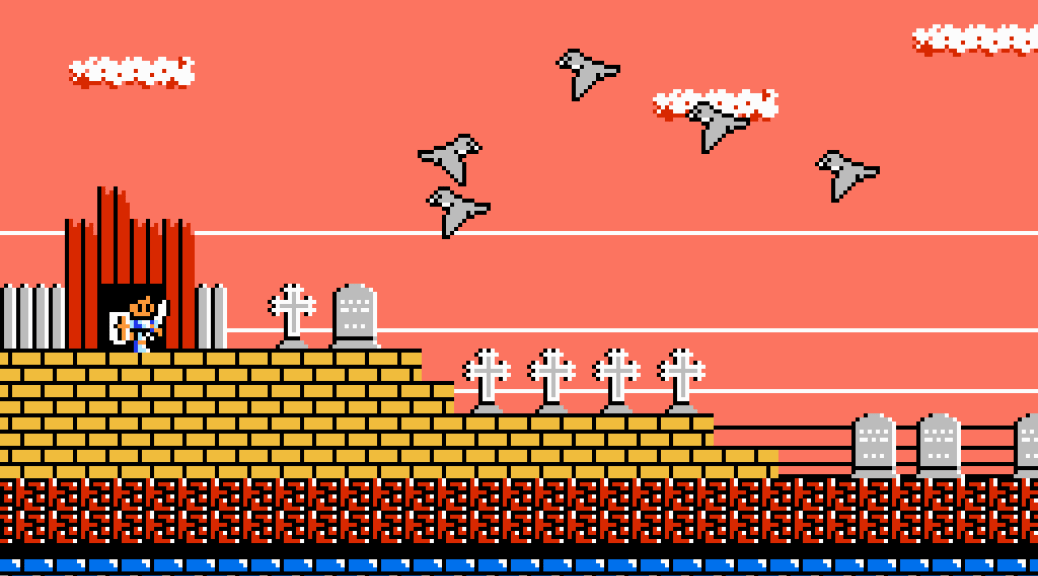
Romancia: Dragon Slayer Jr., NES/Famicom
The Nintendo Famicom version of Romancia – aka Dragon Slayer Jr. – was developed by Compile and published by Tokyo Shoseki, in Japan only, in 1987. A fan translation makes the game playable in English (and Spanish), which is good because this version of the game is considerably better than the MSX version.
 The King of Grabs