
Crypt Killer is a three-player, horror-themed lightgun shooter that was first distributed into arcades by Konami in 1995. It uses 3D polygonal graphics for the backgrounds and 2D scaled sprites for the enemies and objects. In some respects it is Konami‘s attempt at producing a House of the Dead-style shooter, although in my humble opinion it isn’t as good as Sega‘s famous horror shooter series.
Tag Archives: skeletons

Ultima Underworld: The Stygian Abyss, FM Towns
Origin/Blue Sky Productions‘ classic MS-DOS RPG, Ultima Underworld: The Stygian Abyss, was released for the FM Towns in 1993 by Electronic Arts Victor, Inc.*
*= Electronic Arts Victor was a joint venture between Electronic Arts and the Victor Musical Industries subsidiary of JVC, established in September 1992 in Tokyo. Electronic Arts Victor‘s mission was to translate Electronic Arts‘ library of games to Japanese language and to distribute them in Japan, as well as to create original titles for the Japanese market.
Continue reading Ultima Underworld: The Stygian Abyss, FM Towns

Chaos Strikes Back, FM Towns
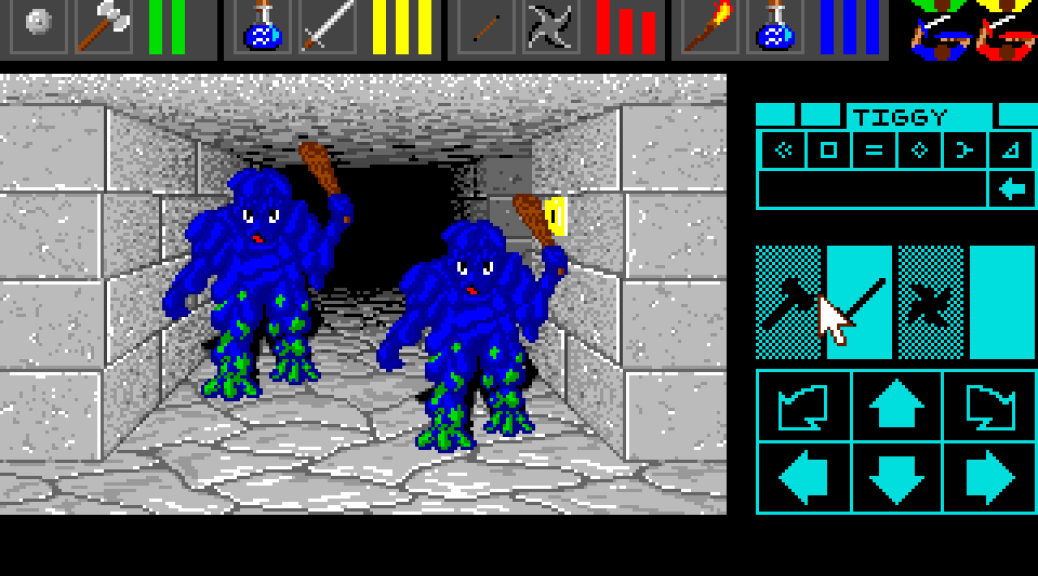
Chaos Strikes Back is a continuation of the classic Role-Playing Game, Dungeon Master. It’s a sequel – but not the sequel – to the first game, and was originally released as a stand-alone expansion disk on the Atari ST. On the FM Towns it was published on CD-ROM by Victor Musical Industries in 1990, and there’s a bit of faffing around to do before you can actually start the game*. Thankfully you can at least do this in English as there’s an option to play in that language.
*= Before you can play Chaos Strikes Back you must either create a new party (by entering the prison and choosing from the available portraits), and then save it to a new 720Kb floppy disk; or load a set of characters from a pre-existing FM Towns Dungeon Master save. You then need to enter the CSB portrait editor utility program and then click on ‘Make New Adventure’ to activate and save a new Chaos Strikes Back file to the disk. Only then will you be able to load and start the game…
Dungeon Master, FM Towns
The FM Towns version of the classic Dungeon Master was ported by FTL Games (the game’s original developer) and published by Fujitsu in 1989 (two years after the original Atari ST version, and three years before the DOS version came out). This was a Japan-only release, on CD-ROM, but the game is playable in both English and Japanese, which is great.

Kiki Kaikai, Arcade
Kiki Kaikai (the literal translation being “Strange and Mysterious World“) is a shoot ’em up developed and distributed into Japanese arcades by Taito in 1986. Set in Feudal Japan, the player assumes the role of a Shinto shrine maiden, called Sayo-chan, who must use her ‘O-Fuda’ scrolls and ‘Gohei’ wand to defeat renegade spirits and monsters from Japanese mythology. Sayo’s ultimate aim is to free The Gods of Fortune who have been imprisoned by evil spirits.
Castlevania, PC
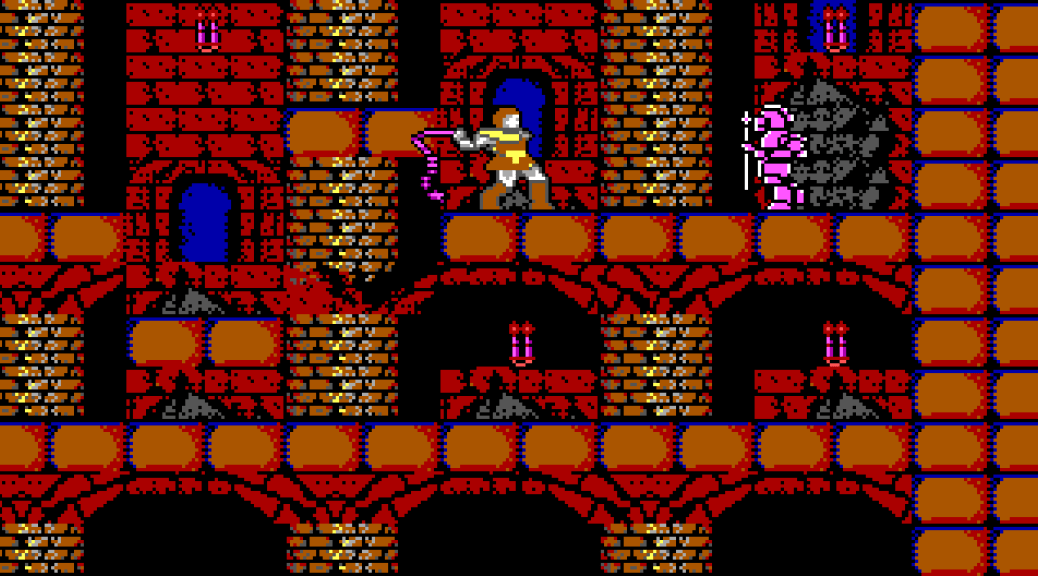
The PC MS-DOS version of Konami‘s Castlevania was developed by Unlimited Software, Inc. (the same company that did the C64 conversion), and first published in North America in 1990. As far as I know it didn’t get a release in Europe or Japan.
Castlevania, Commodore 64
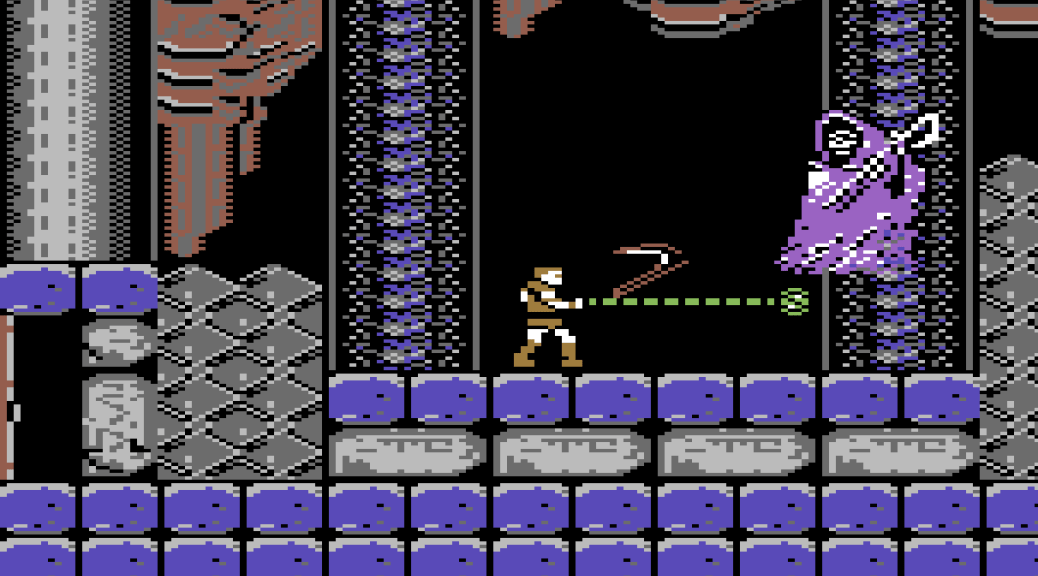
The Commodore 64 version of Castlevania was converted by Unlimited Software, Inc. and published by Konami in 1990, and it’s not a bad port overall. It’s arguably better than the dodgy Amiga version.

Castlevania, Amiga
The Amiga version of Konami‘s classic Castlevania was ported by Novotrade and first released in 1990. I was surprised and excited that the first Castlevania had actually been released for the Amiga, but after playing it I kinda wish they hadn’t bothered, because it’s bloody awful.

Castlevania III: Dracula’s Curse, NES/Famicom
The third game in the Castlevania series, Castlevania III: Dracula’s Curse, was first released for the Nintendo Famicom in 1989 in Japan (under the title of “Akumajō Densetsu“). A North American NES release followed in 1990, and a European release in 1992.
Continue reading Castlevania III: Dracula’s Curse, NES/Famicom

Castlevania II: Simon’s Quest, NES/Famicom
The second game in the Castlevania series, Castlevania II: Simon’s Quest, was originally released in Japan (as “Dracula II – Noroi no Fuuin“) for the Famicom Disk System in 1987, and in North America for the NES in 1988. Europe had to wait until 1990 for a release of the game.
 The King of Grabs