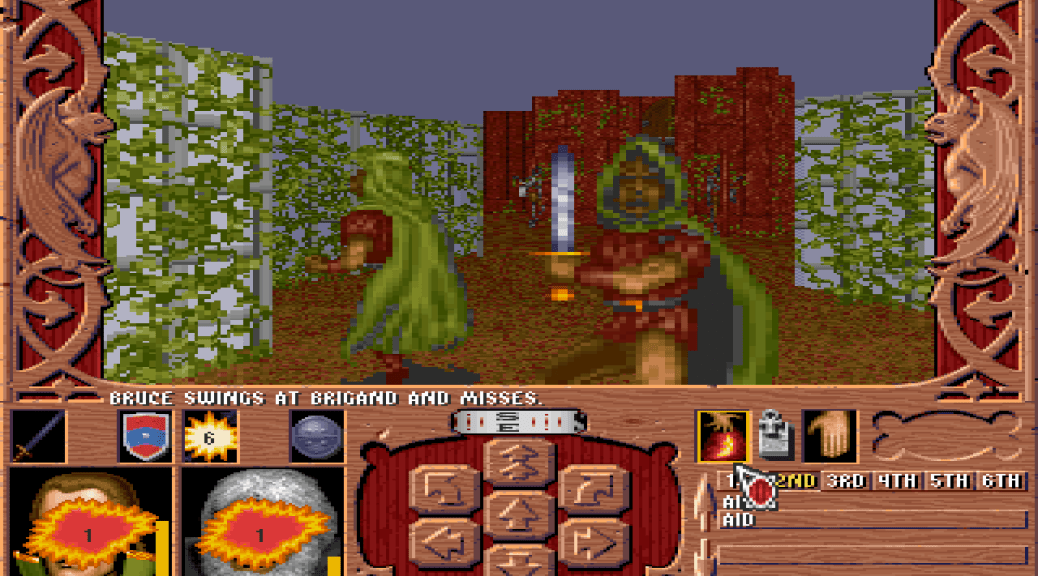
Released in 1994, Ravenloft: Strahd’s Possession was developed by DreamForge Intertainment for Strategic Simulations Inc. and was distributed by US Gold in the UK.
I remember it well because I reviewed it for PC Player magazine back in the day.
Released in 1994, Ravenloft: Strahd’s Possession was developed by DreamForge Intertainment for Strategic Simulations Inc. and was distributed by US Gold in the UK.
I remember it well because I reviewed it for PC Player magazine back in the day.
The full title of this 1995 sequel is Magic Carpet 2: The Netherworlds, and it is an excellent continuation of the series.
Magic Carpet from Bullfrog was first released in 1994 through Electronic Arts. It is a DOS-based, first-person action game with you – the player character – flying a ‘magic carpet’ around a series of islands, fighting evil wizards and monsters and collecting ‘mana’ to increase your magical powers.
Simon the Sorcerer is a very fondly-remembered, British point-and-click adventure game published by Adventure Soft for the Amiga in 1993.
It looks and plays similarly to the classic LucasArts adventures of the late 80s and early 90s – Loom, Monkey Island, and Indiana Jones and the Fate of Atlantis – and has the same verb/icon system as pioneered by those games.
This 2003 remake of Namco‘s SNES classic Tales of Phantasia was the first time the game had been officially translated into English.
While much of the game remains the same, there are a few differences.
Tales of Phantasia is an RPG developed by Wolf Team, and first published for the Super Nintendo by Namco in 1995. As JRPGs go, it is quite memorable.
Dragon Quest VI: Realms of Revelation was developed by Heartbeat for Enix and released for the Super Nintendo in 1995 in Japan. It is the sixth instalment in the Dragon Quest series, if you aren’t familiar with Roman numerals.
First released in 1992 by Enix, Dragon Quest V (five – or, to give the game its full title: Dragon Quest V: Hand of the Heavenly Bride) is another fun-to-play JRPG that is simple but engaging, and also contains enough detail and surprises to feel worthwhile.
It was the first Dragon Quest game released for the Super Nintendo and sold over three million copies in Japan.
Like its successor, Dragon Quest VI, it wasn’t officially released in the West until decades later, but English fan translation patches for the game do exist and that is what I’m showing here.
This is the first game in the Lufia series – developed by Neverland and published by Taito in 1993 for the Super Nintendo.
Lufia and the Fortress of Doom is a cute and colourful Japanese Role-Playing game with Zelda-style presentation and turn-based combat.
Continue reading Lufia and the Fortress of Doom, Super Nintendo
I have to admit that, in spite of the slightly wonky graphics/cut scenes, I have a real soft spot for Gremlin Interactive‘s 1997 PC MS-DOS release, Realms of the Haunting. Mostly because I was lucky and got to visit Gremlin‘s offices in Sheffield to see the game in production, and to talk to the people who were making it. I drove all the way from Bournemouth – where I worked as a video games magazine editor – and spent an entire day there to preview the game for PC Power magazine.


 The King of Grabs