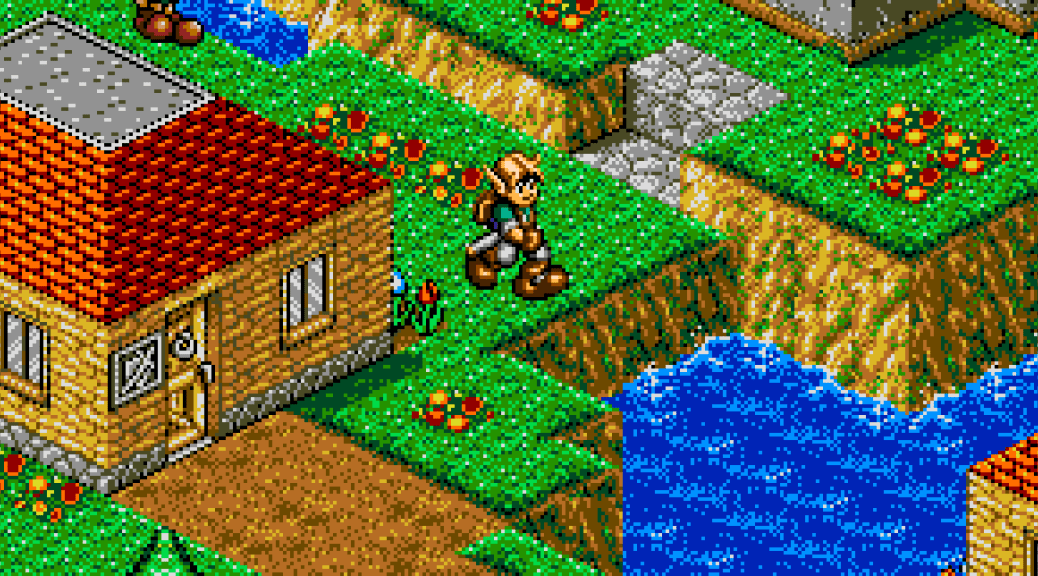
This 1995 Japan-only Taito release is a follow-up (spin-off, rather than a sequel) to Landstalker on the Sega Megadrive.
Continue reading Lady Stalker: Challenge From The Past, Super Nintendo
This 1995 Japan-only Taito release is a follow-up (spin-off, rather than a sequel) to Landstalker on the Sega Megadrive.
Continue reading Lady Stalker: Challenge From The Past, Super Nintendo
Released in its native Japan in 1992, and everywhere else in 1993, Landstalker is a memorable real-time action adventure in a well-defined fantasy world. The Megadrive‘s answer to Zelda, in some respects.
Also known as “Metroid 4“, Metroid Fusion on the Game Boy Advance is the fourth episode in the famous run-and-gun series from Nintendo and was first released in 2002.
The third game in the Metroid series is a top class Super Nintendo classic.
Super Metroid (1994) is more detailed than both previous Metroid games put together, although the basic structure is the same – explore various levels to find your latent abilities, all of which have been lost (“Why does this keep happening in Metroid games?” you may ask. “It’s in the script,” is my answer).
The second ever Metroid game first appeared on the Nintendo Game Boy in 1991.
Metroid II: Return of Samus is a brilliant continuation of the first Metroid game. The animation of lead character Samus is much more gritty and realistic in this game, compared to the NES original. And the monochromatic graphics actually seem to add to the eerie atmosphere, rather than hamper the game at all.
This first Metroid, for the Nintendo Entertainment System, was initially released in 1986 and remains the toughest episode in the whole series to date.
Seiken Densetsu 3 was released by Squaresoft in 1995 and an English fan translation came out in 2000. Only five years after the game’s original release there was a fan translation… That’s unheard of. And there are various translations available now, including German and French.
I absolutely love the graphical style of Squaresoft‘s Seiken Densetsu 3. It’s a masterwork of pixel graphics artistry. Everything in it, from the characters, to the buildings, to the items, and to the magic spell effects are all incredibly well presented and thought-out. These are definitely among the most iconic 2D RPG graphics ever made. And the people who made them deserve a round of applause from the rest of the gaming world for creating them. 🙂
One mistake I made when I first played Seiken Densetsu 3 was: I didn’t know where the magic spells were. This is probably a common mistake among first time players.
You have to press ‘down’ from the item menu ring to find and use your magic spells, and I probably played the first twenty levels or so without using my character magic at all. If you’re going to give this great game a try for the first time, don’t make the same mistake that I did. Press down to use your magic (and spirits) when the item ring is visible. Pressing up and down cycles through them. The same system as is used in shops for buying and selling. It does take some getting used to although you can quickly switch characters using the L and R buttons, which is useful in shops and essential in combat.
Probably the ‘deepest’ thing about Seiken Densetsu 3 is the magic combat system. Yes, you can hack away with swords and claw away with, erm, claws, but you can also bring up what they call the “Ring Menu” and cast magical spells. And – when you’re fighting against some enemies and bosses – it pays to know how to use magic well. Or you will get the stuffing knocked out of you… It’s all about using ‘buffs’ and ‘de-buffs’ – trying to counter the enemy by watching what he’s doing, and casting magic on your sword to create more damage. The combat system in Seiken Densetsu 3 is definitely more subtle than just ‘hacking away’. It is a fight to the death with devastating opponents in a game of wits, speed and magic knowledge!