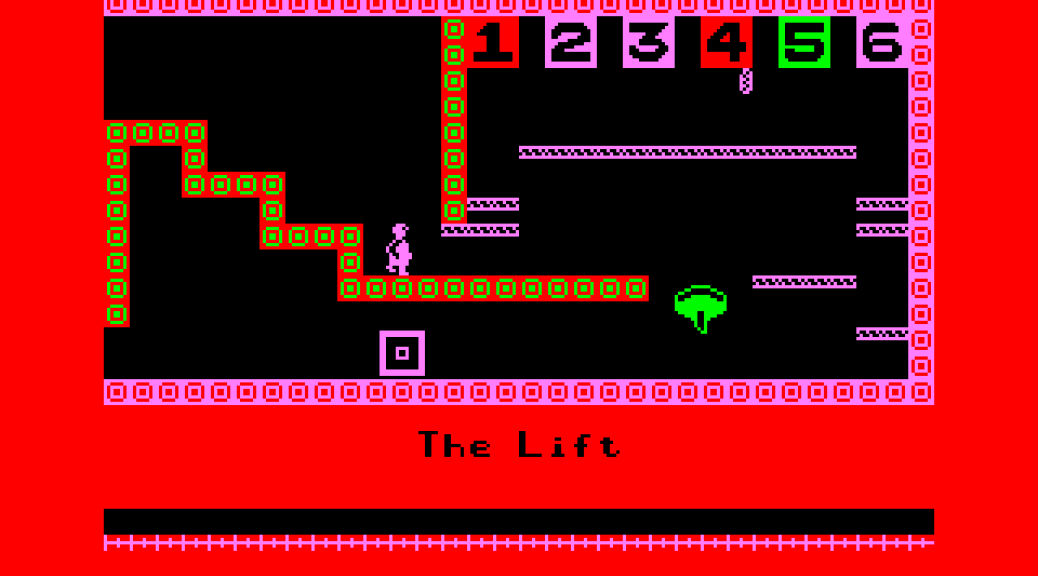
The 1984 Amstrad CPC conversion of the ZX Spectrum game, Technician Ted (aka The Chip Factory starring Technician Ted), is pretty much identical to the original, except that it has a rather garish colour palette.
Tag Archives: 2D graphics
Flat, two-dimensional graphics, usually constructed of pixels. Not three-dimensional.
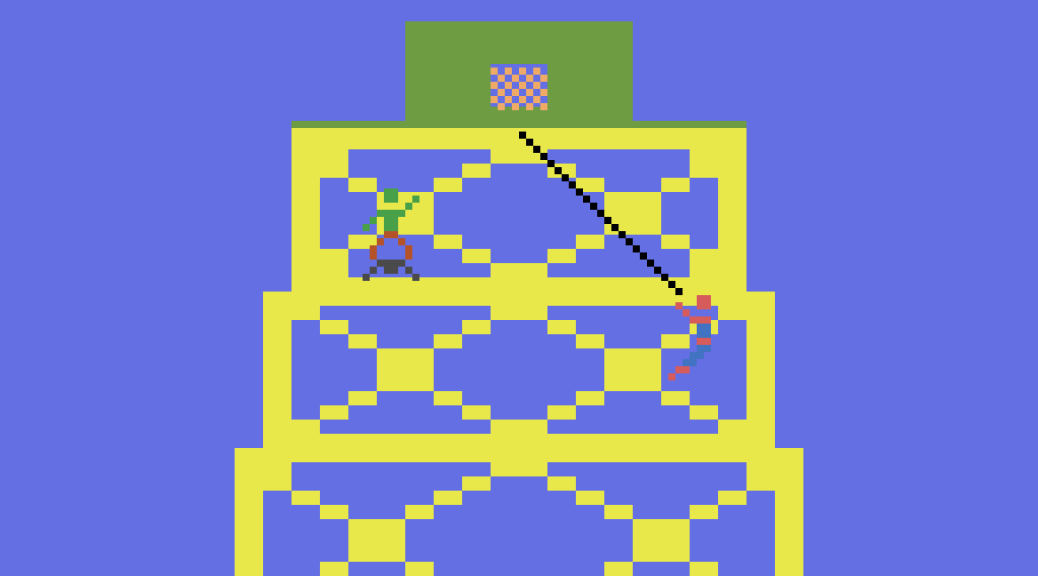
Spider-Man, Atari 2600
The 1982 release of Parker Brothers‘ Atari 2600 game, Spider-Man, was the first ever video game featuring a character licensed from Marvel Comics. And, of course, by extension, it was also the first officially-licensed Spider-Man game. But is it any good?
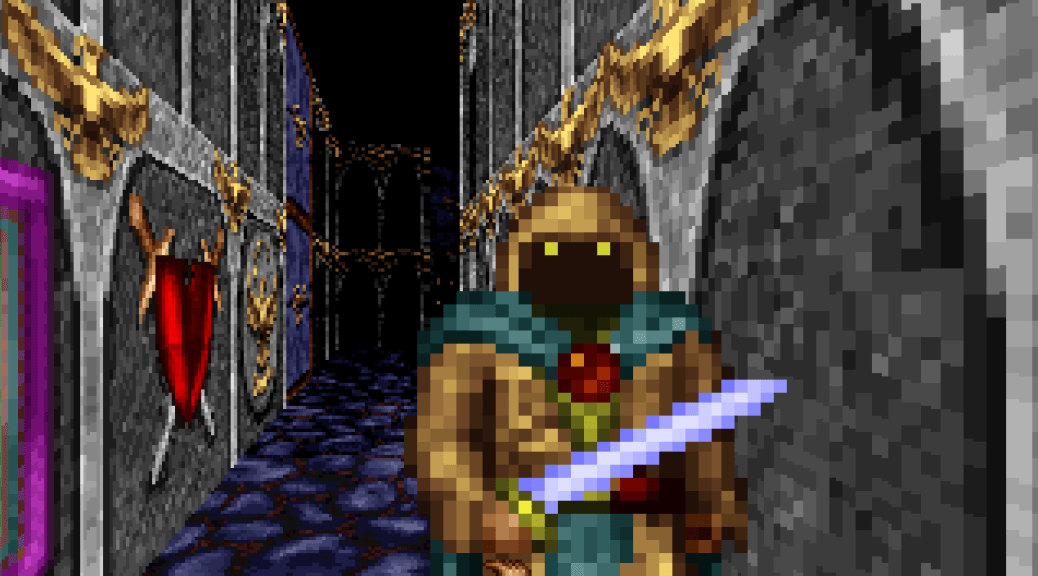
Hexx: Heresy of the Wizard, PC
Hexx: Heresy of the Wizard (aka Wizard) was released by Psygnosis in 1994 and is a first-person, free-roaming dungeon-crawler. Unfortunately, though, it’s not a very good one.

Moon Patrol Redux, Atari 5200
Moon Patrol Redux is a homebrew hack/remake of the Atari 5200 port of Moon Patrol – originally released in 1983, with this ‘Redux‘ version coming out in 2019 via Playsoft.
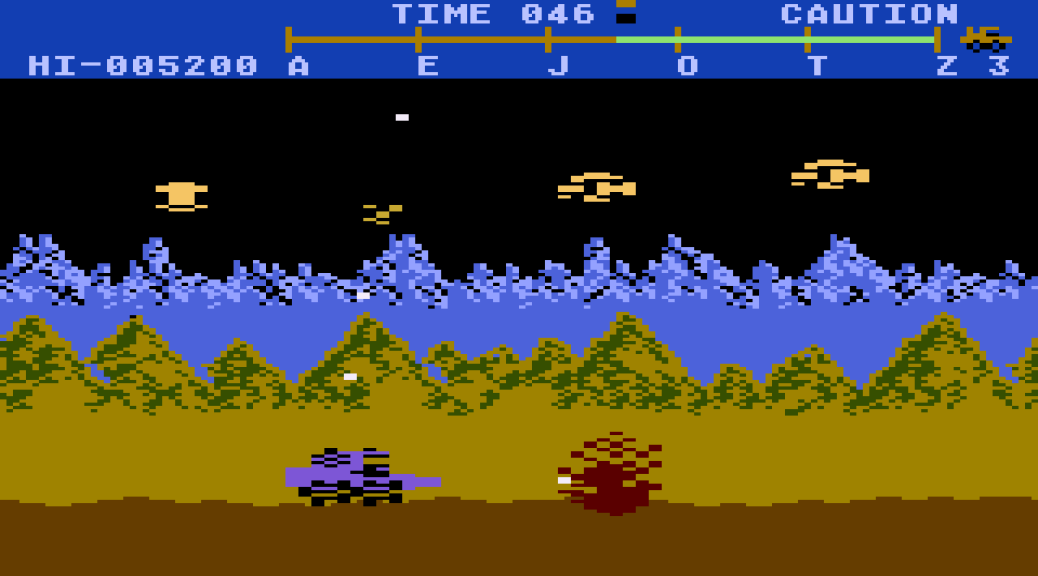
Moon Patrol, Atari 5200
Developed and published by Atari, Inc. in 1983, the Atari 5200 conversion of Moon Patrol is an adequate, but hardly ‘dazzling’, port of the classic Irem arcade game.
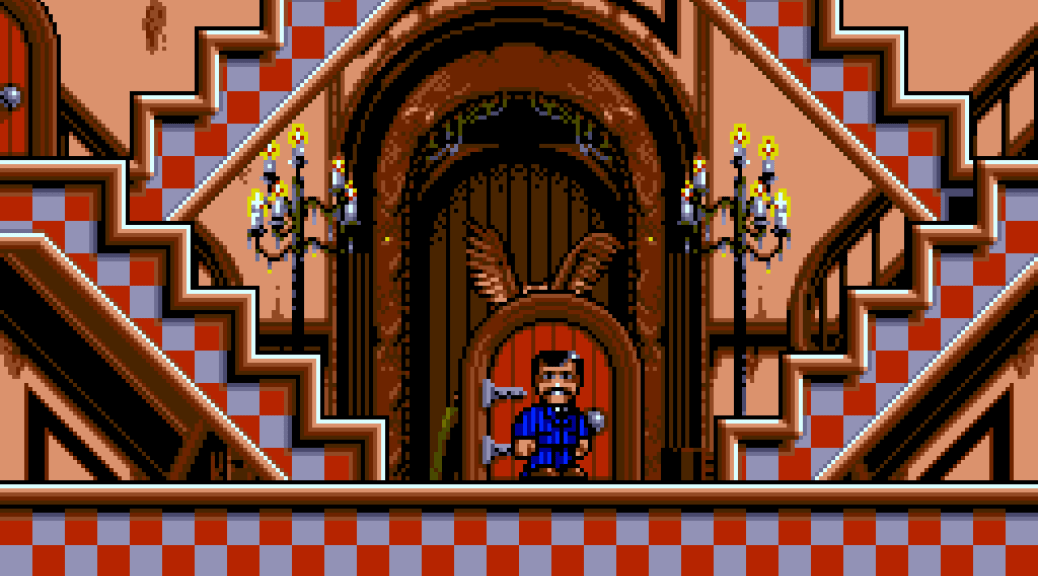
The Addams Family, Atari ST
Based in the 1991 film from Paramount Pictures, The Addams Family is a cute and colourful platform game, developed and published by Ocean Software. The Atari ST version, featured here, was first released in 1992.

Vixen, Atari ST
Vixen, by Martech, was released for a number of 8 and 16-bit home computer platforms in 1988, and it proved to be somewhat controversial. Mainly because the game used glamour model Corinne Russell as both reference for the lead character, and to plaster all over the packaging and marketing for the game, which upset a lot of vocal, prudish people in the UK, leading to calls for it to be banned. Retailer Boots even refused to stock the game unless Martech changed the game’s packaging…

Kid Dracula, Game Boy
Konami‘s 1993 Game Boy game, Kid Dracula, is a cutesy spin-off from the Castlevania series. It’s actually a remake of the 1990 Famicom game, “Akumajō Special: Boku Dracula-kun“.

Kid Dracula, NES/Famicom
Known in Japan as “Akumajō Special: Boku Dracula-kun“, this cute and humorous Castlevania spin-off was initially released by Konami, in Japan only, in 1990, for the Nintendo Famicom. Numerous fan translations exist for the game, but it was also officially released in English for the first time – as “Kid Dracula” – in 2019, in the Castlevania Anniversary Collection. That’s the version I’m showing here.

Arcanum: Of Steamworks and Magick Obscura, PC
Developed by Troika Games and published by Sierra On-Line in 2001, Arcanum: Of Steamworks and Magick Obscura is a rich and complex RPG with isometric 2D graphics, set in a fantasy world undergoing an industrial revolution. The game mixes magic and technology in a Victorian-styled “Steampunk” setting; is completely open-ended, and features lots of different races (humans, orcs, gnomes, elves, dwarves), with complicated – even racist – societal themes developing as you discover the world and interact with its many characters.
Continue reading Arcanum: Of Steamworks and Magick Obscura, PC
 The King of Grabs