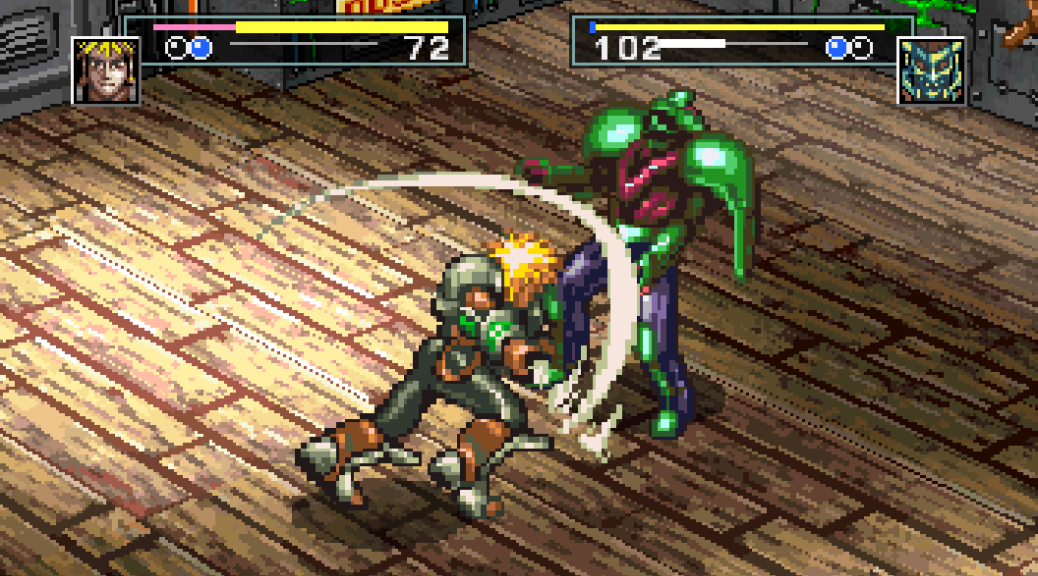
Dark Savior is an isometric action game developed by Climax Entertainment and published by Sega for the Saturn in 1996. In my opinion the game is a bad idea, badly translated, poorly executed, and with some pretty awful story-telling.
Tag Archives: swords

Shaman King: Master of Spirits 2, Game Boy Advance
Shaman King: Master of Spirits 2 is the 2005 sequel to the accomplished Shaman King: Master of Spirits and was again developed and published by Konami, only for the Game Boy Advance.
Continue reading Shaman King: Master of Spirits 2, Game Boy Advance
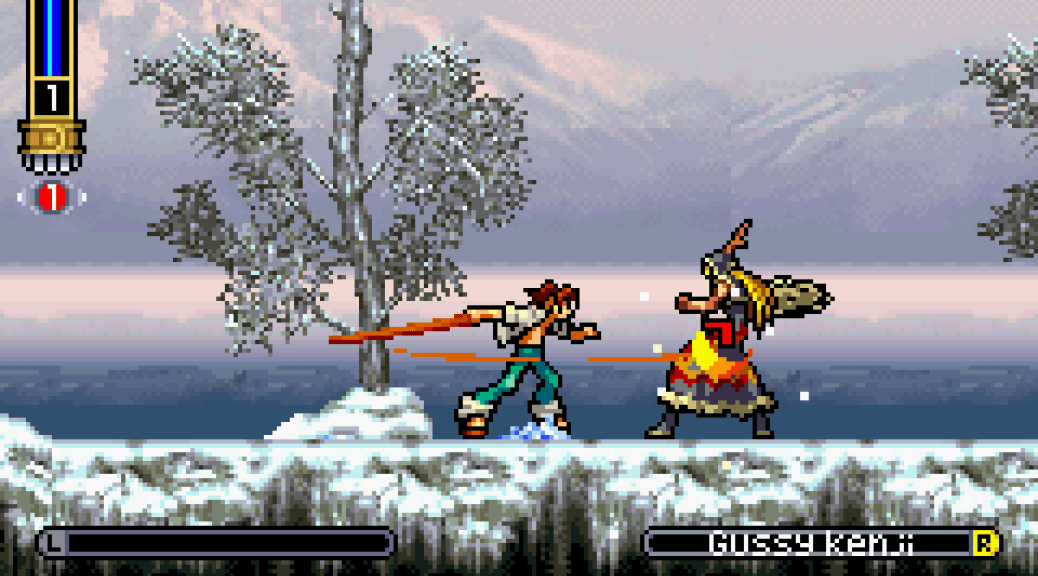
Shaman King: Master of Spirits, Game Boy Advance
Shaman King: Master of Spirits, much like the anime and manga that it’s based upon, is centred on the character Yoh Asakura and his battles to become Shaman King. It was first released for the Game Boy Advance in 2004, by Konami.
Continue reading Shaman King: Master of Spirits, Game Boy Advance

Aladdin, Megadrive/Genesis
AKA “Disney’s Aladdin” is a classic Megadrive/Genesis platform game based on the hit 1992 Disney film of the same name (the one featuring Robin Williams as the voice of The Genie). It was first released in November 1993.
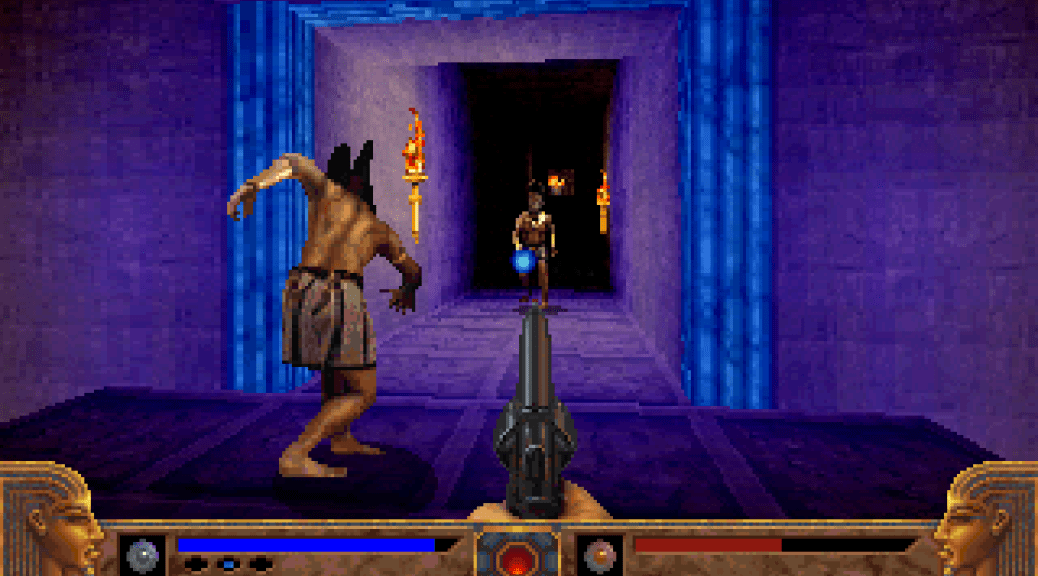
Exhumed, Sega Saturn
Also known as “PowerSlave” in some regions, Exhumed is an Egyptian-themed first-person shoot ’em up with survival horror overtones and it is arguably the best first-person shooter on the Sega Saturn. It was developed by Lobotomy Software and first released in 1996.
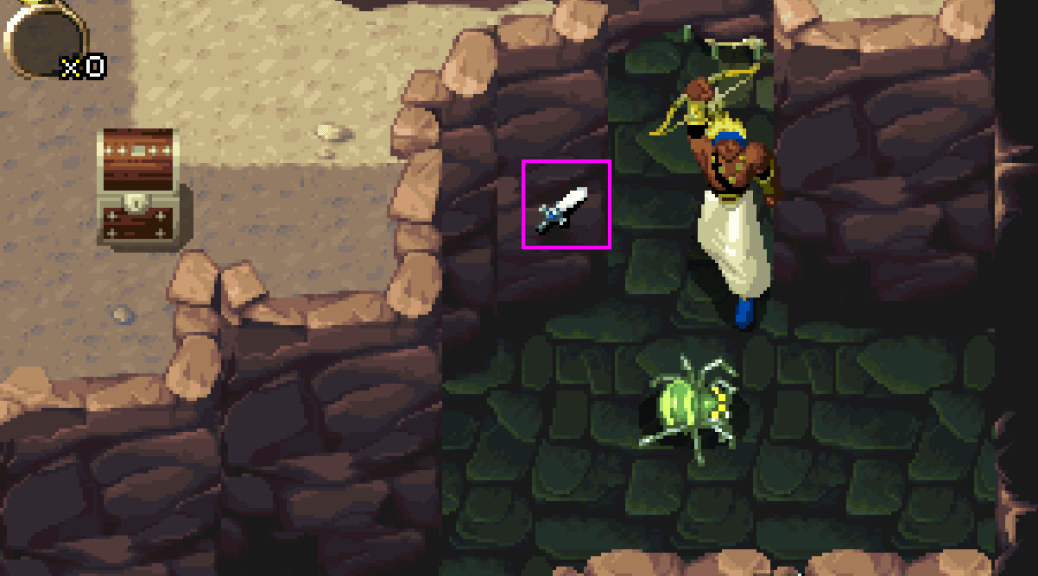
The Legend of Oasis, Sega Saturn
The Legend of Oasis is the Saturn-exclusive sequel (and prequel) to Beyond Oasis on the Megadrive/Genesis. It’s also known as “The Story of Thor 2” in some territories. The game was developed by Ancient and published by Sega in 1996.

Shining Soul II, Game Boy Advance
The sequel to Shining Soul – Shining Soul II – was once again developed by Nextech and Grasshopper Manufacture and was first released for the Game Boy Advance in 2003. It’s another real time RPG, only this time it’s more detailed and challenging than the previous game.

Shining Soul, Game Boy Advance
Shining Soul is an isometric RPG with real time combat, developed by Nextech and Grasshopper Manufacture and published by Sega in Japan and Europe and Atlus in North America. It was first released for the Game Boy Advance in 2002.

The Second Samurai, Megadrive/Genesis
The Second Samurai is the sequel to First Samurai and was developed by Vivid Image and published by Psygnosis for the Megadrive and Amiga in 1994. It is a scrolling platform action game with a samurai sword-wielding hero on a mission to defeat The Demon King. In this sequel Mr. Samurai has a female partner who can fight alongside him.
The game was programmed by Raffaele Cecco (famous for Cybernoid, Exolon and Stormlord, among other things), with graphics by Teoman Irmak and music by Brian Marshall.
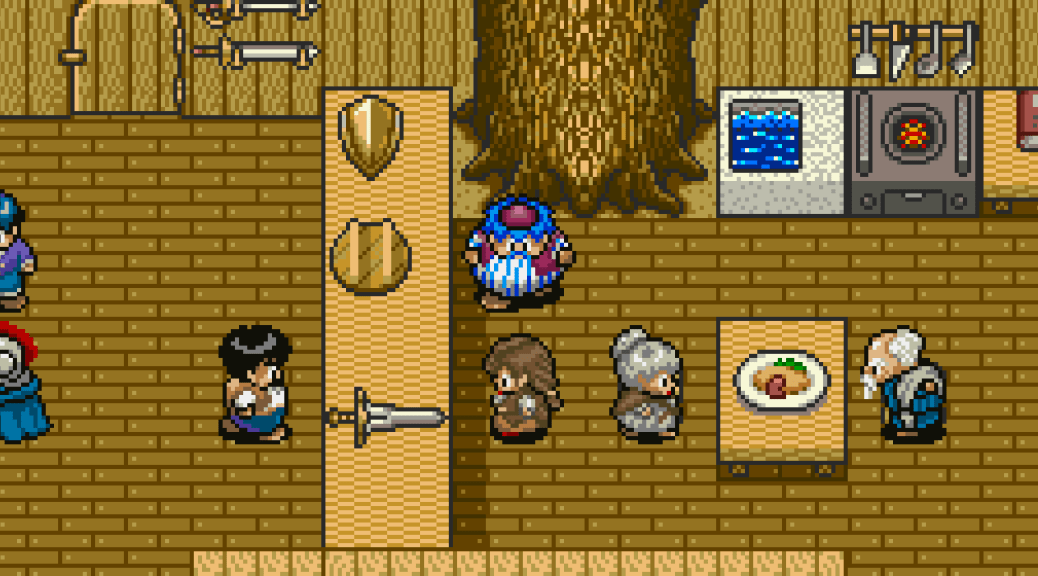
Torneko no Daibōken: Fushigi no Dungeon, Super Nintendo
Torneko no Daiboken: Fushigi no Dungeon (translating as “Torneko’s Great Adventure: Mystery Dungeon“) is the first game in the Mystery Dungeon series from Chunsoft, the developer known for creating the Dragon Quest series. It is a ‘Roguelike‘ dungeon-crawler, with randomised maze-like dungeons and was first released in 1993.
Continue reading Torneko no Daibōken: Fushigi no Dungeon, Super Nintendo
 The King of Grabs