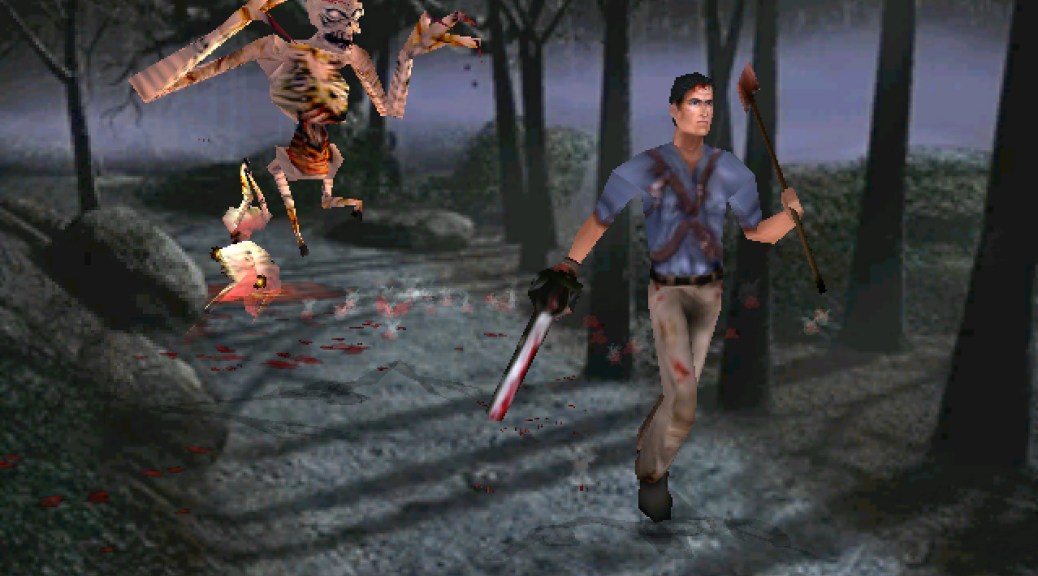
Evil Dead: Hail to the King was developed by Heavy Iron Studios and published by THQ in 2000. It is a survival horror game based on Sam Raimi‘s classic cabin-in-the-woods horror film, and – to be honest – it’s pretty bad. Which is a pity because I’m a big horror film fan (have been since I was a teenager), and this game should be right down my street.
Tag Archives: axes

Knights of the Round, Arcade
Knights of the Round is a three-player hack-and-slash arcade game, developed and distributed by Capcom in 1991. The fact that the developers – for whatever reason – neglected to include the word “Table” at the end of the title of their game hints at some hilariously bad translation, and plenty of terrible spelling mistakes, which is exactly what you get in this game…
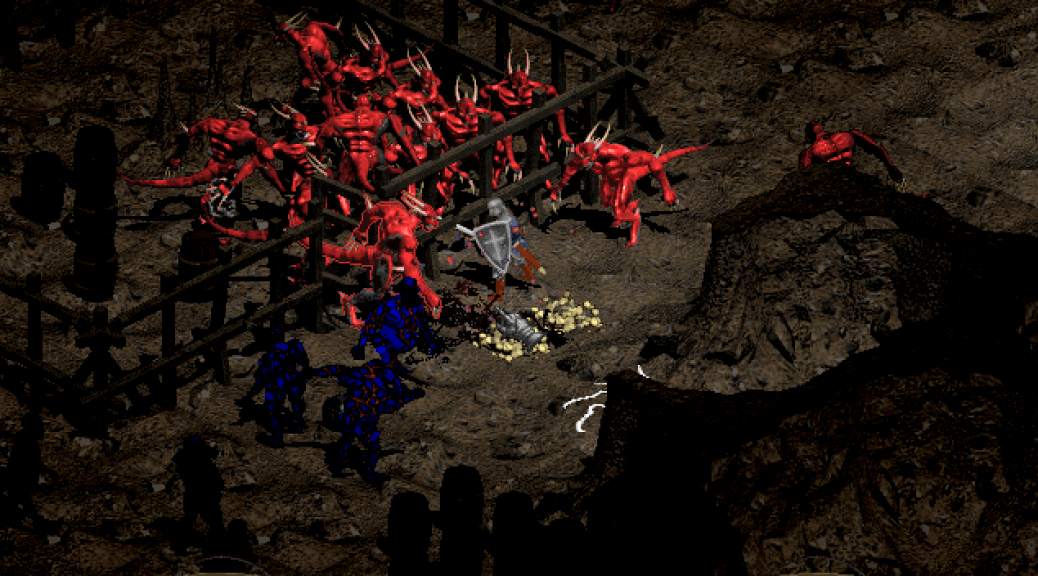
Diablo, PC
Developed by Blizzard North and first published by Blizzard Entertainment in 1997, Diablo is a classic point-and-click action/RPG that features quests, monsters, real-time combat, magic, and dungeon-delving, in a way that is meant to appeal to those who prefer a more immediate style of gameplay, than the more ‘hardcore’, turn-based style of many RPGs. And – as a result – Diablo was a smash hit, and spawned a series that still (infamously) persists to this day.

Castlevania: Lords of Shadow – Mirror of Fate, PC
Castlevania: Lords of Shadow – Mirror of Fate was originally released for the Nintendo 3DS in 2013. It was released in High Definition for PlayStation 3 and XBox 360 later that same year, then for Windows PCs in 2014.
Mirror of Fate is a sequel/prequel to 2010’s Lords of Shadow, and its story begins prior to the events of its predecessor.
Continue reading Castlevania: Lords of Shadow – Mirror of Fate, PC

Xanadu Next, PC
Xanadu Next was developed by Falcom and published for Windows PCs in Japan in 2005. It is a continuation of the Dragon Slayer series and a spin-off from Xanadu: Dragon Slayer II. The game remained untranslated into English until a worldwide release by XSEED Games in 2016. And I have to say: it’s a wonderful game, and is arguably the pinnacle of the long-running franchise.
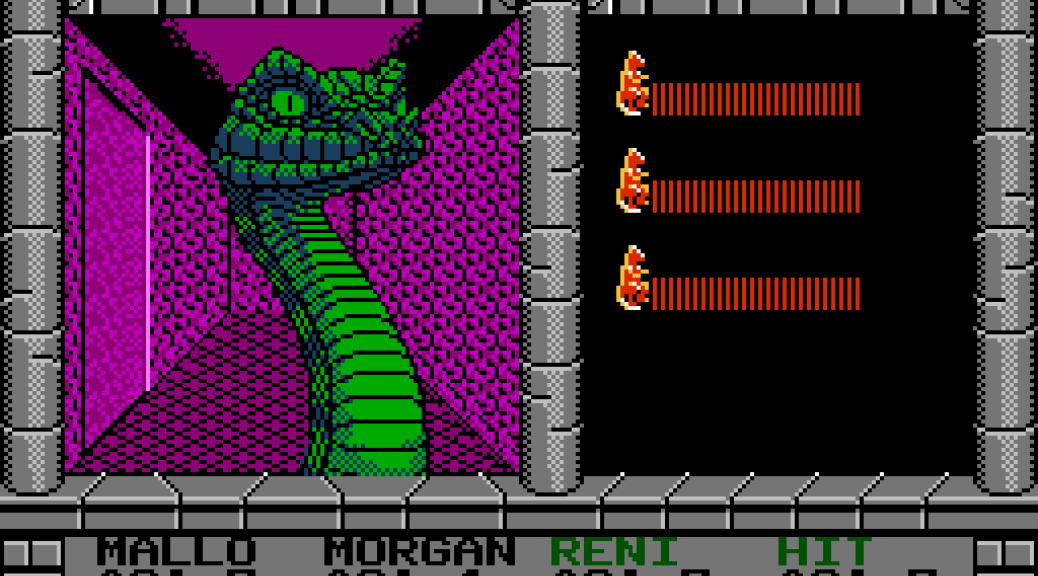
Swords and Serpents, NES/Famicom
Developed by Interplay Productions and published by Acclaim Entertainment in 1990, Swords and Serpents is a first-person, party-based RPG with tile-based movement for up to four players. You can either build a party of four characters yourself, in single-player mode, or up to four different players can control one party member each in multiplayer mode*.
*= An adapter, like the ‘NES Satellite‘, or another four-player expansion peripheral, is required if you’re going to play with that many players (but, let’s face it, very few will, although it’s nice – and fairly unique – to have the option to do that).

Ultima Underworld: The Stygian Abyss, FM Towns
Origin/Blue Sky Productions‘ classic MS-DOS RPG, Ultima Underworld: The Stygian Abyss, was released for the FM Towns in 1993 by Electronic Arts Victor, Inc.*
*= Electronic Arts Victor was a joint venture between Electronic Arts and the Victor Musical Industries subsidiary of JVC, established in September 1992 in Tokyo. Electronic Arts Victor‘s mission was to translate Electronic Arts‘ library of games to Japanese language and to distribute them in Japan, as well as to create original titles for the Japanese market.
Continue reading Ultima Underworld: The Stygian Abyss, FM Towns

Super Adventure Island, Super Nintendo
Super Adventure Island was the first Adventure Island game released for the Super Nintendo and was developed by Produce! and published by Hudson Soft in 1992.
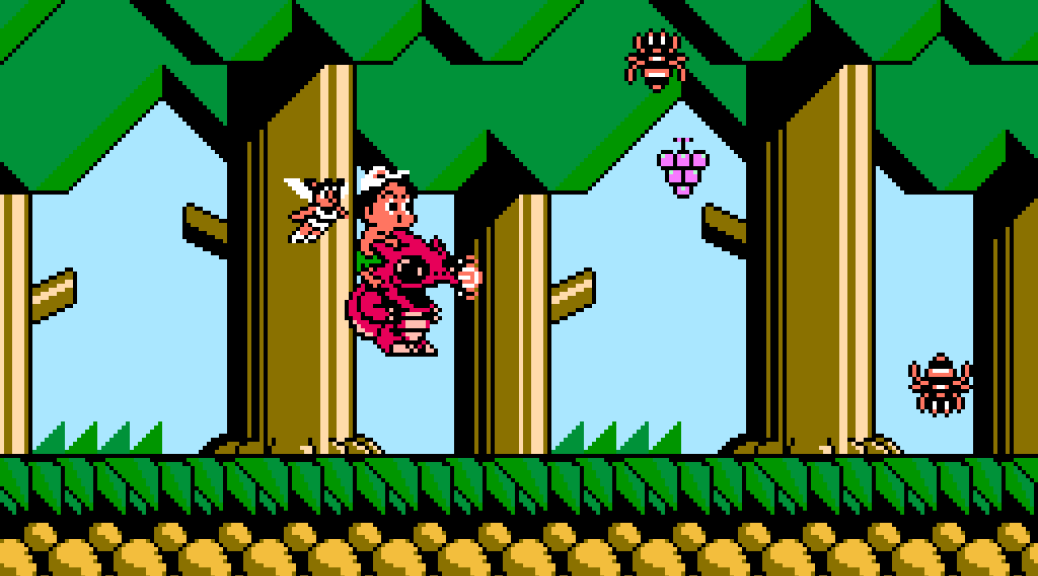
Adventure Island III, NES/Famicom
Developed by Now Production and published by Hudson Soft in 1992, Adventure Island III is the third outing of Master Higgins, the cave boy hero who is the star of this game and a number others, and who started out life as a port of Wonder Boy in the very first Adventure Island game.

Adventure Island, NES/Famicom
Hudson Soft‘s Adventure Island on the NES/Famicom is an adaptation of Sega‘s Wonder Boy arcade game, although subsequent Adventure Island games were original titles and the series went on to become a relatively popular ‘spin-off’ in its own right. Adventure Island was initially released in Japan in 1986, then in North America 1988, and finally in Europe in 1992.

