
Get Dexter is an isometric action puzzle game originally released for the Amstrad CPC in 1986. It was programmed by Remi Herbulot with graphics by Michel Rho. In its native France the game is known as “Crafton & Xunk“, which I always thought was a bizarre title for a video game.
Monthly Archives: April 2022
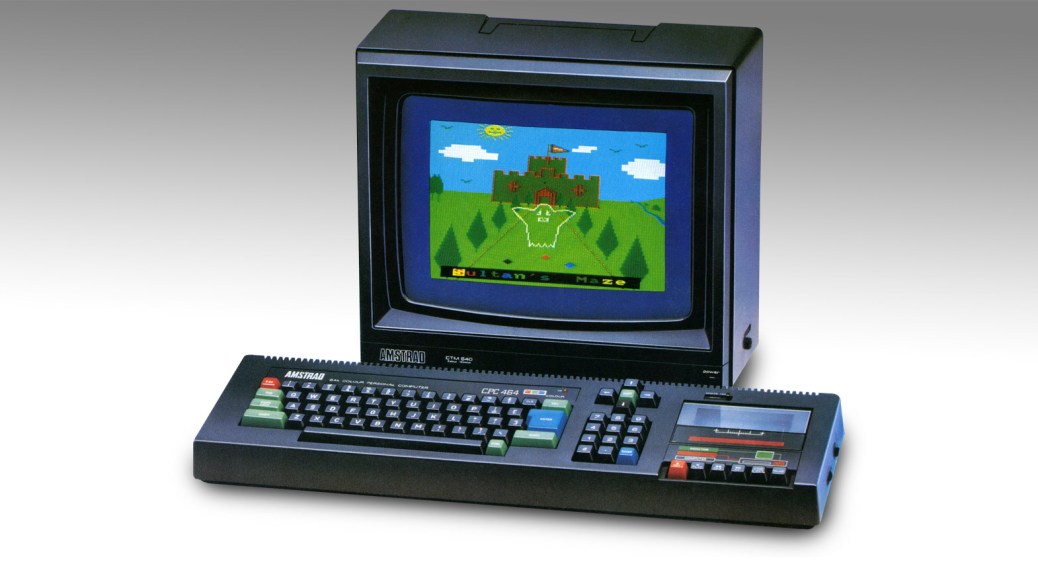
Amstrad CPC Special
The Amstrad Colour Personal Computer (CPC) is a family of 8-bit home computers that were designed and manufactured by British company Amstrad (the infamous one led by Alan Sugar), and marketed as competition to the Commodore 64 and ZX Spectrum from 1984 onward.

King’s Field IV, PlayStation 2
King’s Field IV was developed and published by FromSoftware in Japan in 2001 for the PlayStation 2. It was later released as King’s Field: The Ancient City in North America in 2002, and in Europe (as simply King’s Field IV) in 2003. It is another first-person RPG and is the fourth and final game in the King’s Field series.

King’s Field III, PlayStation
King’s Field III is the second sequel in FromSoftware‘s classic first-person RPG series and was first released in Japan in 1996. It was published in North America by ASCII Entertainment under the title of “King’s Field II” (because the original King’s Field was only released in Japan).
For my money, King’s Field III is the best of the three PlayStation King’s Field games, with larger, more interesting environments, and a bigger scope than the previous two games. The graphics are still borderline laughable, and the controls are still cumbersome, but the gameplay has evolved reasonably well in the space of a couple of years.

King’s Field II, PlayStation
FromSoftware‘s King’s Field II was initially released in Japan in 1995 and it is another first-person RPG with open world exploration, dodgy graphics and challenging combat. It was later published under the title “King’s Field” by ASCII Entertainment in North America and Sony in Europe in 1996, which does cause some confusion as the western titling ignores the actual first game in the series. For clarity: the official English language “King’s Field” is actually King’s Field II – the sequel.

King’s Field, PlayStation
With Elden Ring currently wowing gamers I thought I’d take a look at the series that began FromSoftware‘s journey into the action RPG genre, and that would be King’s Field – released in Japan only in 1994 for the Sony PlayStation – and, to be honest, it couldn’t be any further removed from Elden Ring in terms of presentation…
I’ve played a lot of RPGs in my time, and I would go so far as to say that it’s my favourite genre of video game, but King’s Field came as a bit of a shock to me. Yes, King’s Field was an early 3D RPG on the PlayStation, releasing the same year as the PS1 was launched, but it post-dates Ultima Underworld by two years and is archaic in comparison.

Sorcery, ZX Spectrum
Martin Wheeler‘s 1984 Spectrum game, Sorcery, was a decent hit for publisher Virgin Games. Enough at least for Virgin to convert the game to various other systems, including for the Amstrad CPC, which is the better version.

Fred, ZX Spectrum
Written by famous Spanish software house Indescomp, Fred is a scrolling platform/maze game where you control a cartoon Indiana Jones-type character plundering treasures from an Egyptian tomb, while avoiding contact with ghosts and mummies.
Fred was first released in 1984. In its native Spain the game was published by Investronica, while in the UK and other parts of Europe the game was published by Quicksilva.

Indiana Jones’ Greatest Adventures, Super Nintendo
Indiana Jones’ Greatest Adventures is a run-and-gun platform/action game developed by Factor 5 (the German team who made Super Turrican, among others), with the supervision of LucasArts, and published by JVC in 1994.
The game features sequences based on the first three Indiana Jones films; the first being Raiders of the Lost Ark obviously; the second being Temple of Doom (my favourite), and the third being The Last Crusade.
Continue reading Indiana Jones’ Greatest Adventures, Super Nintendo

Doom 64, Nintendo 64
Developed by Midway Studios San Diego and published by Midway Games in 1997, Doom 64 is a sequel to Doom II that contains a single-player campaign, but no multiplayer.
In total there are 28 campaign levels and four secret levels. Monster and weapon graphics have been redesigned and are unique to Doom 64.
 The King of Grabs