
The sequel to Need For Speed: Underground, and the second Need For Speed game (of four) released for the GameCube, Need For Speed: Underground 2 is a bit of a curveball in the series and is significantly different to the first game. It was developed by “EA Black Box” and first published by EA Games in 2004.
Tag Archives: menu system

Need For Speed: Underground, GameCube
Developed by “EA Black Box” and released by EA Games in 2003, Need For Speed: Underground is a street-racing game in high-powered modern cars. It uses fairly spectacular 3D graphics and environments; has a nice control/feel to the cars, and is full of OTT flashy car racing FMV (which some might find unnecessary; I was kinda leaning in that direction).

Final Fantasy Crystal Chronicles, GameCube
Final Fantasy Crystal Chronicles is an action/RPG collaboration between Square Enix and The Game Designers Studio, Inc.
It was first released for the Nintendo GameCube in Japan in 2003, and in 2004 for the rest of the world.

Arcanum: Of Steamworks and Magick Obscura, PC
Developed by Troika Games and published by Sierra On-Line in 2001, Arcanum: Of Steamworks and Magick Obscura is a rich and complex RPG with isometric 2D graphics, set in a fantasy world undergoing an industrial revolution. The game mixes magic and technology in a Victorian-styled “Steampunk” setting; is completely open-ended, and features lots of different races (humans, orcs, gnomes, elves, dwarves), with complicated – even racist – societal themes developing as you discover the world and interact with its many characters.
Continue reading Arcanum: Of Steamworks and Magick Obscura, PC

The Sword of Hope II, Game Boy
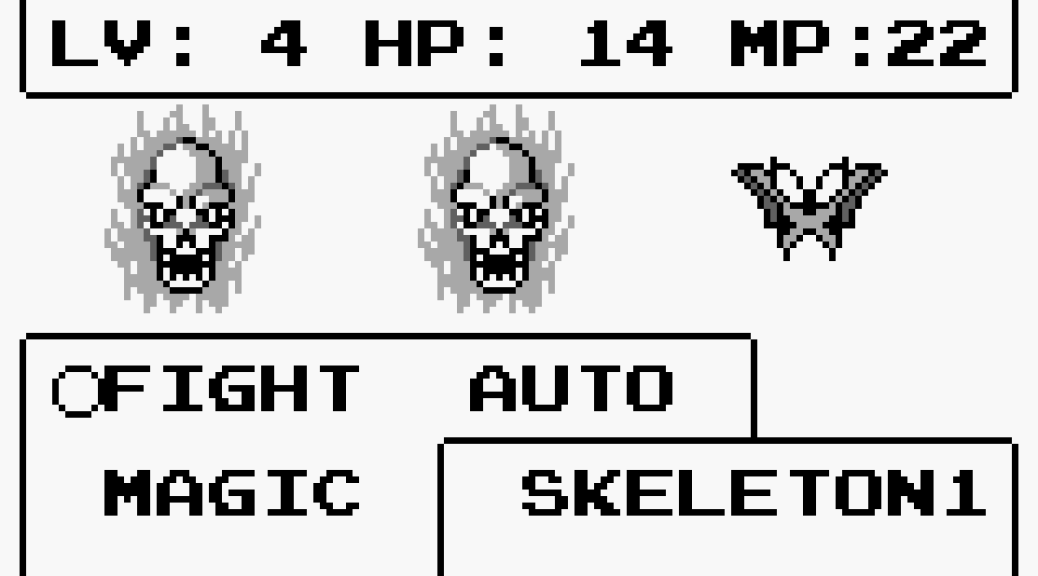
The sequel to the first Sword of Hope, The Sword of Hope II was developed and published by KEMCO in Japan in 1992, but wasn’t localized and released into North America until 1996. Europe (and the rest of the world) didn’t receive a release of the game at all.
The Sword of Hope, Game Boy
This first-person adventure/RPG was developed by KEMCO (a subsidiary of Kotobuki Engineering & Manufacturing Co.), and published by Seika Corporation in Japan, North America and Europe in 1989. In it, you play as Prince Theo, who is on a quest to challenge his insane, power-mad father for rule of the kingdom.
Dragon Warrior Monsters 2, Game Boy Color
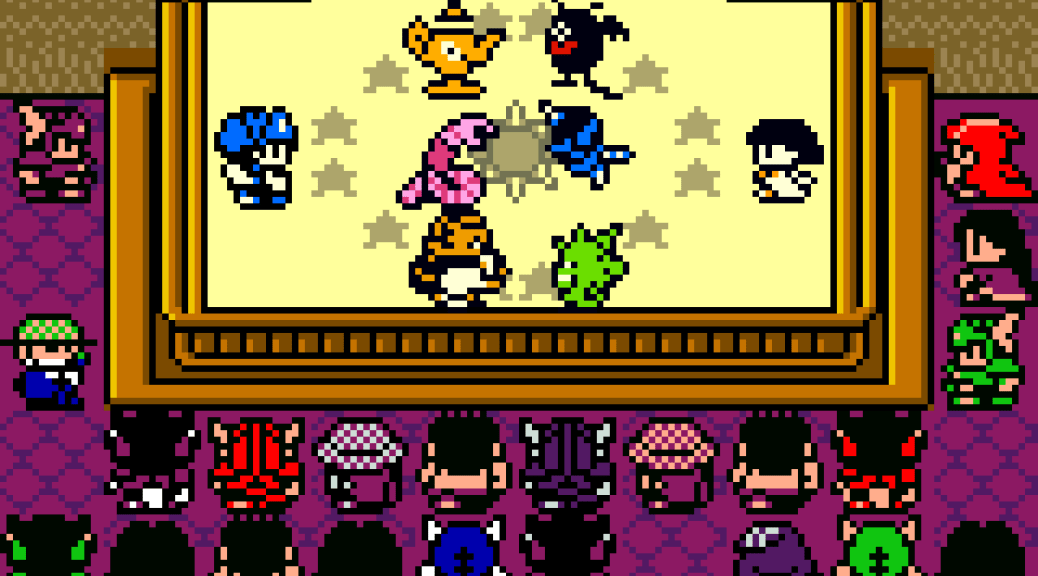
Dragon Warrior Monsters 2 is the second game in the Dragon Quest spin-off series, which is a monster-collecting, training, breeding and combat style game in the tradition of Pokémon. It was developed by TOSE Co., Ltd. and was published exclusively for the Game Boy Color by Enix (Eidos in North America and Europe) in 2001.

Dragon Warrior Monsters, Game Boy Color
Dragon Warrior Monsters (aka Dragon Quest Monsters in Japan) is a spin-off from the famous Dragon Quest series, and this is the first game in the DWM series. It was developed by TOSE Co., Ltd. and published exclusively for the Game Boy Color by Enix (Eidos in North America and Europe), in 1998.

Lagrange Point, NES/Famicom
Released in Japan only by Konami in 1991, Lagrange Point is a science fantasy JRPG set on a human colony ship in space (located at the Lagrangian points between Earth and the Sun). Communications are lost between colonies, so a search team is sent in to investigate.
Swords and Serpents, NES/Famicom
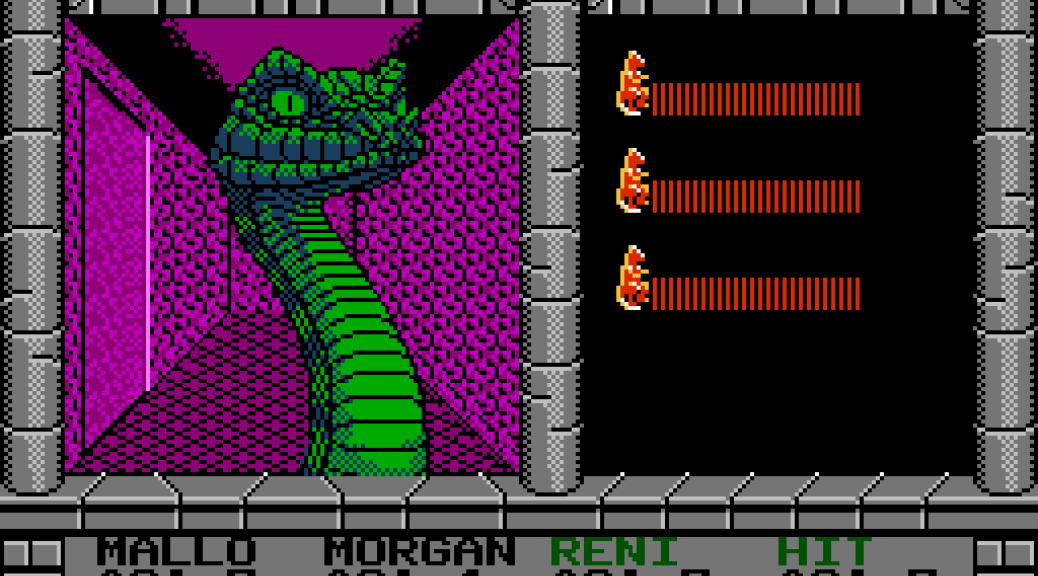
Developed by Interplay Productions and published by Acclaim Entertainment in 1990, Swords and Serpents is a first-person, party-based RPG with tile-based movement for up to four players. You can either build a party of four characters yourself, in single-player mode, or up to four different players can control one party member each in multiplayer mode*.
*= An adapter, like the ‘NES Satellite‘, or another four-player expansion peripheral, is required if you’re going to play with that many players (but, let’s face it, very few will, although it’s nice – and fairly unique – to have the option to do that).
 The King of Grabs