Tag Archives: Level-Grinder

Fallout: London, PC [Part 2 – Avoiding the Bugs]

Before proceeding with the review, I want to bring up the “elephant in the room” with Fallout: London. Something that bothered me throughout my first two playthroughs, and also something that can be mostly avoided with some careful planning and insight. And that is: avoiding the many bugs in the game…

Continue reading Fallout: London, PC [Part 2 – Avoiding the Bugs]

Fallout: London, PC [Part 1 – No Swimming in the River Thames]

Created by Team FOLON, with the backing of gog.com, Fallout: London is a free total conversion for Fallout 4, turning the English capital city into a post-apocalyptic hellscape, with various different factions warring against each other.

The entire single-player campaign – the whole game, in fact – has been modified to give you a new storyline to play through, plus loads of other extras that accent the very Britishness of it all. The mod satirises British history, culture, and British manufacturing and consumerism, and has countless unique items and locations to discover while exploring.

Continue reading Fallout: London, PC [Part 1 – No Swimming in the River Thames]

Tōgi Ō: King Colossus, Megadrive/Genesis

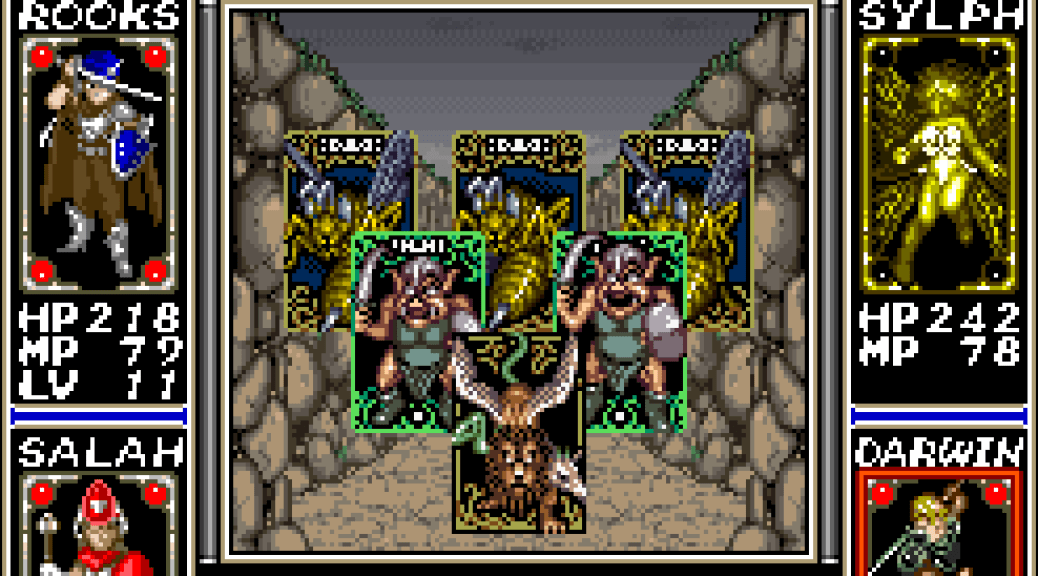
Released in Japan only, by Sega, in 1992, Tōgi Ō: King Colossus is an obscure JRPG with real-time combat that has been fan-translated into English (and Spanish) and is therefore playable to gamers outside of Japan.

Continue reading Tōgi Ō: King Colossus, Megadrive/Genesis

Sword of Mana, Game Boy Advance

Sword of Mana on the Game Boy Advance is an enhanced remake of the first Seiken Densetsu game, which was released as Final Fantasy Adventure on the original black and white Game Boy in English-speaking territories. It was developed by Square Enix and Brownie Brown and was first released as “Shinyaku: Seiken Densetsu” in Japan in 2003.

Continue reading Sword of Mana, Game Boy Advance

Sorcerer’s Kingdom, Megadrive/Genesis

Developed by NCS Corporation and published exclusively for the Sega Megadrive/Genesis in 1992, Sorcerer’s Kingdom is a relatively obscure JRPG with tactical, turn-based combat.

Continue reading Sorcerer’s Kingdom, Megadrive/Genesis

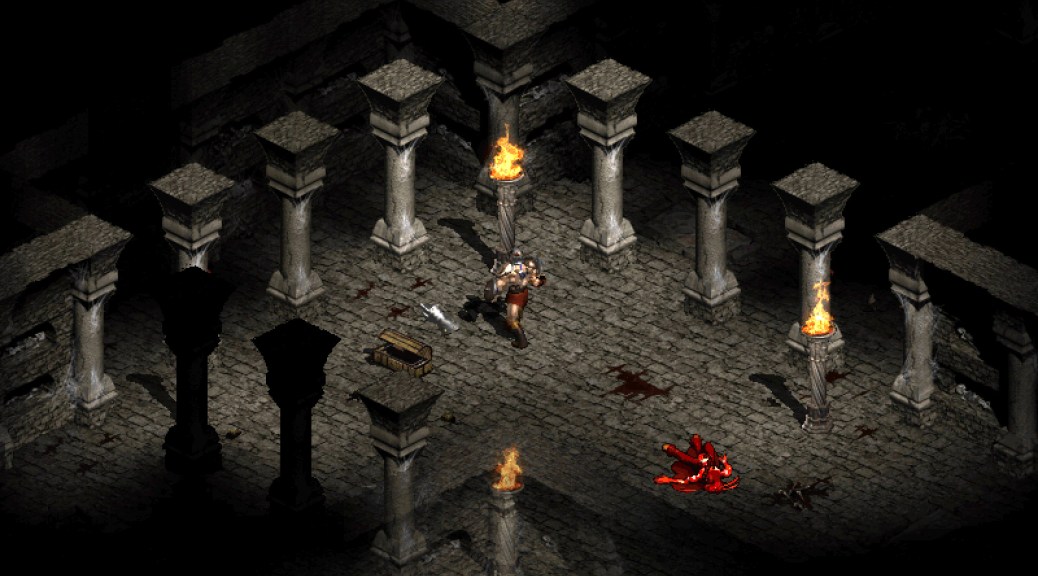
Diablo, PC

Developed by Blizzard North and first published by Blizzard Entertainment in 1997, Diablo is a classic point-and-click action/RPG that features quests, monsters, real-time combat, magic, and dungeon-delving, in a way that is meant to appeal to those who prefer a more immediate style of gameplay, than the more ‘hardcore’, turn-based style of many RPGs. And – as a result – Diablo was a smash hit, and spawned a series that still (infamously) persists to this day.

Continue reading Diablo, PC

Willow, NES/Famicom

Based on the 1988 Ron Howard film of the same name, Willow is an adventure/RPG that was developed and published by Capcom in 1989. It has nothing in common with the arcade game, called Willow, which was released by Capcom the same year.

Continue reading Willow, NES/Famicom

Hexx: Heresy of the Wizard, PC

Hexx: Heresy of the Wizard (aka Wizard) was released by Psygnosis in 1994 and is a first-person, free-roaming dungeon-crawler. Unfortunately, though, it’s not a very good one.

Continue reading Hexx: Heresy of the Wizard, PC

Arcanum: Of Steamworks and Magick Obscura, PC

Developed by Troika Games and published by Sierra On-Line in 2001, Arcanum: Of Steamworks and Magick Obscura is a rich and complex RPG with isometric 2D graphics, set in a fantasy world undergoing an industrial revolution. The game mixes magic and technology in a Victorian-styled “Steampunk” setting; is completely open-ended, and features lots of different races (humans, orcs, gnomes, elves, dwarves), with complicated – even racist – societal themes developing as you discover the world and interact with its many characters.

Continue reading Arcanum: Of Steamworks and Magick Obscura, PC

The Sword of Hope II, Game Boy

The sequel to the first Sword of Hope, The Sword of Hope II was developed and published by KEMCO in Japan in 1992, but wasn’t localized and released into North America until 1996. Europe (and the rest of the world) didn’t receive a release of the game at all.

Continue reading The Sword of Hope II, Game Boy