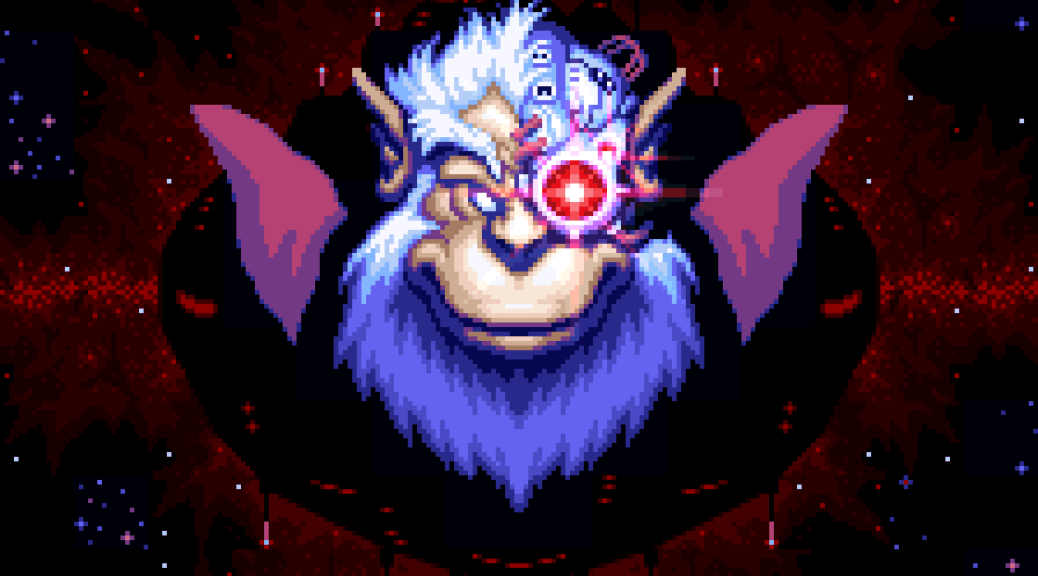
The sequel to the classic Super Nintendo 3D shooter, Star Fox, Star Fox 2 is infamous because it was actually cancelled before it was completed, way back in 1995, but was finally finished and released in 2017 on the SNES Classic Edition retro console.
Tag Archives: Shigeru Miyamoto

The Legend of Zelda: Twilight Princess, GameCube
The Legend of Zelda: Twilight Princess was developed and published by Nintendo for the GameCube and Wii in 2006 and is an unusual, beautifully-produced game with stunning visuals and evocative gameplay. It was the final first-party release from Nintendo for the GameCube.
Twilight Princess features involving, varied, and ever-evolving gameplay, with a more mature-looking Link in the title role (possibly in response to criticism of its predecessor, 2002’s The Wind Waker, due to its cartoony, cel-shaded graphics). The story involves Link trying to stop Hyrule from being engulfed by a corrupt parallel dimension called The Twilight Realm.
Continue reading The Legend of Zelda: Twilight Princess, GameCube

Mario Tennis, Game Boy Color
Developed by Camelot Software Planning and published by Nintendo in 2000 (in Japan – 2001 everywhere else), Mario Tennis on the Game Boy Color is an alternate handheld version of the Mario-based tennis game on the Nintendo 64 which was published under the same name that same year.

Pokémon Colosseum, GameCube
Pokémon Colosseum was developed by Genius Sonority and published by The Pokémon Company in 2003 in Japan and 2004 everywhere else. It is not considered part of the main Pokémon series, but is a third-generation spin-off made exclusively for the Nintendo GameCube.

F-Zero GX, GameCube
F-Zero GX is the successor to F-Zero X (Nintendo 64) and is a fast-paced, futuristic racing game featuring 3D graphics and challenging gameplay. It was also the first significant video game collaboration between Nintendo and Sega, having been developed by Sega‘s famous Amusement Vision (AV) team (with Shigeru Miyamoto acting as producer) – the same team who made the brilliant Super Monkey Ball series. In fact, F-Zero GX uses an enhanced version of the 3D engine that powered Super Monkey Ball.

Pokémon Yellow Version, Game Boy Color
Pokémon Yellow (aka Pokémon Yellow Version: Special Pikachu Edition) is a remake of Pokémon Red/Blue/Green that was released for the Game Boy Colour in 1998.
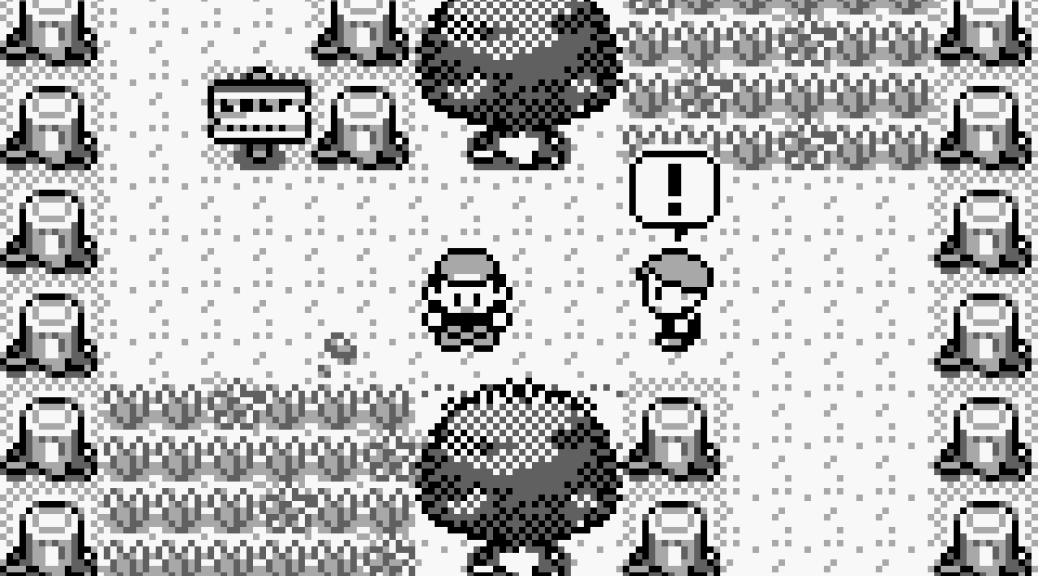
Pokémon Red Version, Game Boy
Pokémon Red Version was the very first Pokémon game and it was released for the original black and white Game Boy in 1996.
Like all subsequent Pokémon games it came as a pair of releases, so that players could have Pokémon exclusive to their version of the game and so that trading was required between versions – if you wanted to catch every single available Pokémon. Some might view that as cynical, but it wasn’t really intended to make people buy both versions, just to encourage link-up play and trading between them. It does however mean that you can’t catch all the available Pokémon if you only have one version of the game, and have no way of trading with someone else who has the other version.
In Japan, Pokémon Red (originally titled Pocket Monsters: Red) was accompanied by Pokémon Green (Pocket Monsters: Green), but in North America and Europe Pokémon Red was accompanied by Pokémon Blue, which is basically a remake of Green.
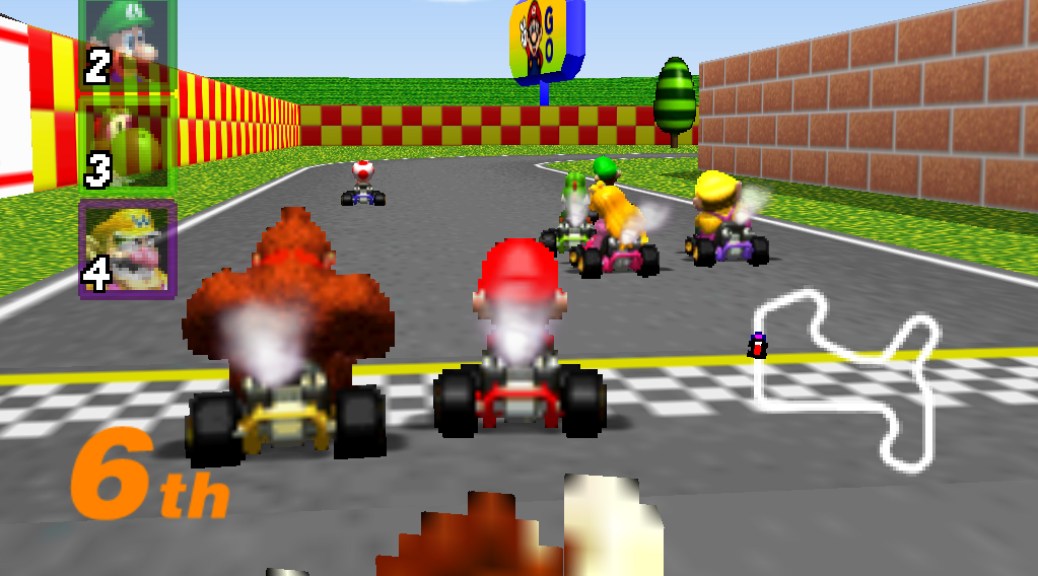
Mario Kart 64, Nintendo 64
Mario Kart 64 is the successor to the brilliant Super Mario Kart on the SNES and the second game in the famous Mario Kart series. It was first published by Nintendo for the N64 console in 1996.
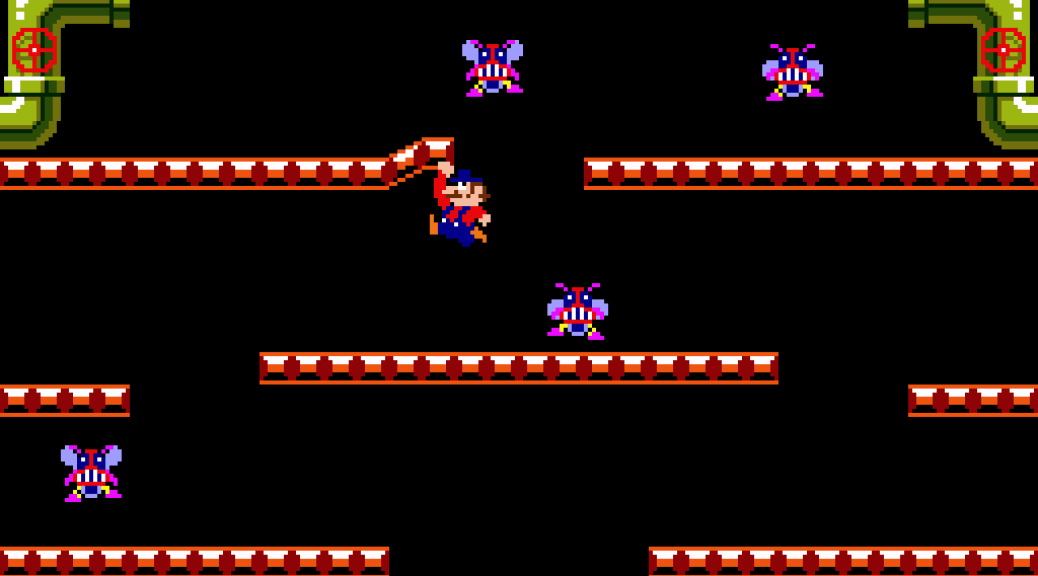
Mario Bros., Arcade
Released into arcades by Nintendo in 1983, Mario Bros. is a one or two-player platform game featuring Mario and Luigi as the main characters. Incidentally, this was the first time Luigi ever appeared in a video game.
Mario Bros. was designed by Shigeru Miyamoto and Gunpei Yokoi – two of the lead creators of Donkey Kong, of which this game is a follow-up.

Popeye, Arcade
Nintendo‘s 1982 arcade game, Popeye, was somewhat ahead of its time, and also in some respects as archaic to play as a Game & Watch.
It was ahead of its time in the way that it used a relatively high screen resolution (512×448), which results in quite detailed, high res sprites that are unusual for the time.
Unfortunately the same can’t be said of the background graphics, which look like something designed on an Atari 2600… In fact: Popeye is a weird mix of graphical resolutions, but this weirdness doesn’t affect the gameplay at all.

